
Issue One. Issue Two. Issue Three. Issue Four. Issue Five.

Issue Three
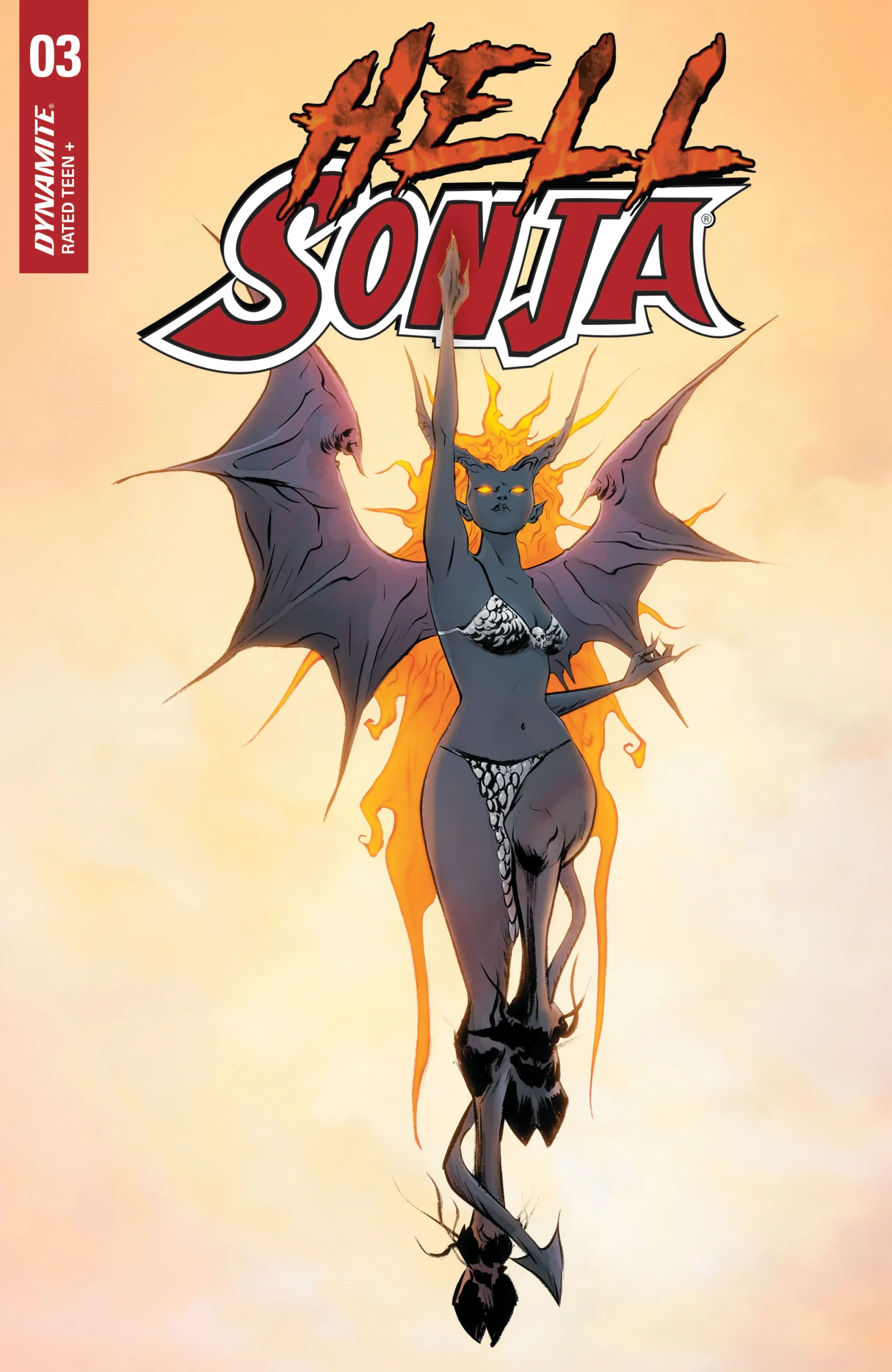
The third issue of the series is more interesting conceptually than the previous ones, but it gets bogged down narratively. The best idea in the issue—and one of the strongest in the entire series—is that God is dead, or at least has disappeared somewhere, while Hell and Heaven continue to function. We already knew from the first issue that Hell was a soul-hungry mechanism left behind by God. Now we discover that Heaven, too, is infrastructure abandoned by its owner. More than that, it is a planet-sized computer that stores the dead as data and generates a private paradise for each of them. It is something between the Christian Heaven with a cyberpunk twist and a cosmic operating system that continues to run after the administrator has died.
The idea of prayer is also treated more ironically here. A man named Harold, residing in a heavenly paradise—where paradise takes the form of a looping memory of a childhood birthday—is attacked by Root Rot. Being in Heaven, he naturally decides to seek help through prayer. The prayer, however, goes straight to Hell. Hell Sonja receives it and sends a rescue team into a helpless Heaven.
The fact that Heaven functions like a gigantic computer infrastructure opens the comic up to several interesting questions. It operates like a catalogue in which the dead are data stored in memory. Moon Sonja—herself an artificial intelligence—asks: ‘Can a human soul truly retain its humanity after being converted into digital data?’ In other words, is a copy of a person still the same person? This is a distinctly cyberpunk question concerning the continuity of identity after it has been copied or transferred into virtual reality.
Unfortunately, Hastings has so many ideas and so little space in which to develop them that these interesting problems receive only a few speech balloons of reflection before the action races onwards. The writer also somewhat conflates two separate questions here: whether a conscious digital person can exist at all, and whether a specific human identity can preserve continuity after being copied into a computer. In order to explain everything, he therefore has to rely upon a great deal of expository dialogue, and because much of it concerns technological concepts, a substantial portion of the issue is filled with technobabble reminiscent of the most excessive episodes of Star Trek: The Next Generation in that respect.
Another interesting idea is the antagonist. Root Rot is a play on words. In Unix and Linux systems, root is the privileged administrator account. In other words, Root Rot gains root access—the highest level of permissions, allowing it to take control of Heaven’s server. But root rot also refers to the rotting of plant roots, often associated with fungal or fungus-like pathogens. This, in turn, connects the antagonist with the fungus from the previous issue.
Although the issues initially appear to be only loosely connected, Hastings begins suggesting a stronger relationship between them through recurring ideas. In the previous issue, the Sonjas confronted biological decay; in the third, they face digital decay.
This cyberpunk rewriting of religion also includes seraphim—beings from Isaiah’s vision traditionally associated with the throne of God. Hastings takes their connection with divine space and transforms them into a kind of angelic system security, ensuring that no living being uploads its consciousness to the Heaven Server.
Thus, in the world of Hell Sonja, the division between Heaven and Hell does not correspond to any simple division between good and evil. Good people can end up in Hell—Red Sonja’s husband is condemned to it—and the entire heavenly-infernal system can be manipulated. Which, of course, is precisely what Hell Sonja does.
The ending of the issue also does something that significantly improves the miniseries as a whole: it shows that the ideas scattered across the previous instalments are beginning to form a single narrative. Unfortunately, this also makes Hell Sonja’s principal weakness even more apparent: its excessive density.
Within roughly twenty pages, Hastings wants to stage an assault on Heaven, introduce the cybernetic nature of Paradise, tell the hacker’s backstory, give every Sonja a moment of her own, include a discussion of digital identity, develop the story of Red Sonja’s husband, continue expanding the contract motif, return to the fungus from the previous issue and reveal the central antagonist. It is simply too much.
Qualano further complicates matters by using a large number of diagonal, intersecting panels. In Heaven, this actually works quite well—the frames resemble windows, fragments of data or a damaged interface—but combined with the already rapid script, it means that some pages are skimmed with the eye rather than genuinely read.
Author of “Panorama of Hong Kong and Taiwan Cinema”, a lover of Asian cinema, action films, and space voyages aboard the starship Enterprise. He once studied Polish philology, and later became a citizen of the NSK State in Time. He has published in Kinomisja, Ekrany, Kultura Liberalna, Torii, Dwutygodnik Kulturalny, and others.