Japanese Cinema Panorama: 1948–1950
Concluding — even if only temporarily — the overview of 1950 in Japanese cinema is a good moment to pause, take a breath, and look at the main trends and the evolution of their films. At least insofar as the limited availability of productions outside Japan allows. Before doing so, however, I think it is worth undertaking a very brief survey of 1948–49 as a kind of belated introduction to the Japanese Cinema Panorama.
1948
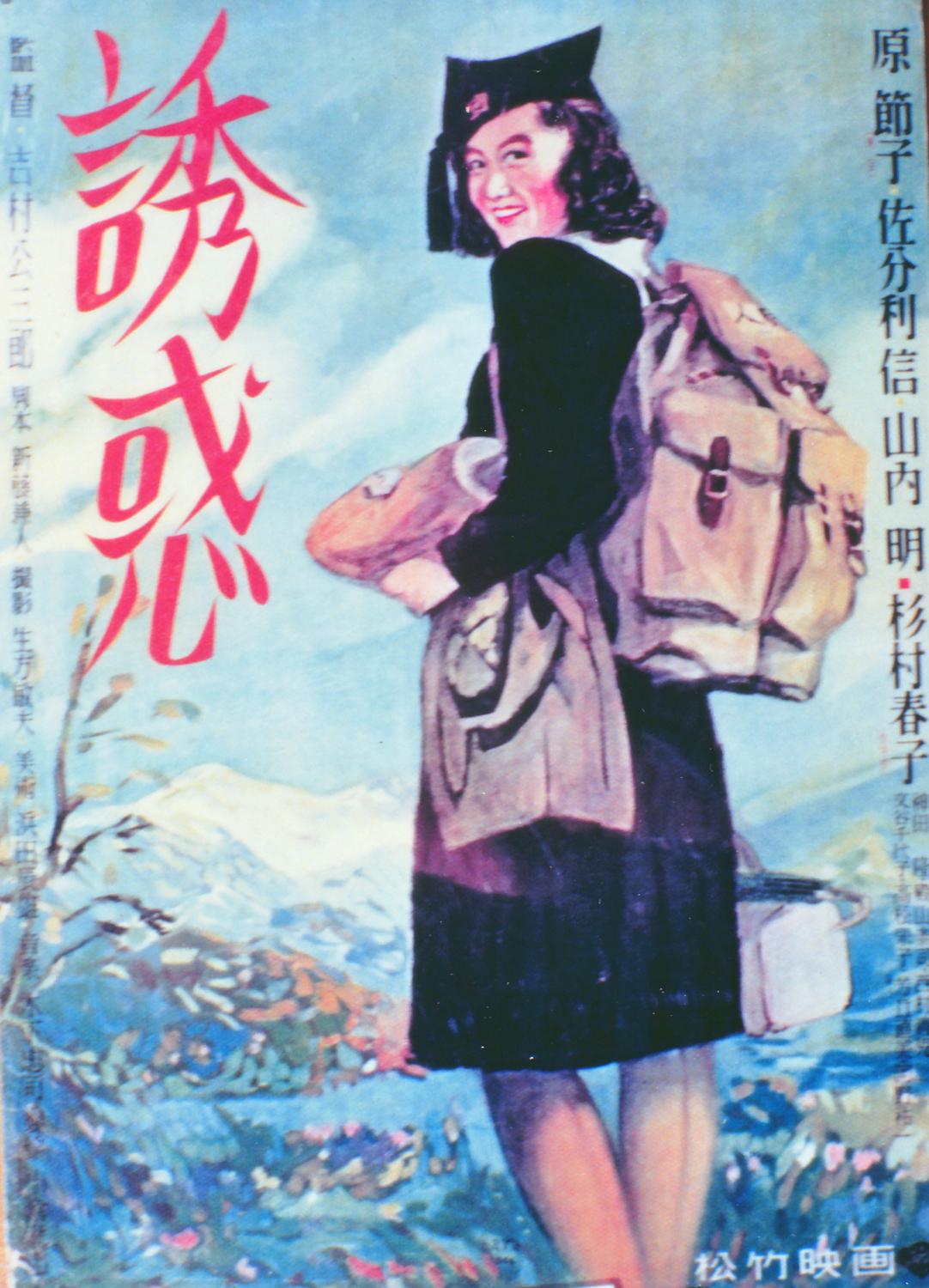
Temptation
(Yūwaku)
Director: Kōzaburō Yoshimura
Screenplay: Kaneto Shindō
Studio: Shochiku
Genre: drama
Cast: Setsuko Hara, Shin Saburi, Akira Yamanouchi, Haruko Sugimura, Chiyoko Fumiya, Takashi Kanda, Seiji Nishimura, Eiko Takamatsu
A young lawyer falls in love with the daughter of his former professor, whom he has hired to teach his children.
Comment: A pleasant, well-constructed film with an excellent cast. The Yoshimura–Shindō duo created several very interesting pictures in the late 1940s and 1950s. Temptation does not rank among the finest of their collaborations, but it remains worthwhile cinema, touching on the theme of forbidden love and the conflict between the desires of the heart and common sense.
7/10
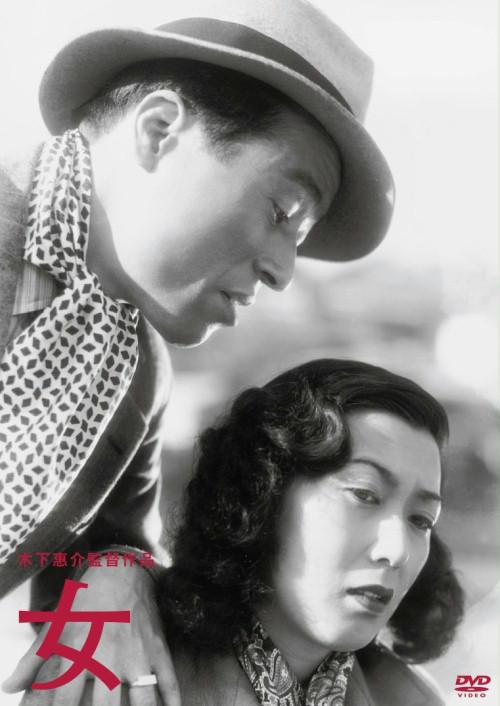
Woman
(Onna)
Director and Screenplay: Keisuke Kinoshita
Studio: Shochiku
Genre: drama, noir
Cast: Mitsuko Mito, Eitarō Ozawa
After the war, Toshiko has become a vaudeville dancer in order to earn a living. She is also involved with a man whom, though she loves him, she wants to give up his criminal activities.
Comment: On one hand, this is an important look at the problems of postwar Japan, grappling with poverty, the black market, and crime. On the other, Woman is a film overloaded with dialogue. Its slowly developing plot, which offers no surprises, is presented primarily through lengthy conversations between the two protagonists. The production would have benefited considerably from being shortened and given a somewhat greater injection of energy.
6/10
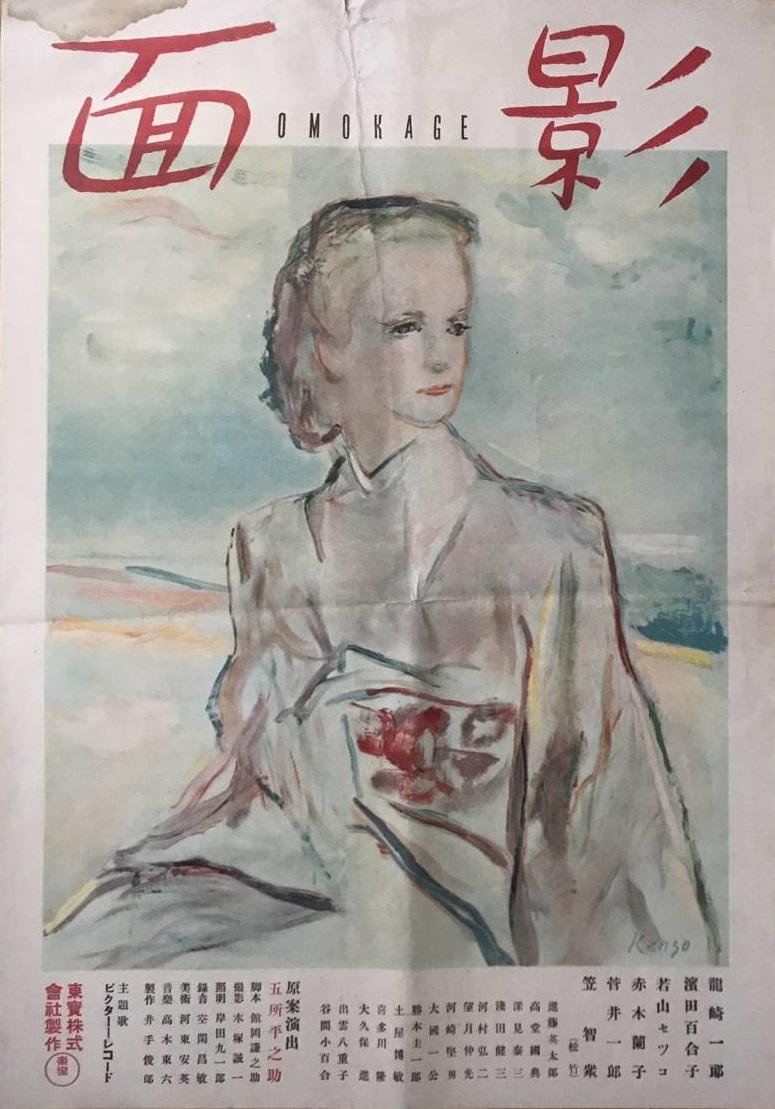
A Visage to Remember
(Omokage)
Director: Heinosuke Gosho
Screenplay: Kennosuke Tateoka
Studio: Toho
Genre: drama
Cast: Ichirō Ryūzaki, Yuriko Hamada, Setsuko Wakayama, Ranko Akagi, Ichirō Sugai, Chishū Ryū
During a holiday, a handsome engineer visits his mentor, who wishes to arrange a marriage between him and his daughter. The man begins to fall in love, however, with the mentor’s wife, who bears a striking resemblance to his own late wife.
Comment: A successful drama from Gosho, free from excessive melodrama and presenting the characters’ feelings rather gracefully while avoiding contrived conflicts. It approaches everyone with great respect, assigning both flaws and virtues to each, and stages several memorable scenes along the way.
7/10
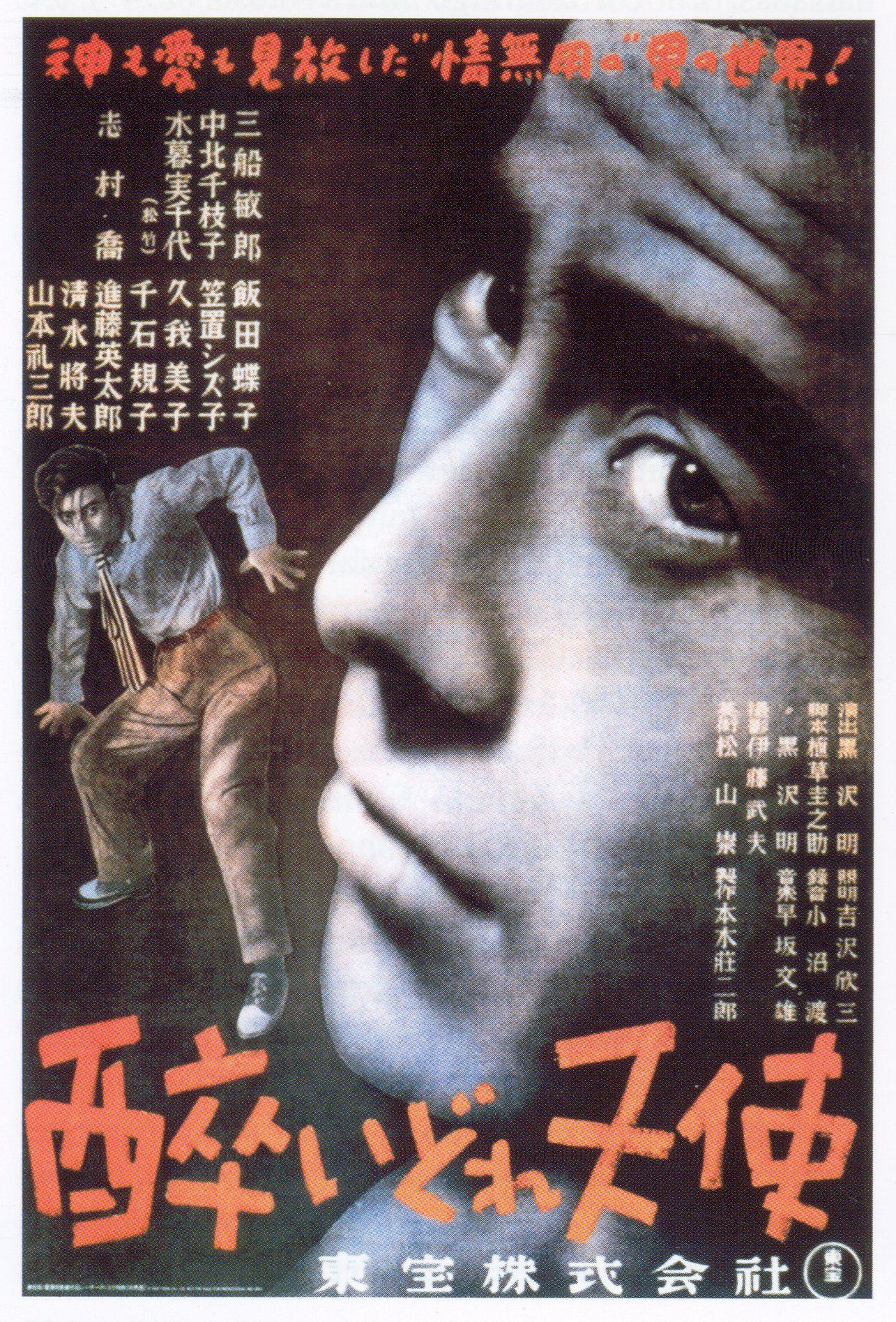
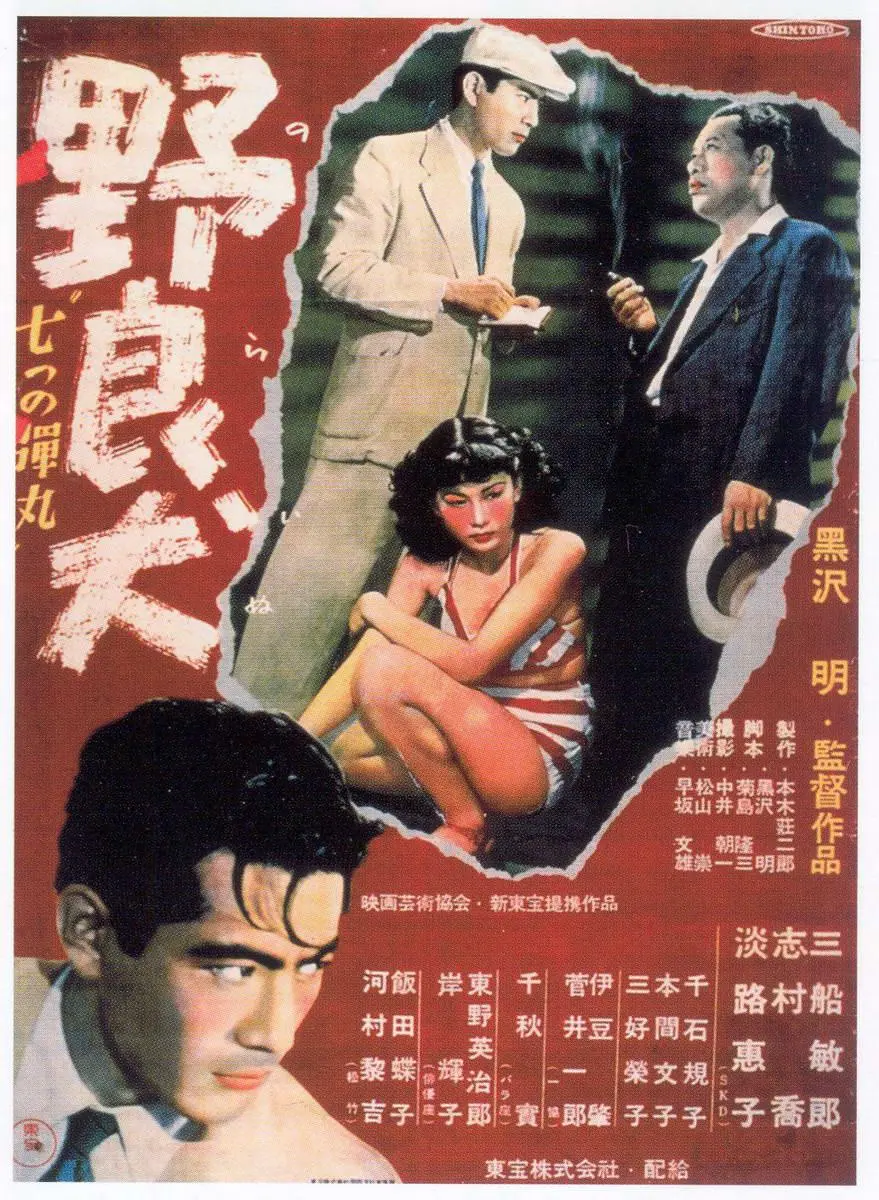
Drunken Angel
(Yoidore tenshi)
Director: Akira Kurosawa
Screenplay: Akira Kurosawa, Keinosuke Uekusa
Studio: Toho
Genre: drama, noir
Cast: Takashi Shimura, Toshirō Mifune, Reizaburo Yamamoto, Michiyo Kogure, Chieko Nakakita, Noriko Sengoku, Shizuko Kasagi, Eitarō Shindō
#1 on the Kinema Junpo list
Dr. Sanada, an alcoholic, treats a wounded gangster named Matsunaga and discovers that the man is suffering from tuberculosis. He attempts to persuade him to change his lifestyle and begin a course of treatment.
Comment: An alcoholic doctor treating a tubercular young yakuza — in Kurosawa’s hands this becomes a magnificent portrait of postwar Japan and its conflicting attitudes to life. The production is also significant for the influence it exerted on the realistic portrayal of gangsters in Japanese cinema. Brilliantly acted, filmed, and written, Drunken Angel is one of the finest films of the decade, and perhaps of the twentieth century.
9/10
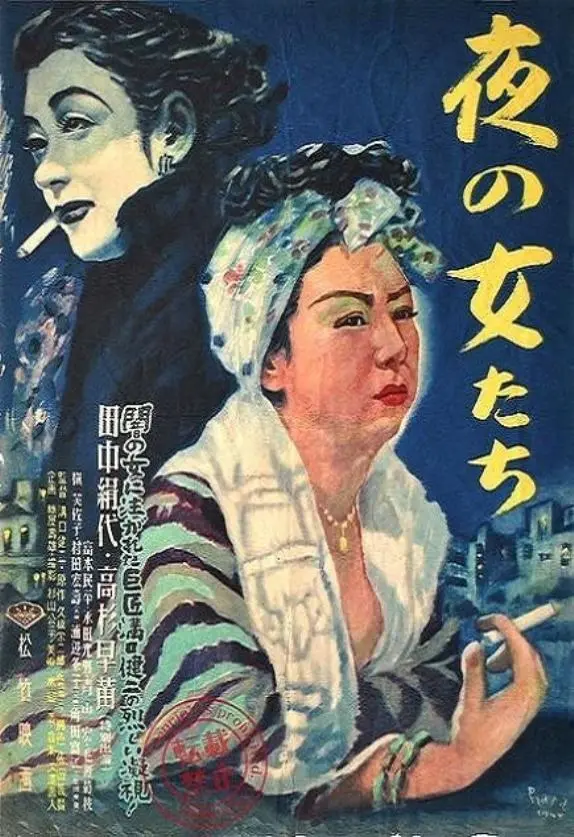
Women of the Night
(Yoru no onnatachi)
Director: Kenji Mizoguchi
Screenplay: Yoshikata Yoda
Studio: Shochiku
Genre: drama
Cast: Kinuyo Tanaka, Sanae Takasugi, Kumeko Urabe, Tomie Tsunoda, Mitsuo Nagata, Hiroshi Aoyama, Fusako Maki, Kikue Mōri, Sadako Sawamura, Ken Tanaka
#3 on the Kinema Junpo list
Fusako falls into depression when she discovers that her partner, a drug dealer, is cheating on her.
Comment: It is no secret that Kenji Mizoguchi is one of the directors I hold in the highest regard, and his Ugetsu one of my favorite films. I am somewhat less fond of Women of the Night, but it remains an interesting glimpse into the lives of postwar prostitutes, with a drug dealer’s mistress as its protagonist. Mizoguchi serves up a bleak image of the world and, as always, spares neither society in general nor men in particular from harsh criticism — and presents it all, incidentally, with great stylistic elegance.
8/10
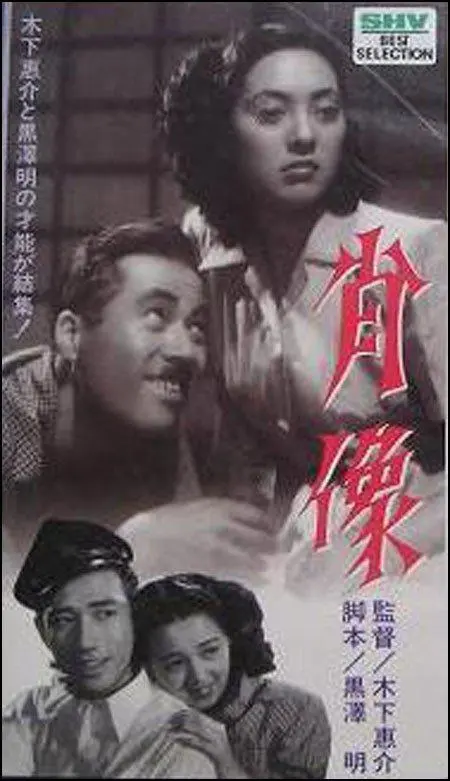
The Portrait
(Shōzō)
Director: Keisuke Kinoshita
Screenplay: Akira Kurosawa
Studio: Shochiku
Genre: drama, comedy
Cast: Kuniko Igawa, Kuniko Miyake, Mitsuko Miura, Ichirō Sugai, Chieko Higashiyama, Eitarō Ozawa
An unscrupulous broker installs his mistress in a house he owns in order to drive out the family renting rooms there. She begins to change her outlook on life, however, when an artist living in the building starts painting her portrait.
Comment: Kinoshita is, to my mind, a very uneven director — often prone to sliding into excessive, cheap sentimentality, but also capable of crafting interesting plots, psychological portraits, and social commentary. The Portrait is one of his lighter films, focusing on postwar human greed, which it presents as something that can find a fairly straightforward solution through contact with human selflessness and an unprejudiced view of the world.
7/10
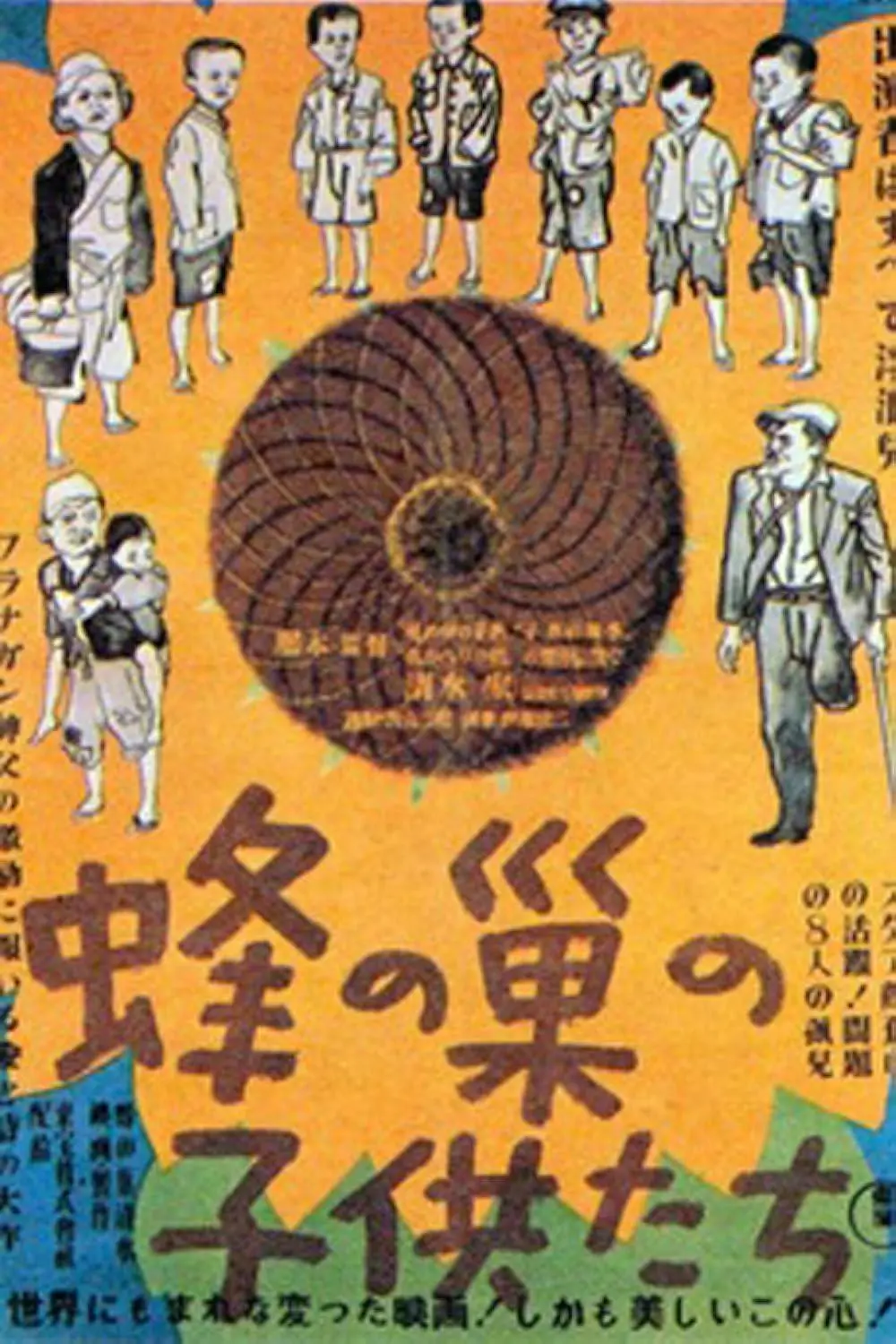
Children of the Beehive
(Hachi no su no kodomotachi)
Director and Screenplay: Hiroshi Shimizu
Studio: Hachi no su eiga-bu
Genre: drama
Cast: Daisuke Iwanami, Shimamura Shusaku, Shinichiro Kubota, Yoshikatsu Chiba, Yotaka Iwamoto, Sadao Nakamura, Kiyoshi Taira, Hiroyuki Mihara, Kiyoshi Kawanishi
#4 on the Kinema Junpo list
The story of war orphans from various corners of Japan. They are exploited by a one-legged man to work on the black market, but find inspiration in a young, nameless soldier returning from the front.
Comment: At moments sad but not overly sentimental, at moments cheerful but not excessively so — this is a portrait of orphaned children after the war. Shimizu serves them both tragedies and moments of happiness, ultimately sketching a rather positive picture and expressing hope for a better, more just Japan. Shimizu was known for films featuring children in the lead roles, and Children of the Beehive ranks, in my view, among the finest of his “childhood” productions.
8/10
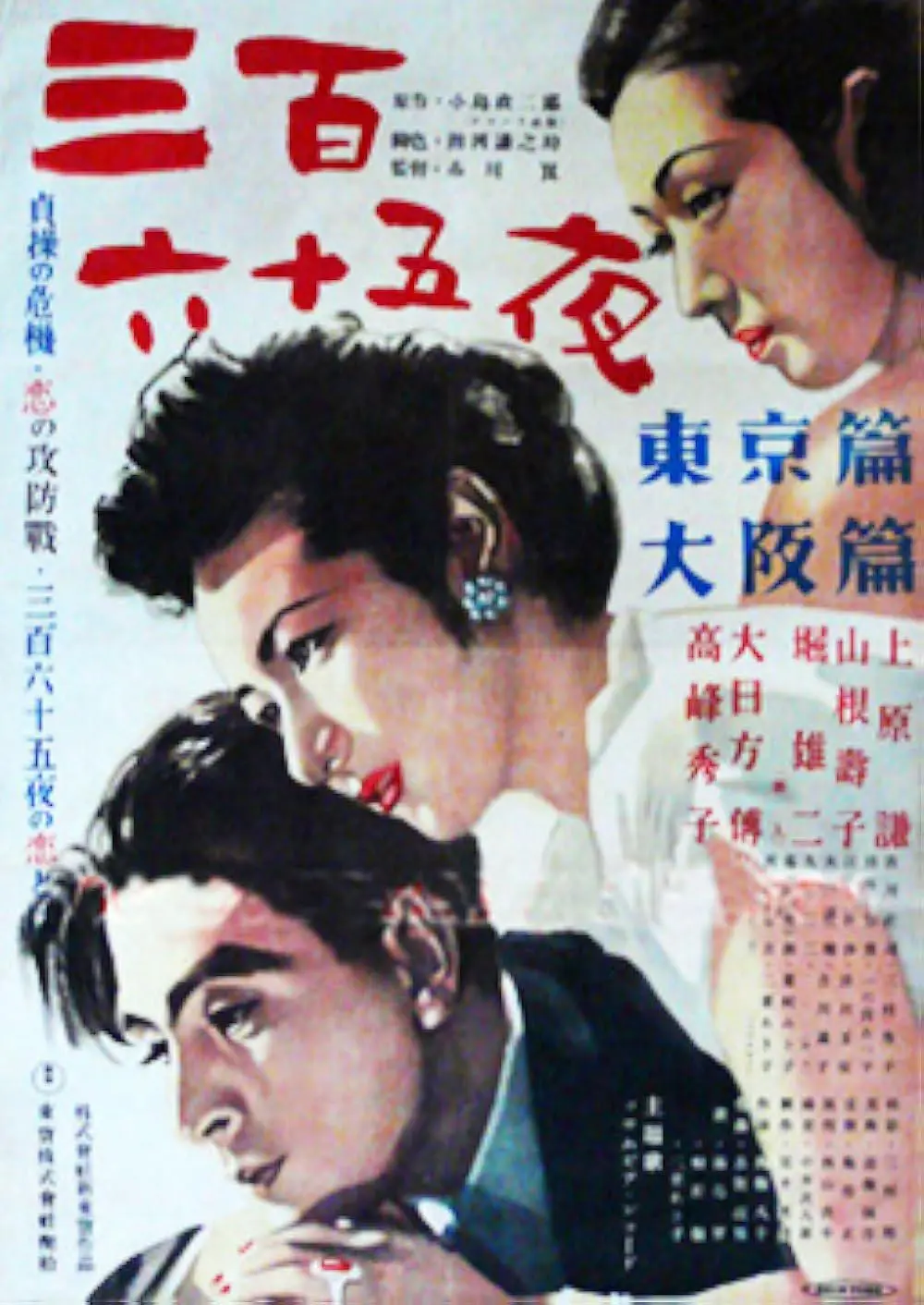
365 Nights
(Sanbyaku rokujūgoya)
Director: Kon Ichikawa
Screenplay: Kennosuke Tateoka
Studio: Shintoho
Genre: drama, romance, noir
Cast: Ken Uehara, Hisako Yamane, Hideko Takamine, Den Obinata, Yūji Hori, Haruo Tanaka, Yōnosuke Toba, Sōji Kiyokawa
Kon Ichikawa’s second film.
A young man rents an apartment in Tokyo, in a building that turns out to have been designed by his father. There he falls mutually in love with the current owner’s daughter. The man is also desired by a woman connected with the criminal underworld and the nightclub scene. She uses her contacts to destroy the man’s beloved, while his father tries to force him into marrying a wealthy woman in order to save his business.
Comment: Ichikawa’s second feature combines the melodrama popular in Japan with noir crime fiction. Here we find gangsters, nightclubs, blackmail involving compromising photographs of women, and a fight scene executed and edited with surprising skill. Primarily, however, this is a romance mixing the classic concerns of lovers in the sure chigau tradition with problems generated by a femme fatale, blackmail, and extortion.
The film is undeniably somewhat melodramatic at times, somewhat drawn out at others, and avoids probing various social issues in any depth — but despite this it constitutes an interesting example of the adoption of noir stylistics in Japan at the close of the 1940s. It is also solid in its acting, particularly in the case of the energetic, seductive Hideko Takamine.
7/10
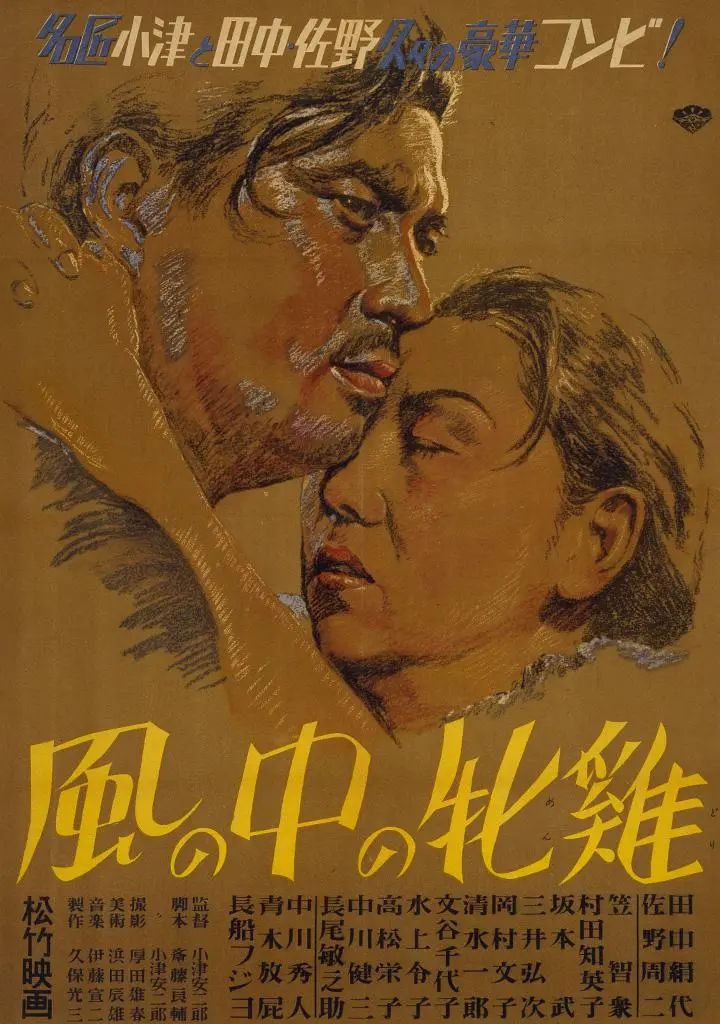
A Hen in the Wind
(Kaze no naka no mendori)
Director: Yasujirō Ozu
Screenplay: Yasujirō Ozu, Ryōsuke Saitō
Studio: Shochiku
Genre: drama
Cast: Kinuyo Tanaka, Shūji Sano, Chieko Murata, Chishū Ryū, Hohi Aoki, Chiyoko Ayatani, Reiko Minakami
#7 on the Kinema Junpo list
The story of Tokiko, a woman faithfully waiting for her husband to return from the war. When her four-year-old son falls gravely ill, however, and she has no money to pay for his treatment, she decides to temporarily become a prostitute.
Comment: A classic Ozu drama that is not only a portrait of a postwar family but also a metaphor for a traumatized Japanese nation. The film cannot be faulted on stylistic grounds, but due to the director’s treatment of the subject matter — including the recurring sight of a husband abusing his wife as she meekly accepts his behavior — it is difficult to regard the production as a pleasant viewing experience.
6/10
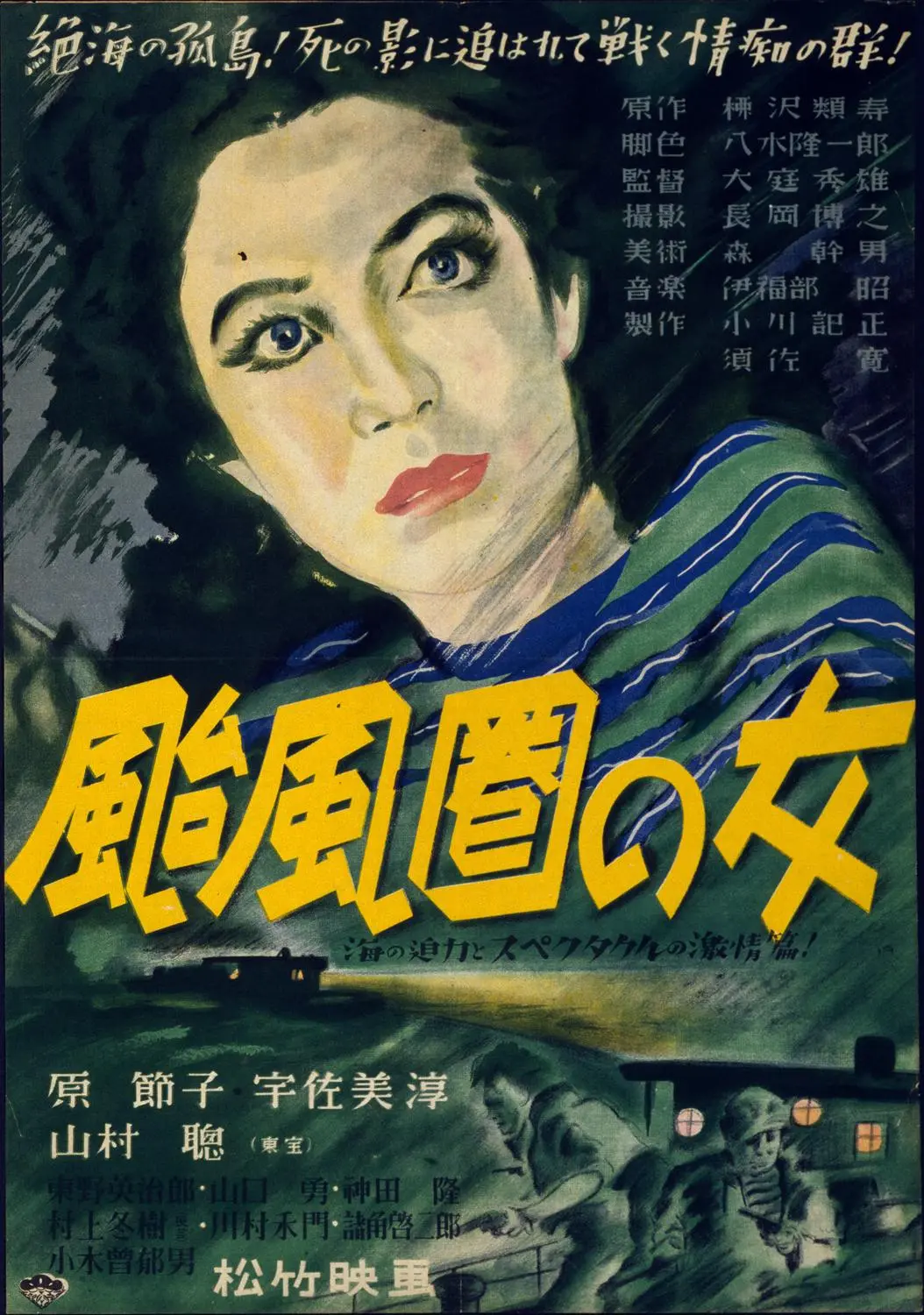
A Woman in a Typhoon Area
(Taifūken no onna)
Director: Hideo Oba
Screenplay: Ryuichiro Yagi
Studio: Shochiku
Genre: drama, crime
Cast: Setsuko Hara, Jun Usami, Sō Yamamura, Eijirō Tōno, Isamu Yamaguchi, Takashi Kanda, Fuyuki Murakami, Kamon Kawamura
Four pirates arrive on an island housing a meteorological station, hoping to intercept a supply ship. Instead they are forced to remain on the island due to an approaching typhoon and find themselves confronting the meteorologists.
Comment: This is not cinema of the highest order, but it possesses several undeniable merits. The first and greatest of these is the energetic performance of Setsuko Hara, wrestling with her feelings and conscience and displaying a dynamism not usually associated with her. Beyond that — how often are films made about heroic meteorologists battling pirates?
6/10
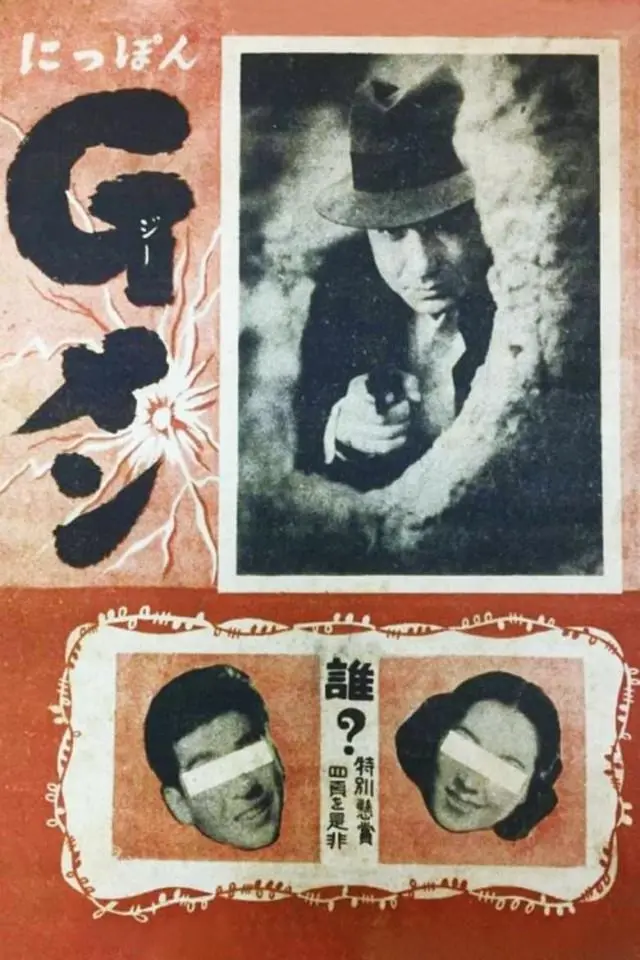
G-Men of Japan
(Nippon Gmen)
Director: Sadatsugu Matsuda
Screenplay: Yoshitake Hisa
Studio: Toyoko Eiga
Genre: crime, action, noir
Cast: Chiezō Kataoka, Ichirō Izawa, Keiko Orihara, Haruko Sugimura, Kyoji Sugi, Den Obinata, Ryūnosuke Tsukigata
G-Men of Japan series.
The film follows a police unit investigating a gang of smugglers, thieves, and murderers.
Comment: The film opens the G-Men of Japan series, which preceded the popular series combining crime with action cinema starring Chiezō Kataoka that Toei would produce in the 1950s; that studio was also responsible for distributing the title under discussion. At its core it is an action film with a collective protagonist, depicting the conflict between the justice system and organized crime. It therefore features an investigative phase in which the police interrogate suspects, deploy modern technology to identify the murder weapon, and comb neighborhoods for information. These sequences are strongly inspired by film noir, though lacking its characteristic moral ambivalence. In G-Men the viewer always knows who the positive characters are and sooner or later discovers who the villain is. In its later stages the production transforms into action cinema with shootouts, explosions, and chase sequences executed at a high level.
Beyond Kataoka, Sadatsugu Matsuda would also soon become a mainstay of Toei. In the 1950s Matsuda was responsible for the studio’s most important series as well as numerous standalone action pictures, including chanbara, and its major productions. In the 1960s he was also involved in making films in the yakuza eiga trend. In addition to its influence on Japanese action cinema, G-Men of Japan, through its collective protagonist, emphasizes the value of cooperation and joint effort in the postwar reconstruction of the state, while pointing to concerns about smuggling and crime in a Japan then living in poverty. Drawing heavily on Western cinema for inspiration and endorsed by the American occupation forces, the film can also be regarded to some extent as a precursor to the mukokuseki eiga trend at Nikkatsu.
A note on the title: the term g-men means “government men” and originated in the USA in the 1930s, denoting FBI agents popularized by J. Edgar Hoover and Hollywood gangster pictures. In occupied Japan the name was adopted to denote government and police agents.
6/10
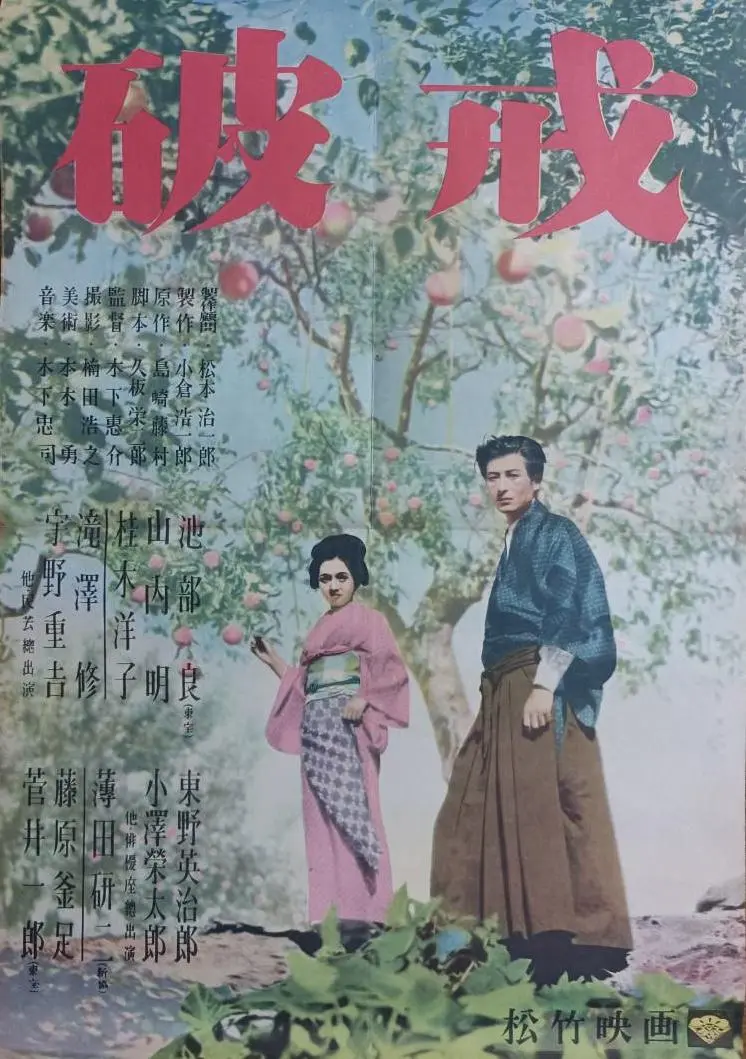
Apostasy
(Hakai)
Director: Keisuke Kinoshita
Screenplay: Eijirō Hisaita
Studio: Shochiku
Genre: drama
Cast: Ryō Ikebe, Yōko Katsuragi, Osamu Takizawa, Jūkichi Uno, Masao Shimizu, Yoshi Katō, Eitarō Ozawa, Eijirō Tōno, Kappei Matsumoto, Yasushi Nagata, Chieko Higashiyama
#6 on the Kinema Junpo list.
The film is set in the Meiji era. A young teacher tries to conceal his low social origins while simultaneously supporting a liberal intellectual visiting the town.
Comment: The film’s message — criticizing class distinctions and the placing of greater weight on a person’s origins than on the values they embody — was highly topical at the time, and has not entirely dated even today. The manner of its presentation, however, is so excessively sentimental, melodramatic, and stuffed with drawn-out dialogue that it significantly hinders a positive assessment of the production. It is worth adding that the film premiered just one year after censorship rules in Japan changed; previously, issues concerning the perception of the burakumin could not be publicly discussed.
5/10
1949
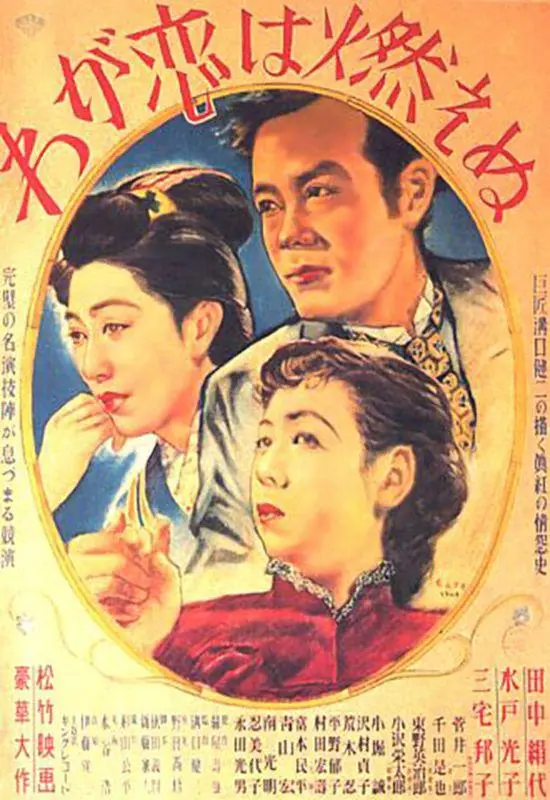
Flame of My Love
(Waga koi wa moenu; lit.: My Love Burns)
Director: Kenji Mizoguchi
Screenplay: Kaneto Shindō, Yoshikata Yoda
Studio: Shochiku
Genre: drama
Cast: Kinuyo Tanaka, Mitsuko Mito, Kuniko Miyake, Ichirō Sugai, Eitarō Ozawa, Shinobu Araki, Eijirō Tōno, Koreya Senda, Kappei Matsumoto, Masao Shimizu, Jūkichi Uno
The story of a woman fighting for equal rights in Japan in the 1880s.
Comment: A somewhat lesser-known film by Mizoguchi, recounting the tragedy-filled struggle for women’s rights in the 1880s. Kinuyo Tanaka plays a woman who tries to change a rigid, conservative society while befriending a progressive politician, only to collide with the brutal reality of a corrupt political world and social indifference.
8/10
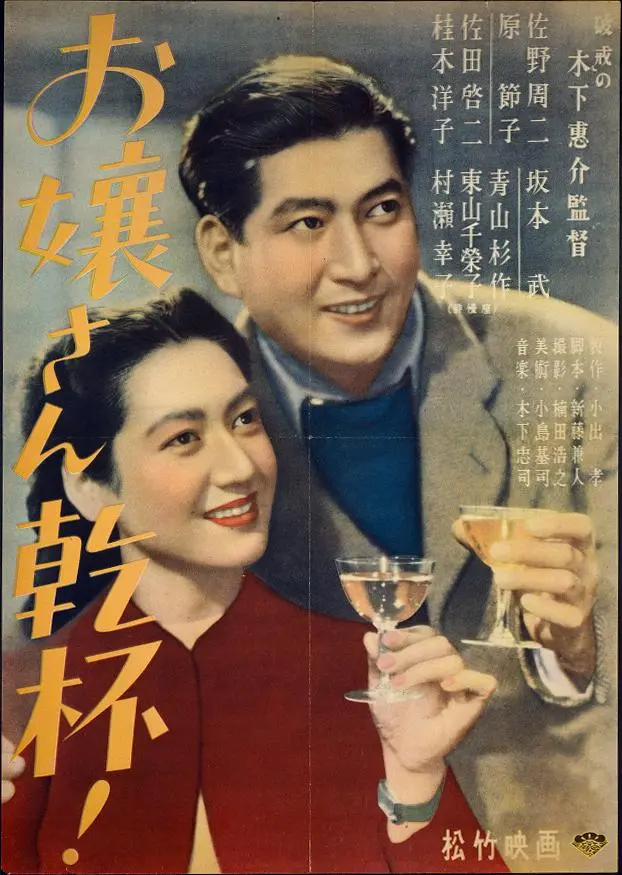
Here’s to the Young Lady
(Ojōsan kanpai)
Director: Keisuke Kinoshita
Screenplay: Kaneto Shindō
Studio: Shochiku
Genre: romance, drama, comedy
Cast: Shūji Sano, Setsuko Hara, Chieko Higashiyama, Keiji Sada, Takeshi Sakamoto, Sachiko Murase
#6 on the Kinema Junpo list.
A matchmaker tries to bring together a poor but decent garage owner and a girl from a wealthy family who has difficulty expressing her emotions.
Comment: A very pleasant romantic story, decidedly better than many other films from Kinoshita. It offers an interesting encounter between two social classes, gradually stripping away the veneer of the upper one and exposing its hypocrisy.
7/10
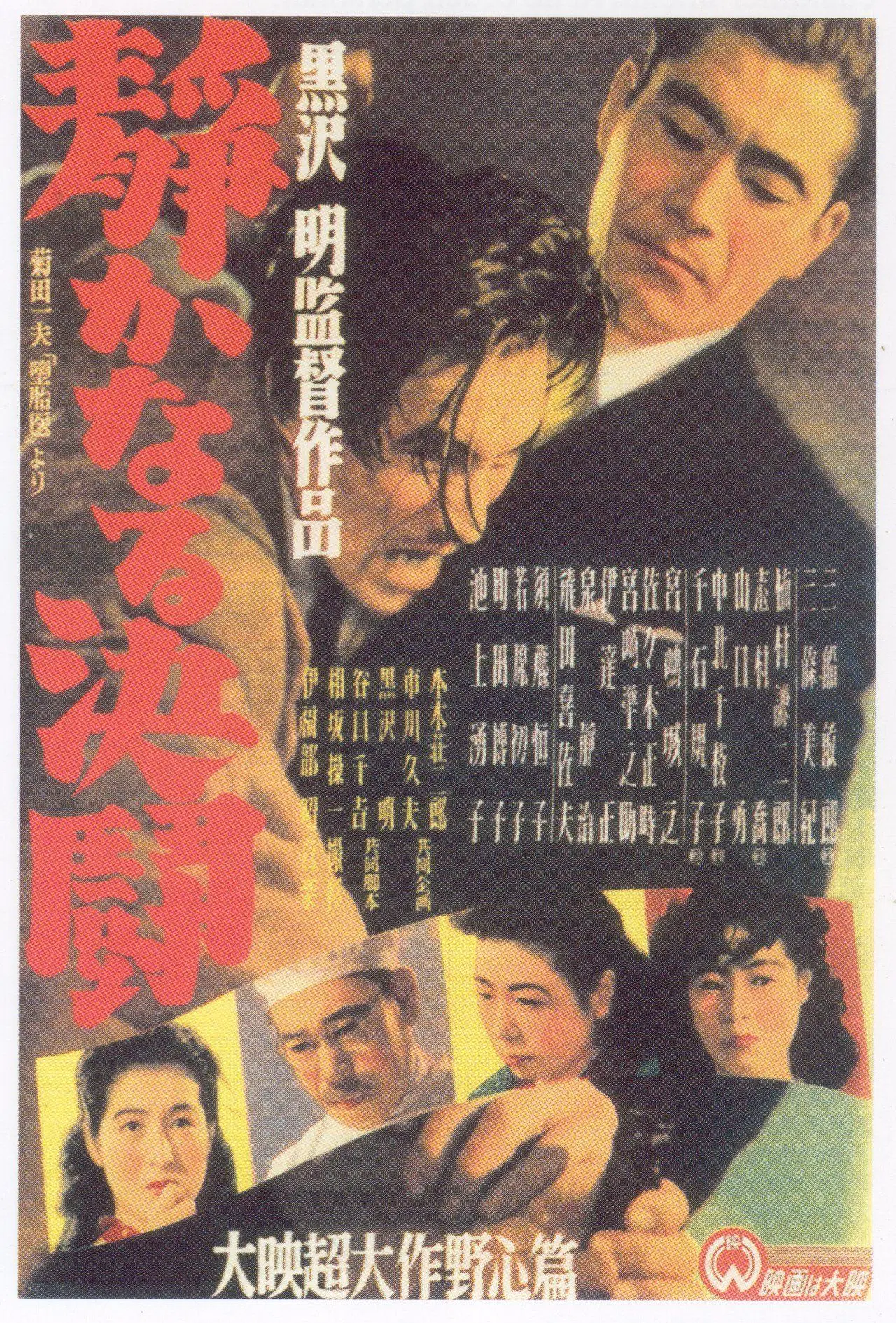
The Quiet Duel
(Shizukanaru ketto)
Director: Akira Kurosawa
Screenplay: Akira Kurosawa, Kazuo Kikuta
Studio: Daiei
Genre: drama
Cast: Toshirō Mifune, Miki Sanjō, Takashi Shimura, Kenjiro Uemura, Isamu Yamaguchi, Noriko Sengoku, Chieko Nakakita, Kenichi Miyajima, Masatoki Sasaki, Seiji Izumi, Tadashi Date
#7 on the Kinema Junpo list.
A young, idealistic doctor works at a small clinic belonging to his father. During the war he contracted syphilis while performing surgery. The disease now causes him problems not only with his health but also with his personal life.
Comment: Another classic from Kurosawa. A solid drama, very well acted and presented, but undeniably inferior to many other works by the master of cinema.
8/10
A Bullet Hole Underground
(Chikagai no dankon)
Director: Kazuo Mori
Screenplay: Shin’ichi Yanagawa
Studio: Daiei
Genre: crime, action, noir
Cast: Takashi Shimura, Hiroshi Nihon’yanagi, Machiko Kyō, Saburo Date, Toshiaki Konoe, Minoru Takada, Ichirō Sugai, Ryutaro Otomo
A mysterious murder takes place in the Osaka underground. In the course of its investigation, the police encounter an organized criminal organization involved in smuggling, theft, and murder.
Comment: The production is Daiei’s answer to the G-Men of Japan series and presents itself very similarly in terms of subject matter, narrative approach, and inspiration drawn from American film noir. It also contains an interesting landscape of postwar Japan. The filmmakers shot a number of scenes among ruins and destruction, deepening the sense of the many problems the country was grappling with at the time. Primarily, however, the film focuses on an investigation culminating in fight and shootout sequences.
Unlike the Toyoko and Toei production, A Bullet Hole Underground also contains a romantic subplot. As a result, although the film begins with a collective protagonist, two policemen soon move to the foreground, one of whom was previously linked to the wife of the murder victim. This strand is highly formulaic and disrupts the narrative pace with an unnecessary flashback, but in exchange allows viewers a glimpse into nightclubs, and the woman played by Machiko Kyō bears clear marks of a femme fatale. Her character is also the most fully developed of all, and through her speaks a disillusionment with postwar Japan; she abandons her dreams in pursuit of material stability, only to end up being exploited in a criminal environment.
6/10
Ishimatsu of the Forest
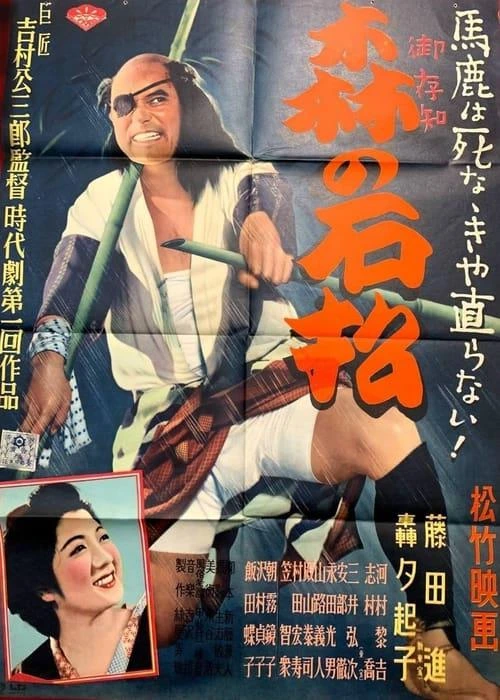
(Mori no Ishimatsu)
Director: Kōzaburō Yoshimura
Screenplay: Kaneto Shindō
Studio: Shochiku
Genre: drama, jidaigeki, chanbara
Cast: Susumu Fujita, Yukiko Todoroki, Chōko Iida, Reikichi Kawamura, Chishū Ryū, Takashi Shimura, Kyōko Asagiri, Taiji Tonoyama, Sadako Sawamura
The poor peasant Ishimatsu longs for fame and recognition. To this end he sets out for the city and becomes a member of the yakuza. His frank yet cynical character wins him many friends, but also enemies who resolve to settle scores with him when he sets out on a mission for his gang.
Comment: One-eyed Ishimatsu — a historical figure, one of the most famous members of the Jirochō Shimizu gang — begins his adventure as an opportunistic swordsman as a villager hungry for a higher station in life. Membership of the gang is meant to provide it — but, as it turns out, criminal activity, even when one tries to shirk the work, is neither easy nor safe.
This adaptation of a classic story in the hands of the Yoshimura–Shindō duo is an energetic tale of ruinous greed, dangerous idleness, and a critique of criminality. Although it occasionally seems somewhat drawn out, it contains a brilliantly filmed and choreographed finale with an excellent closing fight that impresses more on a stylistic than on a purely choreographic level.
7/10
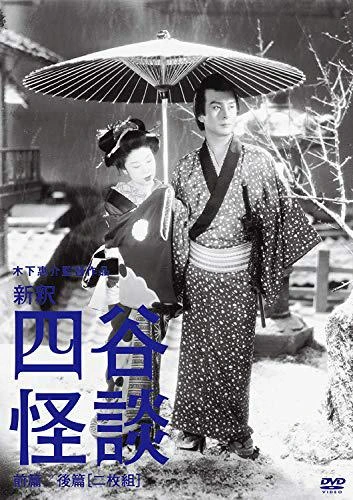
Yotsuya Ghost Story, Part 1 and Yotsuya Ghost Story, Part 2
(Shinshaku Yotsuya kaidan and Shinshaku Yotsuya kaidan: kōhen; lit.: A New Interpretation of the Yotsuya Ghost Story)
Director: Keisuke Kinoshita
Screenplay: Eijirō Hisaita
Studio: Shochiku
Genre: drama, thriller, jidaigeki
Cast: Kinuyo Tanaka, Ken Uehara, Hisako Yamane (Part 1 only), Haruko Sugimura, Chōko Iida, Osamu Takizawa, Jūkichi Uno
Iemon Tamiya is a poor samurai longing for a better life. When the opportunity to marry into a wealthy family presents itself, he allows himself to be persuaded by his criminal friend to poison and kill his own wife.
Comment: The production is a two-part adaptation of the most famous ghost story in Japanese history and also the first postwar attempt in Japan at the horror genre. Although Kinoshita transforms the classic ghost story into a drama with elements of psychological thriller and strips out the supernatural elements, he nonetheless took an important step toward horror cinema in Japan and created an intriguing portrait of the destructive consequences of greed and crime.
8/10
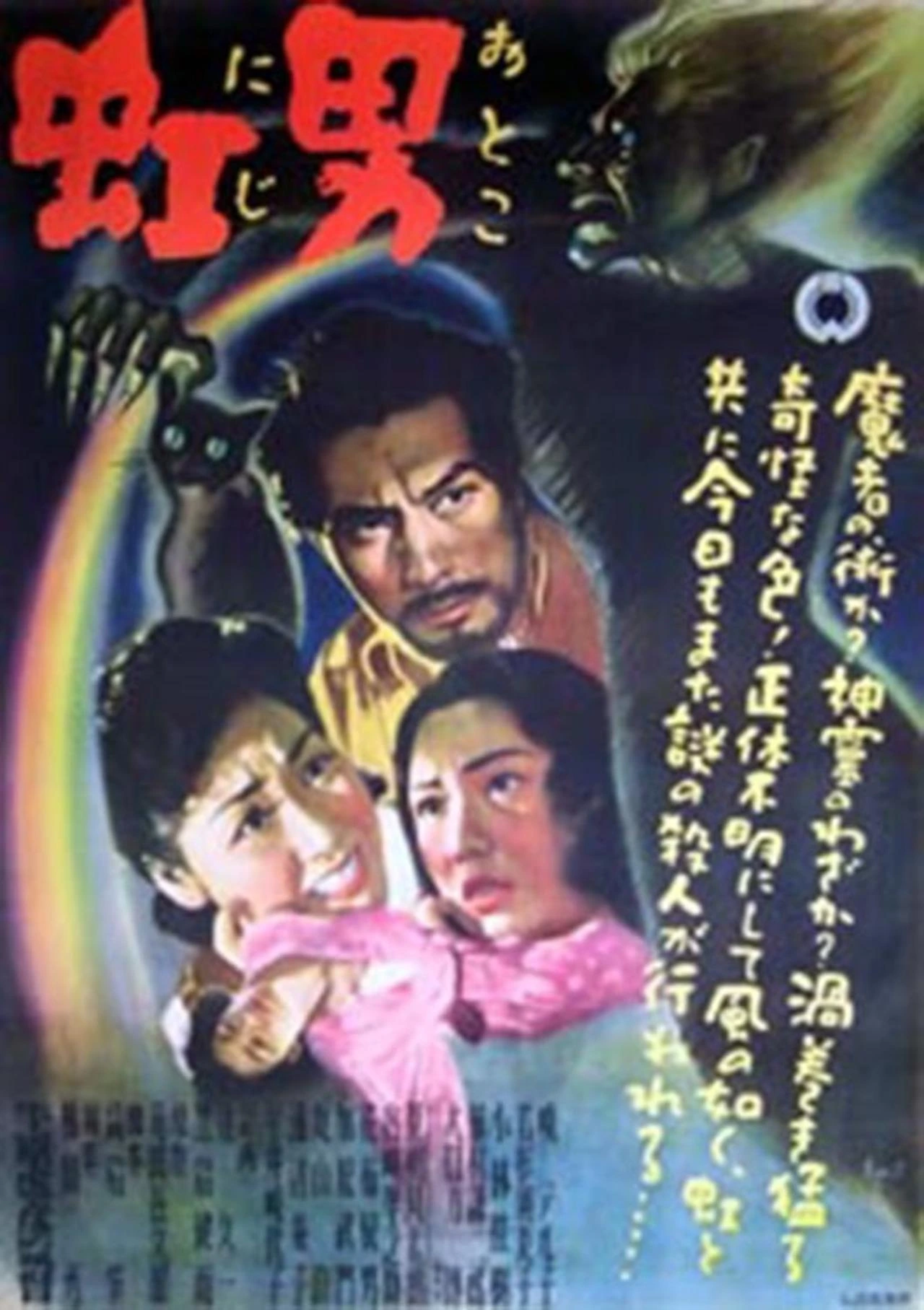
The Rainbow Man
(Nijiotoko)
Director: Kiyohiko Ushihara
Screenplay: Hajime Takaiwa
Studio: Daiei
Genre: thriller, crime
Cast: Keiju Kobayashi, Teruko Akatsuki, Katsuko Wakasugi, Den Obinata, Kenjiro Uemura, Kiyoko Hirai, Kumeko Urabe, Bontarō Miake, Junnosuke Miyazaki, Bumon Kahara
When a young woman becomes the prime suspect in a murder case, two of her friends begin their own investigation. It leads them to a mysterious house…
Comment: A visually attractive but, taken as a whole, unfortunately not particularly successful attempt to engage with criminal mystery and the thriller in postwar Japanese cinema. This type of cinema would, however, undergo rapid evolution in the 1950s, and The Rainbow Man can without hesitation be regarded as a precursor of similar productions.
6/10
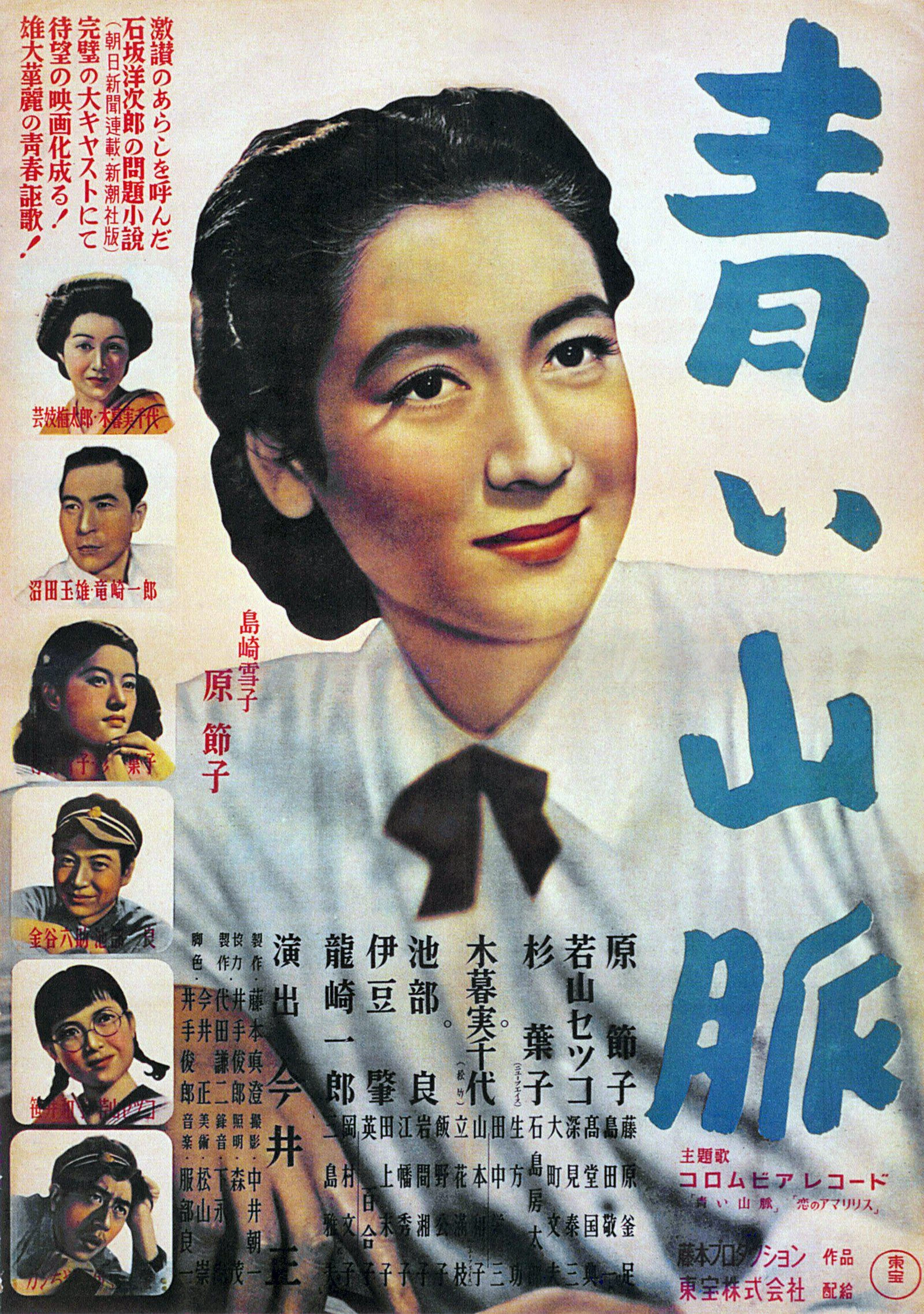
The Blue Mountains: Part I
(Aoi sanmyaku; lit.: Range of Blue Mountains)
Director: Tadashi Imai
Screenplay: Toshirō Ide, Tadashi Imai
Studio: Toho, Fujimoto Productions
Genre: drama, romance, comedy
Cast: Setsuko Hara, Ryō Ikebe, Michiyo Kogure, Yōko Sugi, Ichirō Ryūzaki, Setsuko Wakayama, Hajime Izu, Mitsue Tachibana, Kazuko Yamamoto, Masao Mishima, Eizo Tanaka
#2 on the Kinema Junpo list together with the sequel.
Teacher Yukiko stands in opposition to the conservative faculty and village residents in order to defend a female student seen with a young man from Tokyo.
7/10
The Blue Mountains: Part II
(Zoku aoi sanmyaku; lit.: Continuation of the Range of Blue Mountains)
Director: Tadashi Imai
Screenplay: Toshirō Ide, Tadashi Imai, Yōjirō Ishizaka
Studio: Toho, Fujimoto Productions
Genre: drama, romance, comedy
Cast: Setsuko Hara, Ryō Ikebe, Michiyo Kogure, Yōko Sugi, Ichirō Ryūzaki, Setsuko Wakayama, Hajime Izu, Mitsue Tachibana, Kazuko Yamamoto, Masao Mishima, Eizo Tanaka
#2 on the Kinema Junpo list together with Part I.
A direct continuation of Part I.
Comment: Interesting — though more so in the first part than in the somewhat more simplified second — this is a portrait condemning conservatism in a small-town school. A young teacher stands up for a female student who was seen walking with a boy. The school deems this immoral behavior, and other students begin bullying her.
Brilliantly acted and blending dramatic, comedic, and romantic scenes, the film shows the changing face of postwar Japan, offers a critique of the traditional mentality, and seeks to strengthen women’s position in society.
7/10
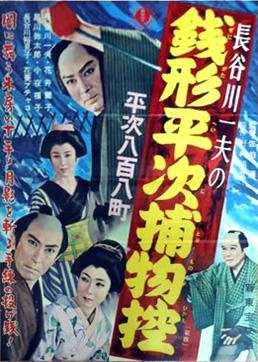
Zenigata Heiji Detective Story: Heiji Covers All of Edo (Zenigata Heiji torimonohikae: Heiji happyakuyachō)
Director: Kiyoshi Saeki
Screenplay: Kiyoshi Saeki, Taizō Fuyushima
Studio: Shintoho, Shinengiza
Genre: chanbara, crime, jidaigeki
Cast: Kazuo Hasegawa, Yataro Kurokawa, Achako Hanabishi, Ranko Hanai, Yumiko Hasegawa, Jushiro Kobayashi, Teruo Wakatsuki
Heiji Zenigata series.
Detective Heiji is assigned to break up a gang of thieves terrorizing all of Edo.
Comment: An unremarkable marriage of chanbara with detective cinema — a combination that would be heavily exploited at the Toei studio in the following decade. Usually, as here too, in hastily assembled films lacking greater ambition. Thanks to the brisk narrative pace, short running time, and charismatic actors, time spent with Zenigata passes pleasantly and without any sense of tedium.
6/10
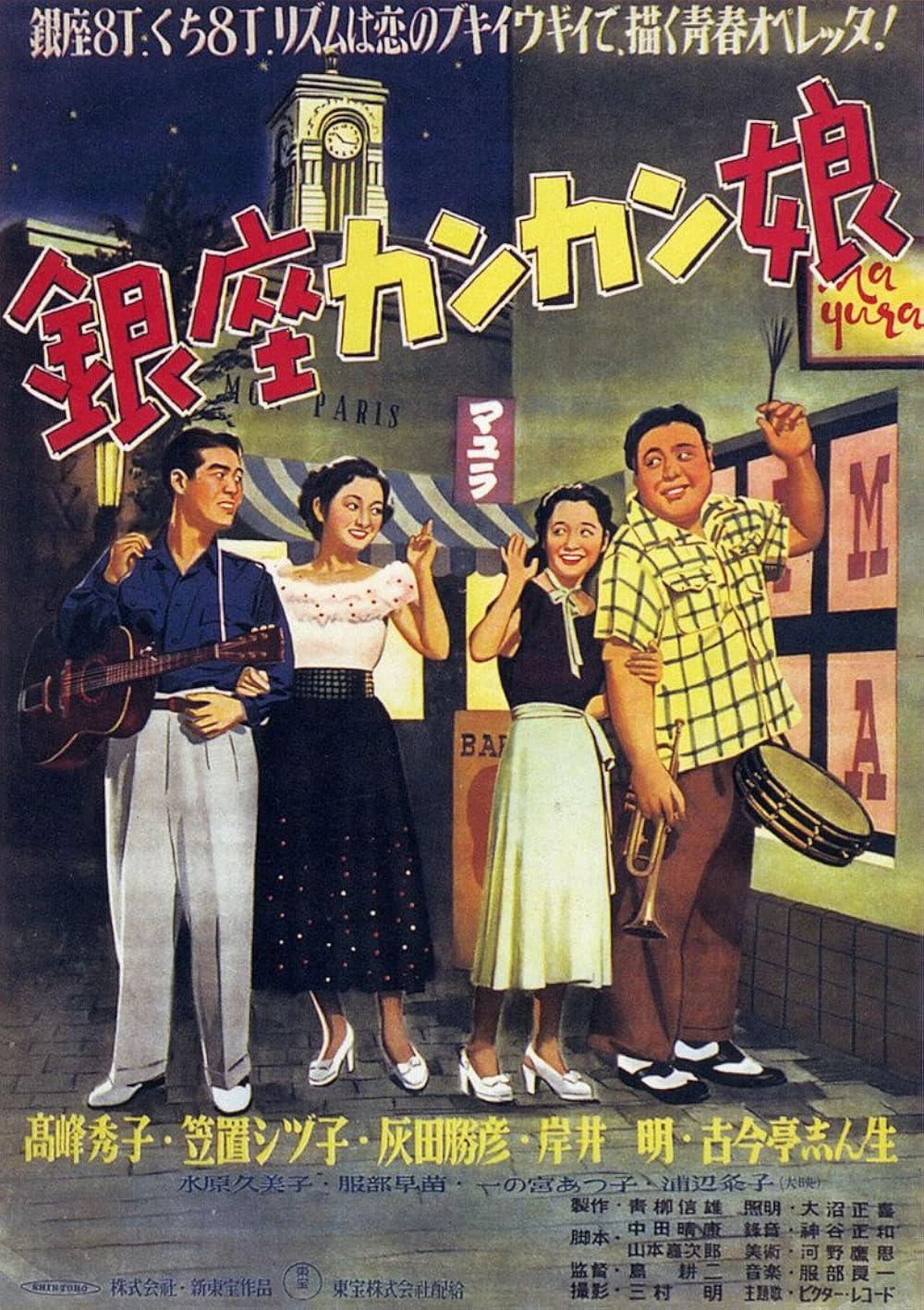
Ginza Cancan Girls
(Ginza kankan musume)
Director: Koji Shima
Screenplay: Kajirō Yamamoto, Haruyasu Nakada
Studio: Shintoho
Genre: comedy, romance, musical
Cast: Hideko Takamine, Katsuhiko Haida, Shizuko Kasagi, Akira Kishii, Shinshō Kokontei, Kumiko Mizuhara, Atsuko Ichinomiya, Kumeko Urabe
Two young women try to earn money for the elderly couple with whom they are lodging. Due to their love of music, they decide — with the help of a friend — to become singers in the nightclubs of the Ginza.
Comment: The film presents a pleasant, sanitized image of the Ginza, anticipating the dramas and crime pictures set in that district that would begin gaining popularity in the 1950s. Unfortunately most of the scenes were filmed in studio spaces, so the big-city atmosphere that would characterize future productions is absent. Ginza Cancan Girls is also suffused with its creators’ yearning for rural simplicity; characters frequently find peace outside the city or long to live in the countryside. In the city, greed, housing problems, and poverty await them. Within the comic framework, however, no problem is too burdensome for the protagonists.
Despite several successful jokes, the film is fairly monotonous and insufferably predictable. The same is true of the songs; they are pleasant by the standards of contemporary Japanese popular music, but the title song is repeated ad nauseam. The filmmakers are clearly trying to drill its melody and lyrics into the viewer’s head. Their not particularly subtle tactic succeeded: the song briefly became a cultural phenomenon and over 500,000 records of it were sold in 1949. Various cover versions followed, and it was even used in a Hyundai car advertisement. It can be listened to [here].
The production and films like it exerted an influence not only on Japanese musicals but also on Hong Kong’s musical cinema — the gechang pian and, more significantly, the gewu pian — where the figure of the female singer carried different political connotations, however. Composer Ryōichi Hattori, responsible for the songs in Ginza Cancan Girls, later worked in Hong Kong as well, where he was responsible among other things for the songs in the cult and historically significant The Wild, Wild Rose (1960), which I analyze in the first volume of the Hong Kong and Taiwan Cinema Panorama. Hattori successfully blended numerous international influences throughout his career, remaining a significant figure in the industry into the late 1960s.
One of the supporting roles in the film is played by Akira Kishii, a legendary rakugo artist. Ginza Cancan Girls teases viewers several times by presenting short, unfinished fragments of his performances, but rewards us in the finale with a complete narrative. Since Kishii rarely allowed himself to be recorded, his participation is an enormous asset for those interested in this art form.
The production also has a secondary layer of meaning suggested by the “cancan girls” appearing in the title. Kankan refers of course to the popular dance, but in Japanese it is also a word coined by Kajiro Yamamoto meaning profound fury. It alluded to the panpan girls, as prostitutes were commonly called at the time, and was intended to express a criticism of moral decay in postwar Japan. In the context of the film, the allusions and the heroines’ activities — far removed from the sexual profession — can be read as an attempt to show positive values and modes of behavior in the entertainment district that do not slide into sexuality and the exploitation of women.
4/10
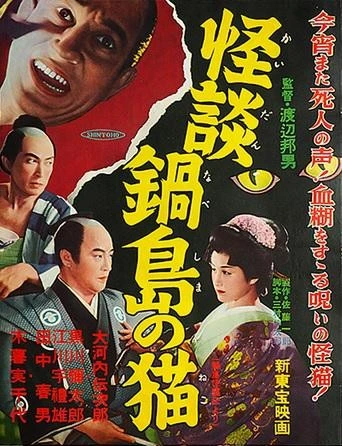
Ghost Cat of Nabeshima
(Kaidan Nabeshima no neko)
Director: Kunio Watanabe
Screenplay: Shintarō Mimura
Studio: Shintoho
Genre: thriller, jidaigeki
Cast: Denjirō Ōkōchi, Michiyo Kogure, Yataro Kurokawa, Akira Nakamura, Ureo Egawa, Sōji Kiyokawa, Haruo Tanaka, Ryutaro Nagai, Unpei Yokoyama, Yōnosuke Toba
A high-ranking samurai discovers an exclusive go board and recommends it to his lord. He does not know, however, that a mysterious legend is attached to it: every game played on it will result in one death.
Comment: A thriller that promises to be a horror film and anticipates the Shintoho studio’s pivot toward the broader genre of horror cinema. Despite an excellent cast, the production is not particularly gripping, is overly predictable, and is technically only barely adequate.
4/10
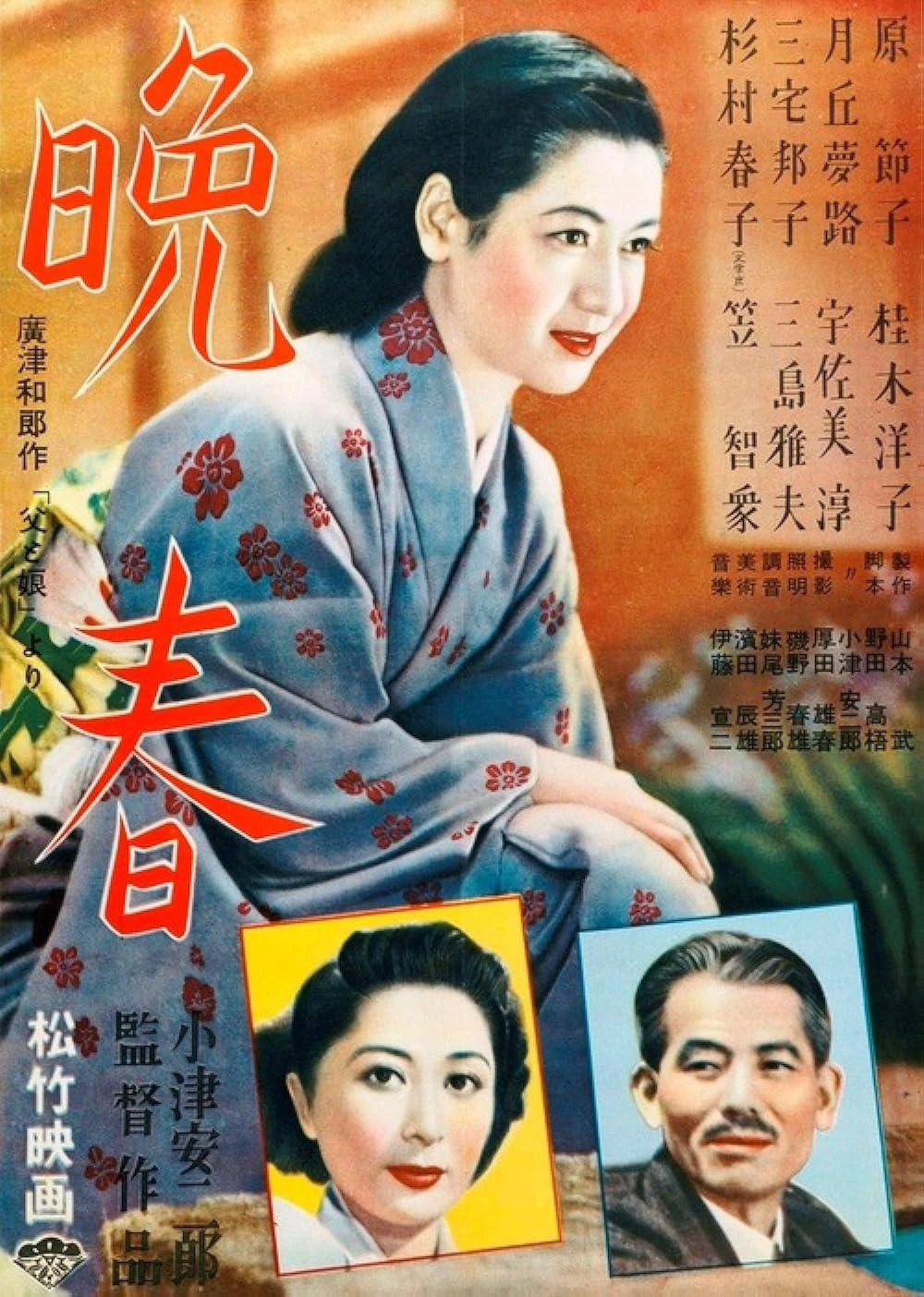
Late Spring
(Banshun)
Director: Yasujirō Ozu
Screenplay: Yasujirō Ozu, Kōgo Noda
Studio: Shochiku
Genre: drama
Cast: Setsuko Hara, Chishū Ryū, Yumeji Tsukioka, Haruko Sugimura, Hohi Aoki, Jun Usami, Kuniko Miyake, Masao Mishima, Yoshiko Tsubouchi, Yōko Katsuragi
#1 on the Kinema Junpo list.
Noriko lives with her widowed father and gives no thought to marriage. The situation changes when her aunt convinces the father that if he does not arrange Noriko’s marriage, she will remain alone for the rest of her life.
Comment: Another great classic, this time from Ozu. Characteristically for him, we are presented with a story about the attempts to find a partner for a woman. It is difficult to describe the film as anything other than beautiful in every respect. In the field of social drama it is hard to find a director who surpasses Ozu.
9/10
The Invisible Man Appears
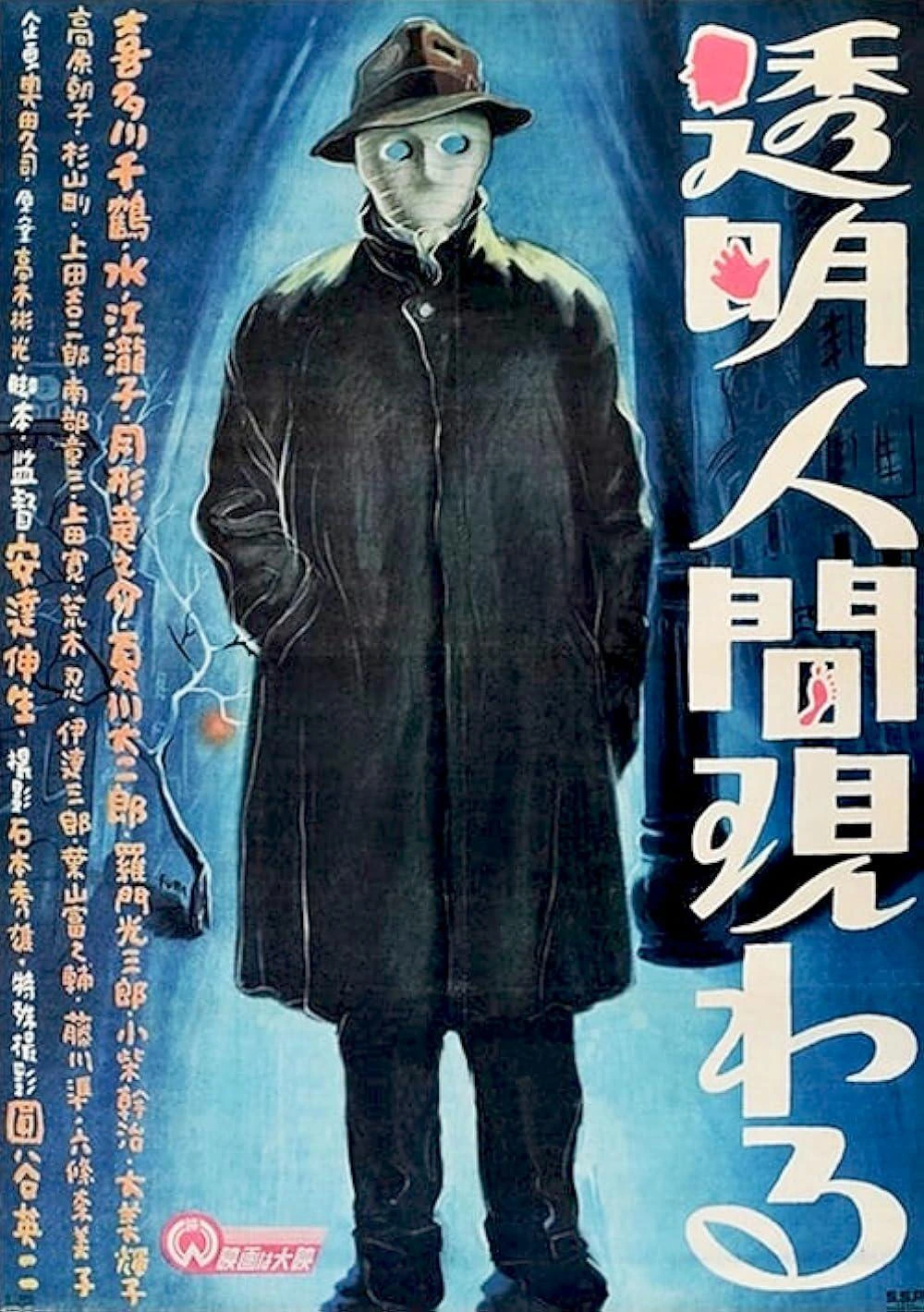
(Tōmei ningen arawaru)
Director: Shigehiro Fukushima, Shinsei Adachi
Screenplay: Akimitsu Takagi, Nobuo Adachi
Studio: Daiei
Genre: thriller, sci-fi
Cast: Ryūnosuke Tsukigata, Chizuru Kitagawa, Takiko Mizunoe, Daijirō Natsukawa, Mitsusaburō Ramon, Shôsaku Sugiyama, Kanji Koshiba, Kichijirô Ueda, Hiroshi Ueda, Shōzō Nanbu, Shinobu Araki, Saburo Date
Jewel thieves attempt to steal an invisibility formula created by Professor Nakazato and use it for the biggest heist of their careers.
Comment: This is Daiei’s further attempt to enter the thriller and science fiction market. The Invisible Man Appears, inspired by H. G. Wells’s novel and James Whale’s film, is the first fully-fledged science fiction film in the history of Japan. Somewhat incoherent and illogical, unable to fully justify the narrative direction it has chosen, it nonetheless constitutes an interesting example of the development of Japanese genre cinema.
6/10
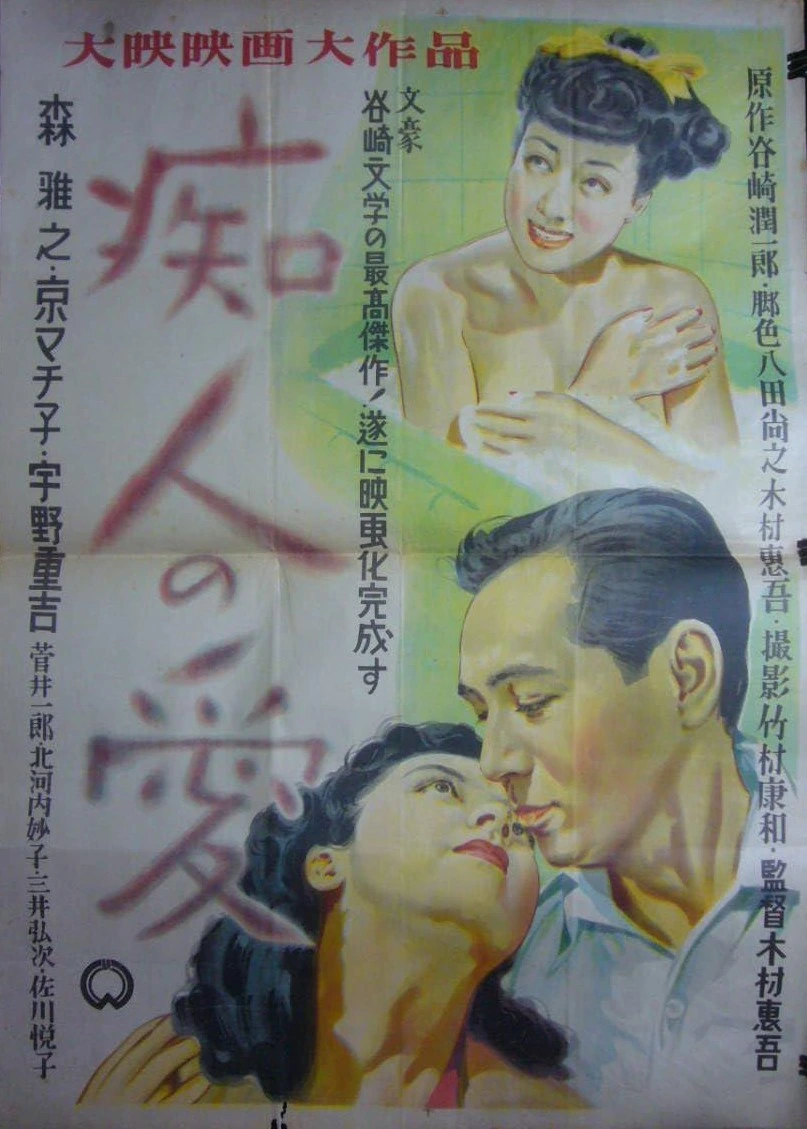
A Fool’s Love
(Chijin no ai)
Director and Screenplay: Keigo Kimura
Studio: Daiei
Genre: drama
Cast: Machiko Kyō, Jūkichi Uno, Masayuki Mori, Ichirō Sugai, Masao Shimizu, Kōji Mitsui, Tomoko Naraoka
The first adaptation of the notorious novel by Jun’ichirō Tanizaki, telling the story of a submissive man’s relationship with a partner who exploits him and whom he tries to mold into his ideal of womanhood.
Comment: The production is memorable above all for its cast. For Machiko Kyō, her role in the film was a career breakthrough. Her portrayal of a seductive, manipulative femme fatale brought her fame and allowed her star to shine in full. Thematically, however, despite an interesting starting point and an unusually active female protagonist, the production gradually descends into increasingly heavy-handed moralizing and ends by falling into the abyss of traditionalist orthodoxy. The filmmakers clearly attempt to draw commentary on masculinity in postwar Japan but are unable to capture its nuances. Both contemporary and modern critics are in agreement that A Fool’s Love is a failed adaptation of the novel, which is richer in content and psychological rumination. The filmmakers were most likely afraid of the response from Japanese society in 1949 to a more literal treatment of the book’s events; the American occupation of the country may also have contributed to their caution.
5/10
Stray Dog
(Nora inu)
Director: Akira Kurosawa
Screenplay: Akira Kurosawa, Ryūzō Kikushima
Studio: Shintoho, Toho, Film Art Association
Genre: drama, noir, crime
Cast: Toshirō Mifune, Takashi Shimura, Keiko Awaji, Eiko Miyoshi, Noriko Sengoku, Noriko Honma, Reikichi Kawamura, Chōko Iida, Eijirō Tōno, Yasushi Nagata, Kappei Matsumoto, Isao Kimura
#3 on the Kinema Junpo list.
A young detective named Murakami loses his pistol while on duty. With the help of a more experienced colleague, he combs the sweltering streets of Tokyo in search of the weapon.
Comment: The film tells the story of a policeman whose pistol has been stolen. The search for the weapon is, however, a pretext for showing a cross-section of contemporary Japanese society. Through the lens of film noir Kurosawa searches the poor, criminal districts of the city, seeking within them beauty and humanity.
9/10
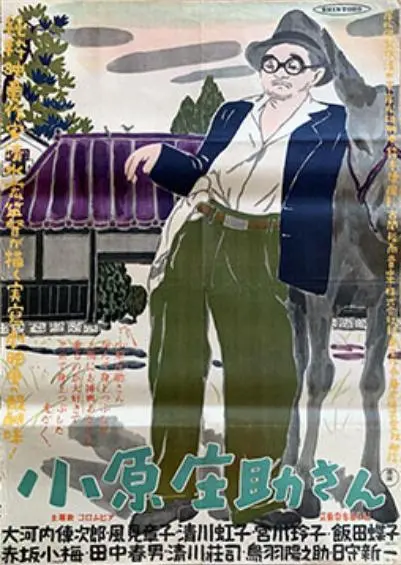
Mr. Shosuke Ohara
(Ohara Shōsuke san)
Director: Hiroshi Shimizu
Screenplay: Hiroshi Shimizu, Matsuo Kishi
Studio: Shintoho
Genre: drama, comedy
Cast: Denjirō Ōkōchi, Akiko Kazami, Reiko Miyagawa, Nijiko Kiyokawa, Chōko Iida, Haruo Tanaka, Sōji Kiyokawa, Yōnosuke Toba, Shinichi Himori, Hiroshi Ayukawa
#10 on the Kinema Junpo list.
Saheita is the heir to a samurai lineage but currently finds himself on the verge of bankruptcy. Despite this, he is unable to refuse when someone asks him for financial help.
Comment: The film is a comedy-drama about a man from a wealthy samurai family whom everyone asks for help, usually financial. The man stands on the brink of bankruptcy but cannot refuse anyone, which brings about the ruin of both his fortune and his family.
It is nevertheless a fairly optimistic film, one that presents the loss of samurai heritage not as something bad but rather as a redistribution of wealth to ordinary people who need the means to live here and now, rather than past glory. Naturally there is no shortage of sarcasm and moral ambiguity in the world depicted.
7/10
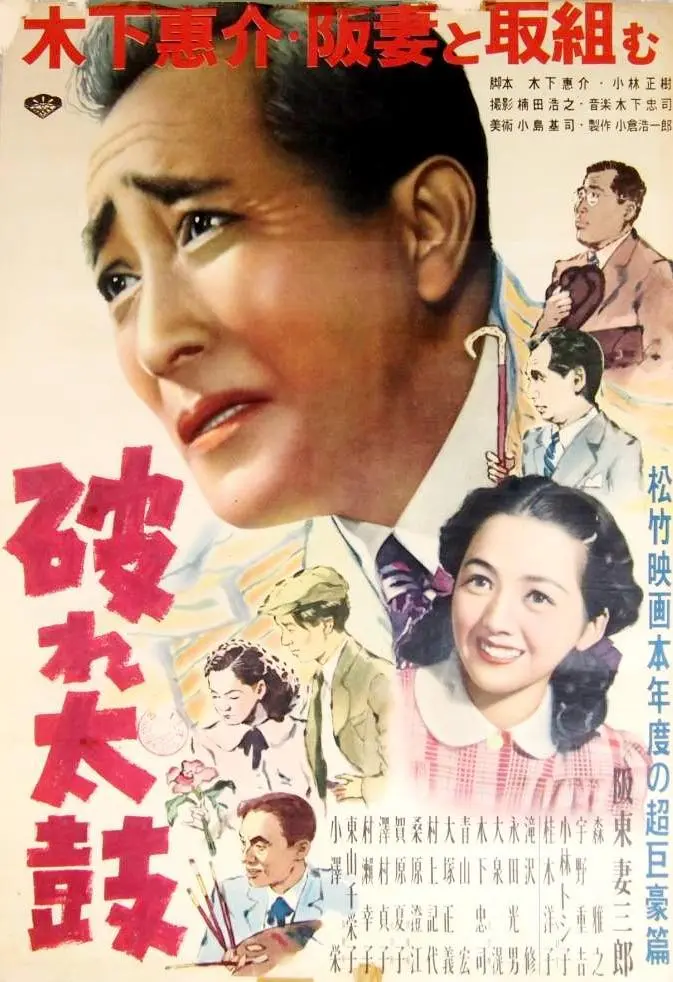
Broken Drum
(Yabure-daiko)
Director: Keisuke Kinoshita
Screenplay: Masaki Kobayashi, Keisuke Kinoshita
Studio: Shochiku
Genre: drama, comedy
Cast: Tsumasaburō Bandō, Sachiko Murase, Masayuki Mori, Chūji Kinoshita, Akira Ōizumi, Toshiko Kobayashi, Yōko Katsuragi, Masayoshi Ōtsuka, Sadako Sawamura, Jūkichi Uno, Osamu Takizawa, Chieko Higashiyama, Eitarō Ozawa
#4 on the Kinema Junpo list.
A tyrannical husband and father tries to force his children into marriages with wealthy partners in order to save his failing business.
Comment: Presented in a comedy-drama key, this is a story about the failure of patriarchal, traditional authority. Its symbol is a family patriarch who tries to compel his children into obedience and unhappy marriages with wealthy individuals who will support his business. In between, he abuses his wife — though this last activity is referenced only verbally.
Thanks to the chosen form, the film never entirely demonizes the father and is able to offer him redemption and forgiveness in the finale — somewhat too generously, perhaps, but acceptable, particularly in an allegorical context.
6/10
Summary of 1950
Films made in 1948–49 frequently asked — in broad terms — what had happened to Japan. To this end they offered numerous views of the society, streets, and phenomena of the time. In 1950, however, a different question increasingly emerges: what Japan should become. Filmmakers sense that the country stands at a historical crossroads. A growing conviction also takes hold that greater freedom exists — a freedom that presents itself as a positive feature of the postwar political and social paradigm, but also one that brings new dangers and is not always compatible with the country’s traditional culture. Moreover, the Japanese did not of course enjoy full freedom but rather a freedom rationed by the occupation institutions and new mechanisms of control; compared with the wartime period, however, this clearly opened considerably wider ground for debate among filmmakers.
The productions appearing in the Japanese Cinema Panorama published in Velarium are fairly coherent thematically and frequently concern the threats and hopes associated with postwar reconstruction. Escape at Dawn criticizes militarism and institutionalized violence in the army, also touching on the theme of destructive nationalism. Nationalism is likewise the force destroying love and art in Till We Meet Again. Listen to the Voices of the Sea belongs to the anti-war trend but does so problematically, since in mourning the lost generation of Japanese student-soldiers it largely shifts attention away from Japanese aggression and onto Japanese suffering. Town of Violence warns against corruption and the links between authority and organized crime, calling for greater democratization and placing hope for a better country in young Japanese people and journalists. Scandal raises the question of freedom of speech, warning that lack of oversight of the media leads to the publication of lies and the exploitation of free expression. Spring Snow points to the necessity of work, discipline, and honesty in the process of reconstruction, while Devil’s Gold shows how postwar poverty and the destabilization of old values turn money into a test of human dignity. Meanwhile, Conduct Report on Professor Ishinaka presents modernization through free love, but also generational contradictions rendered with a comedic touch.
In other words, Japan is exploring various kinds of freedom, morality, and so forth, wondering which of them it can trust. Given the many possible paths of development open to the nation, it must unfortunately also grapple with a growing number of threats arising before modern society. The enemy is no longer primarily militarism and nationalism; corruption, tabloids, patriarchalism, greed, juvenile delinquency, and even modernization itself have joined their ranks. Town of Violence therefore asks who truly controls public order, while Scandal points to the media’s abuse of the sphere of public speech. The Angry Street draws a portrait of young people corrupted by big-city life and turning toward crime. Devil’s Gold illuminates the greed prevalent in modern cities and social inequality. And White Beast grapples with the problem of prostitution and the sex industry. Cinema thus points ever more insistently to the necessity of strong social responsibility. Without it, almost all the foundations of life — both private and public — appear to crumble.
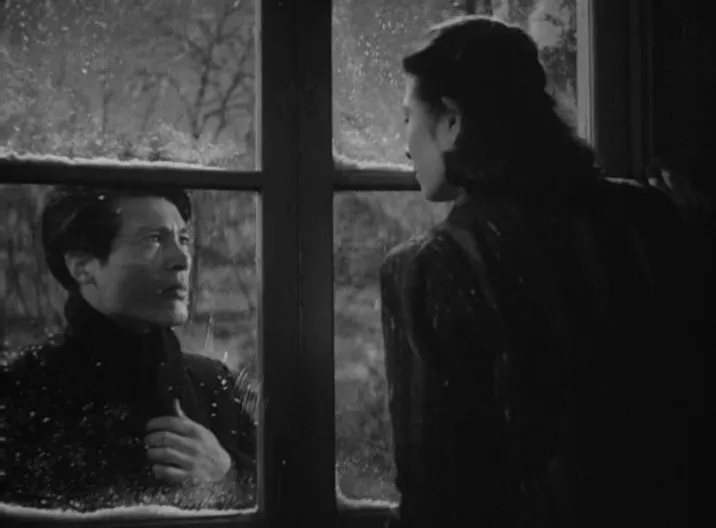
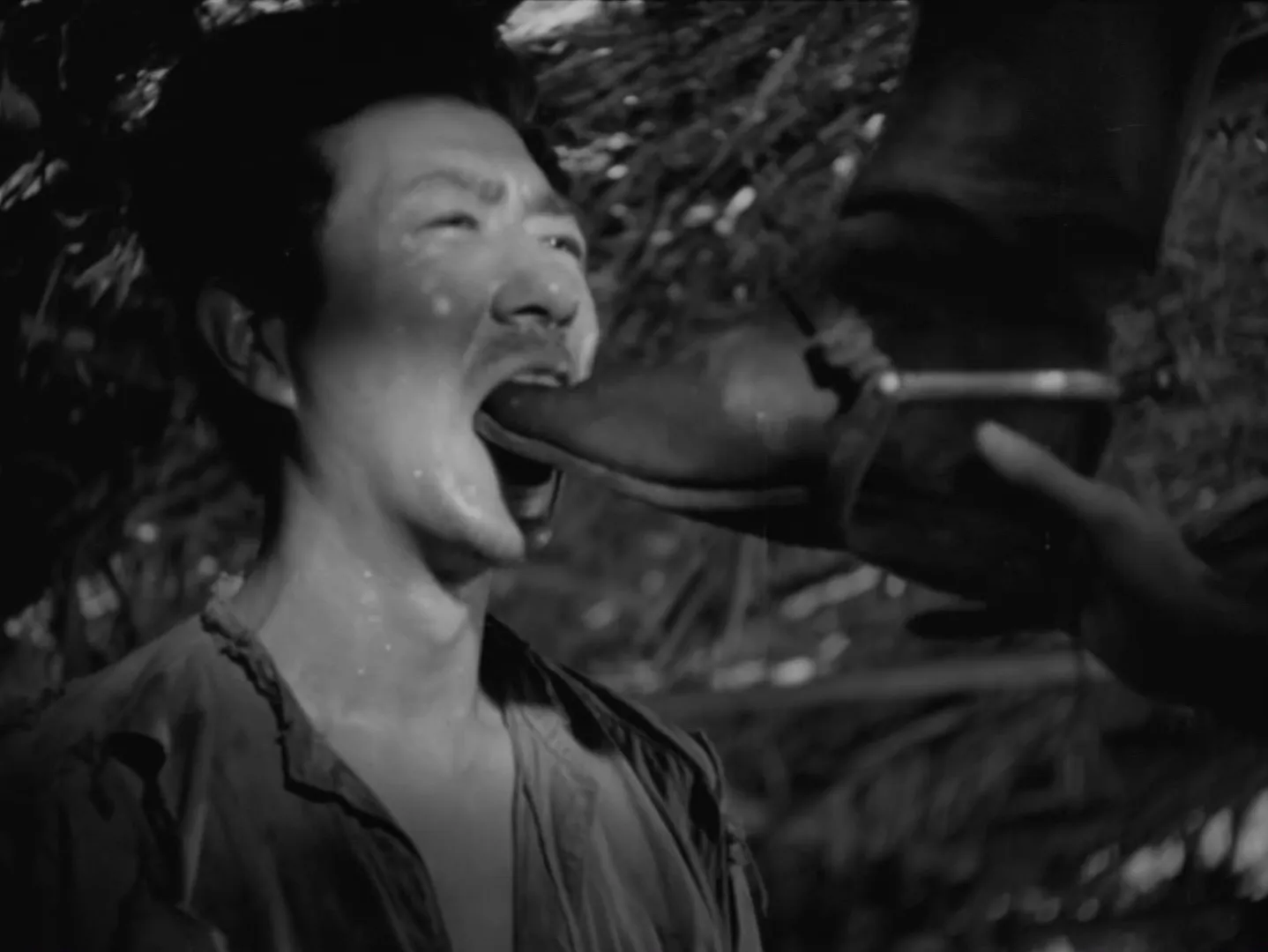
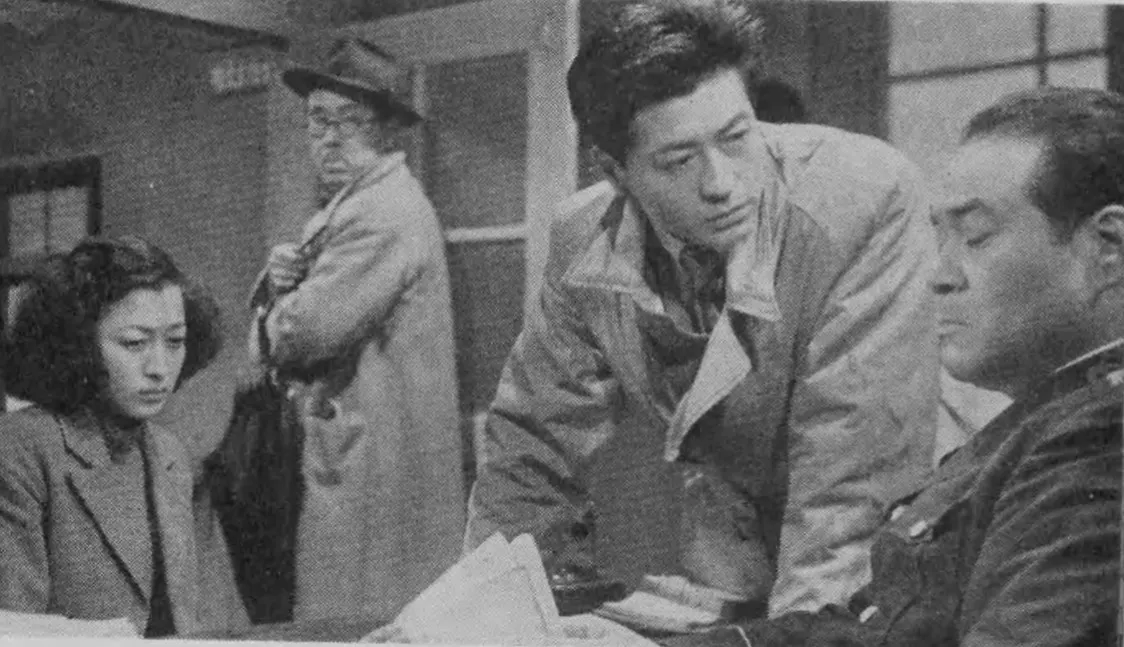
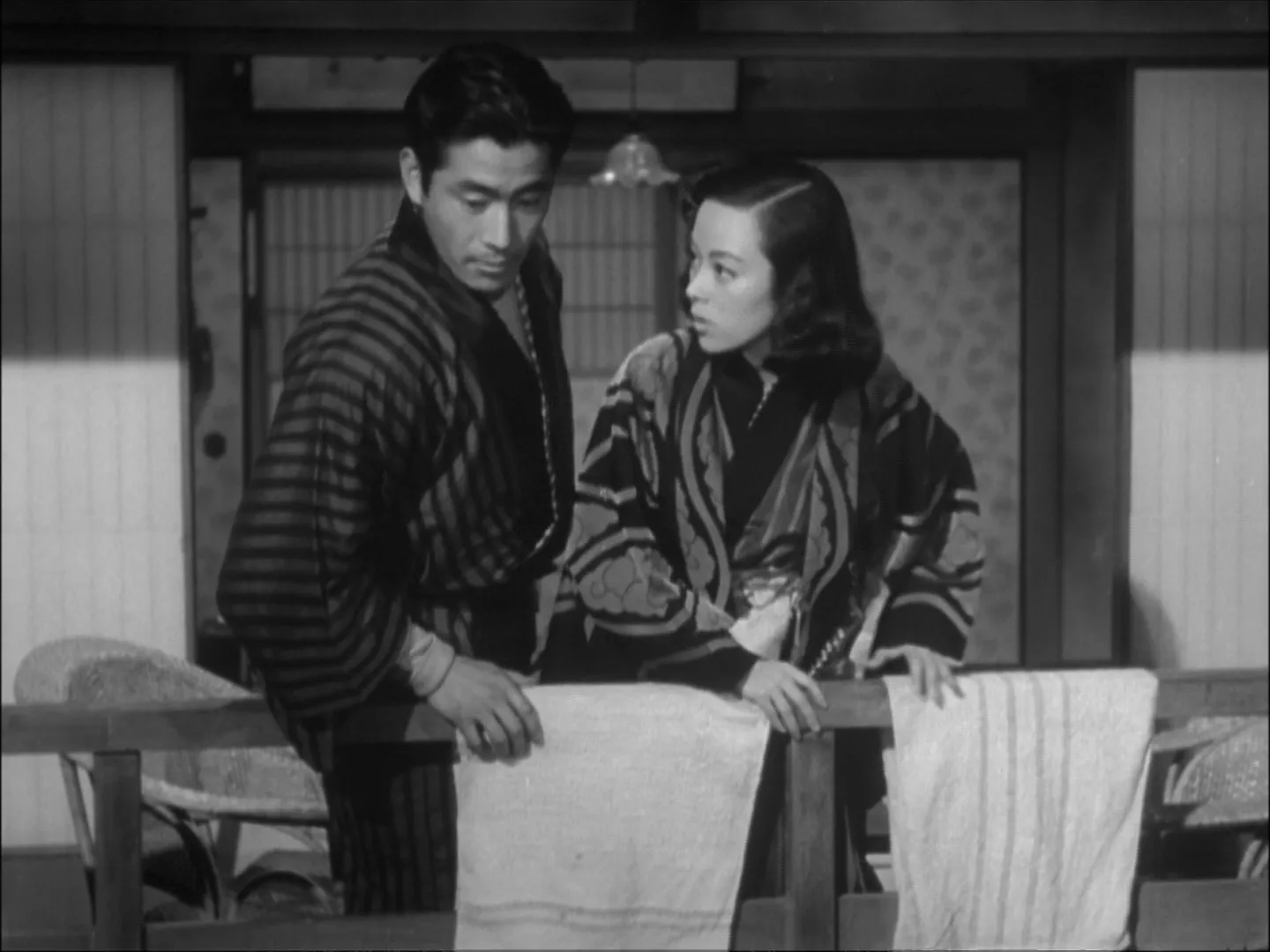
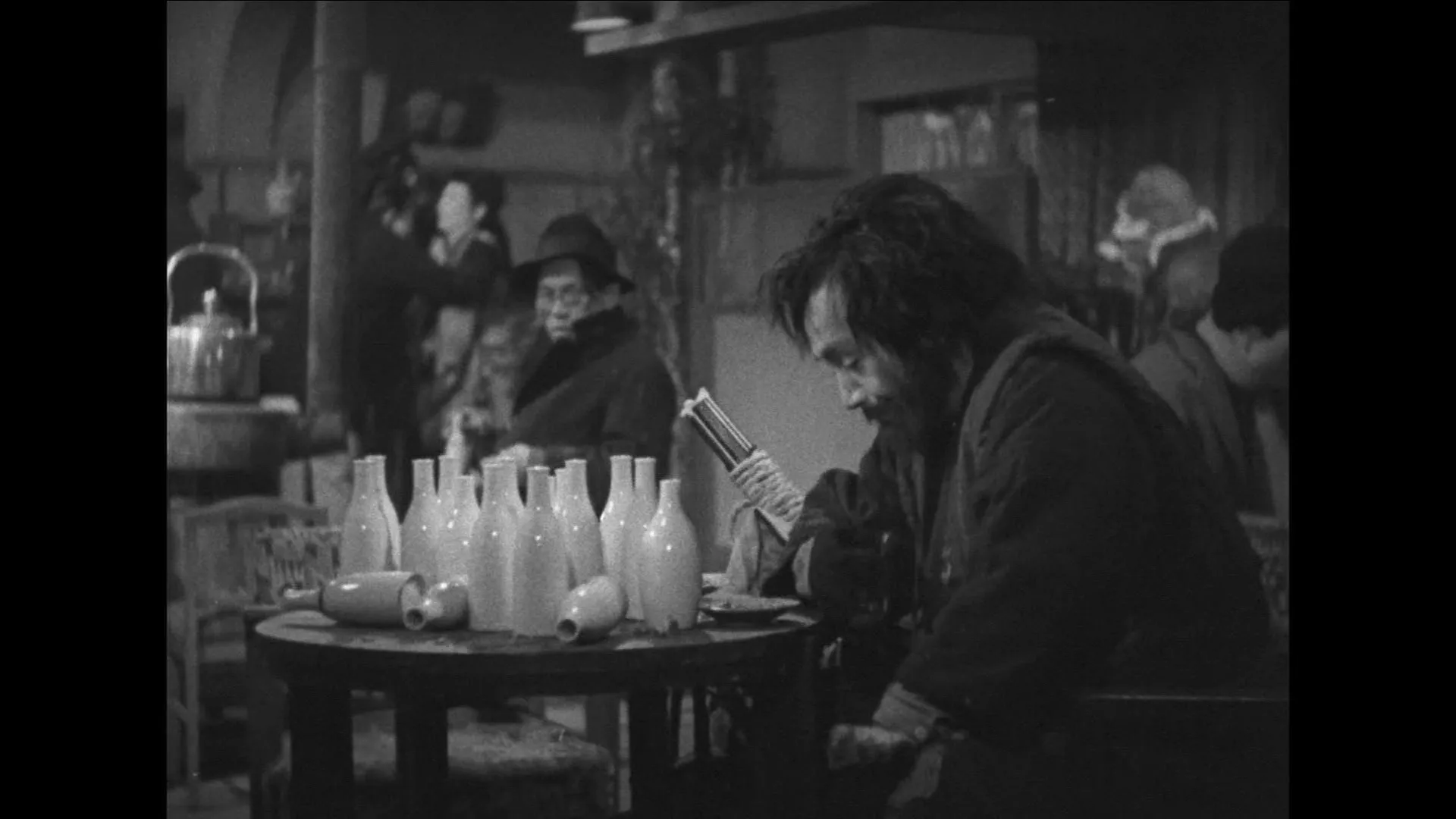
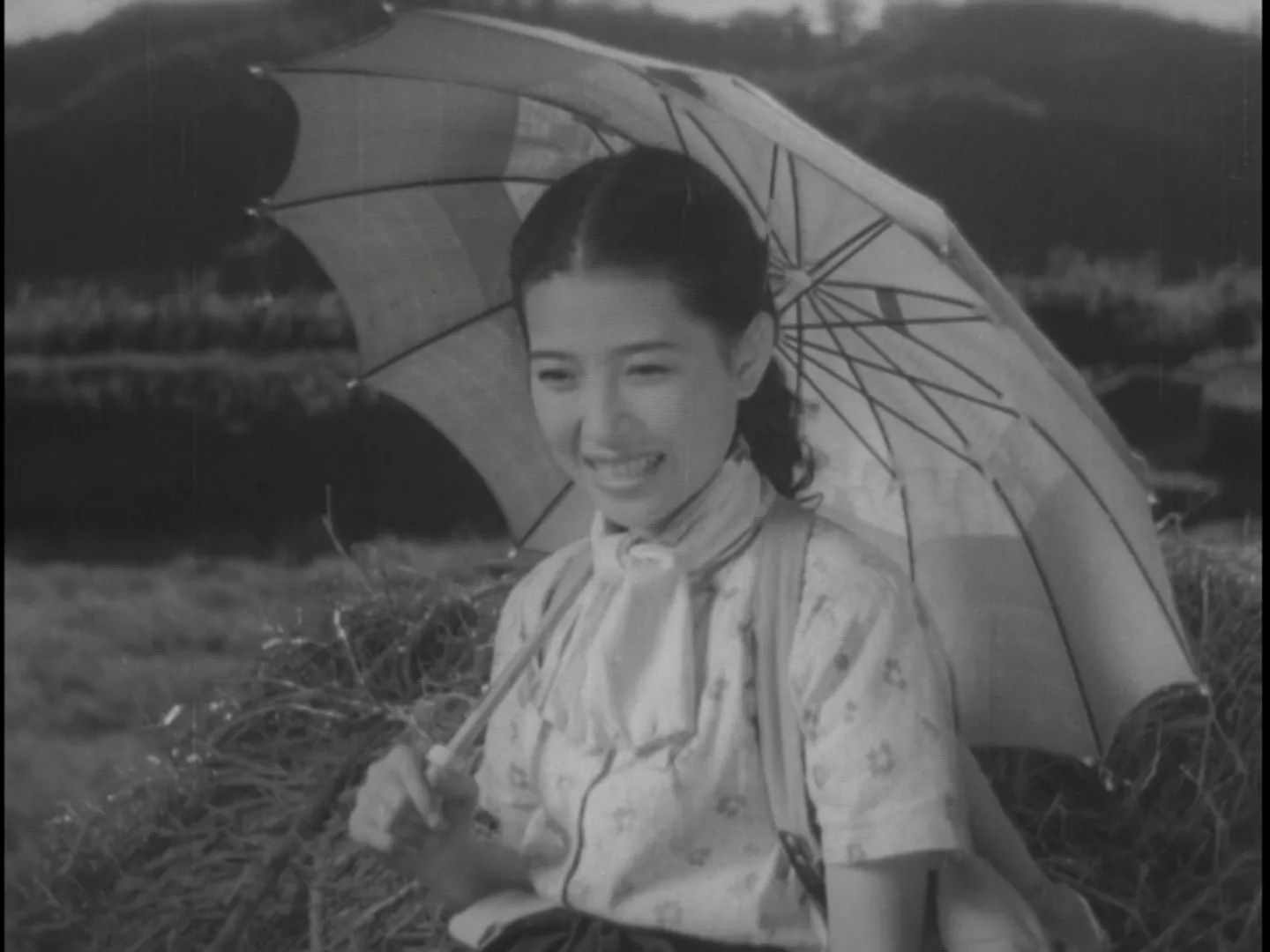
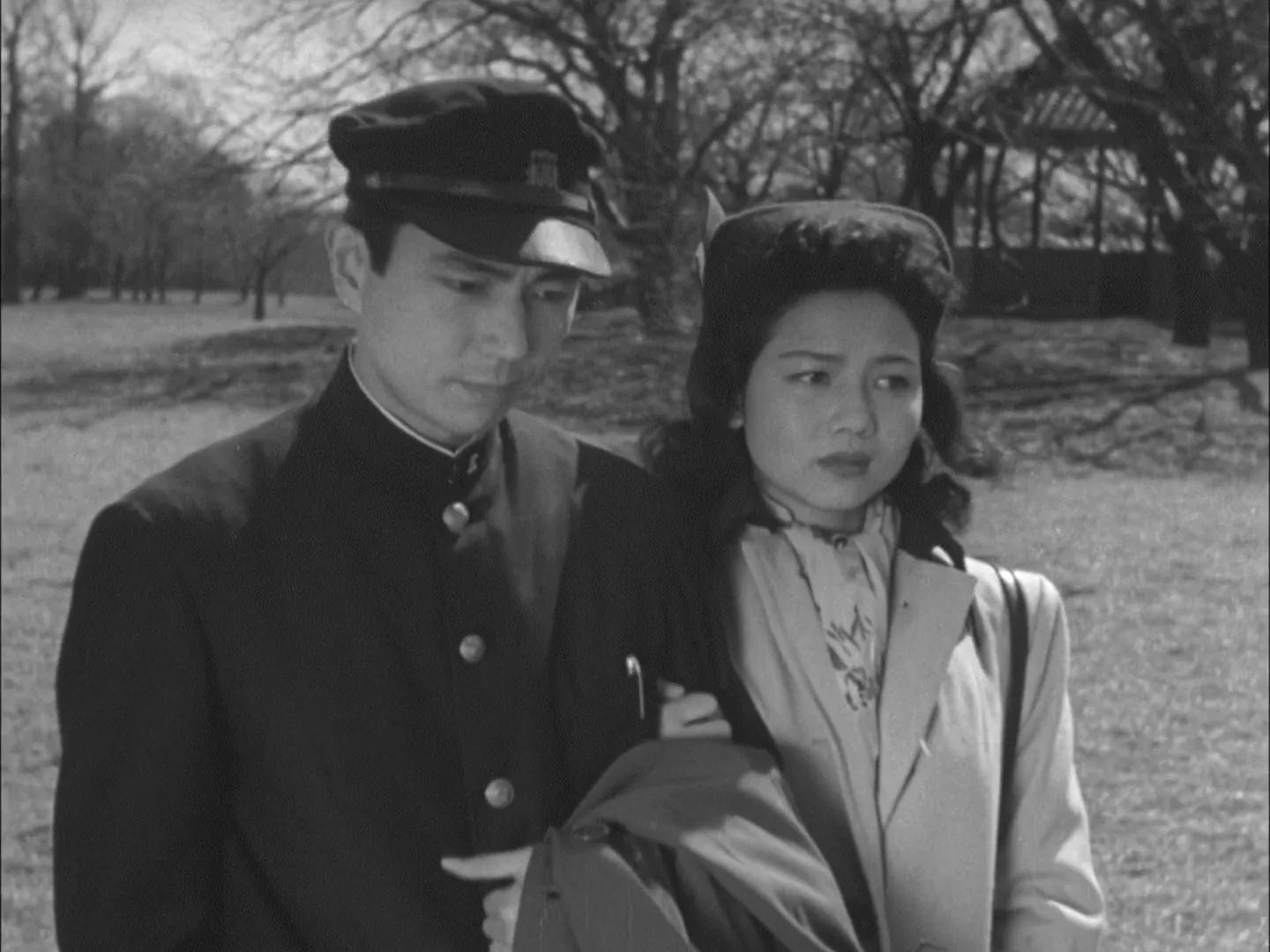
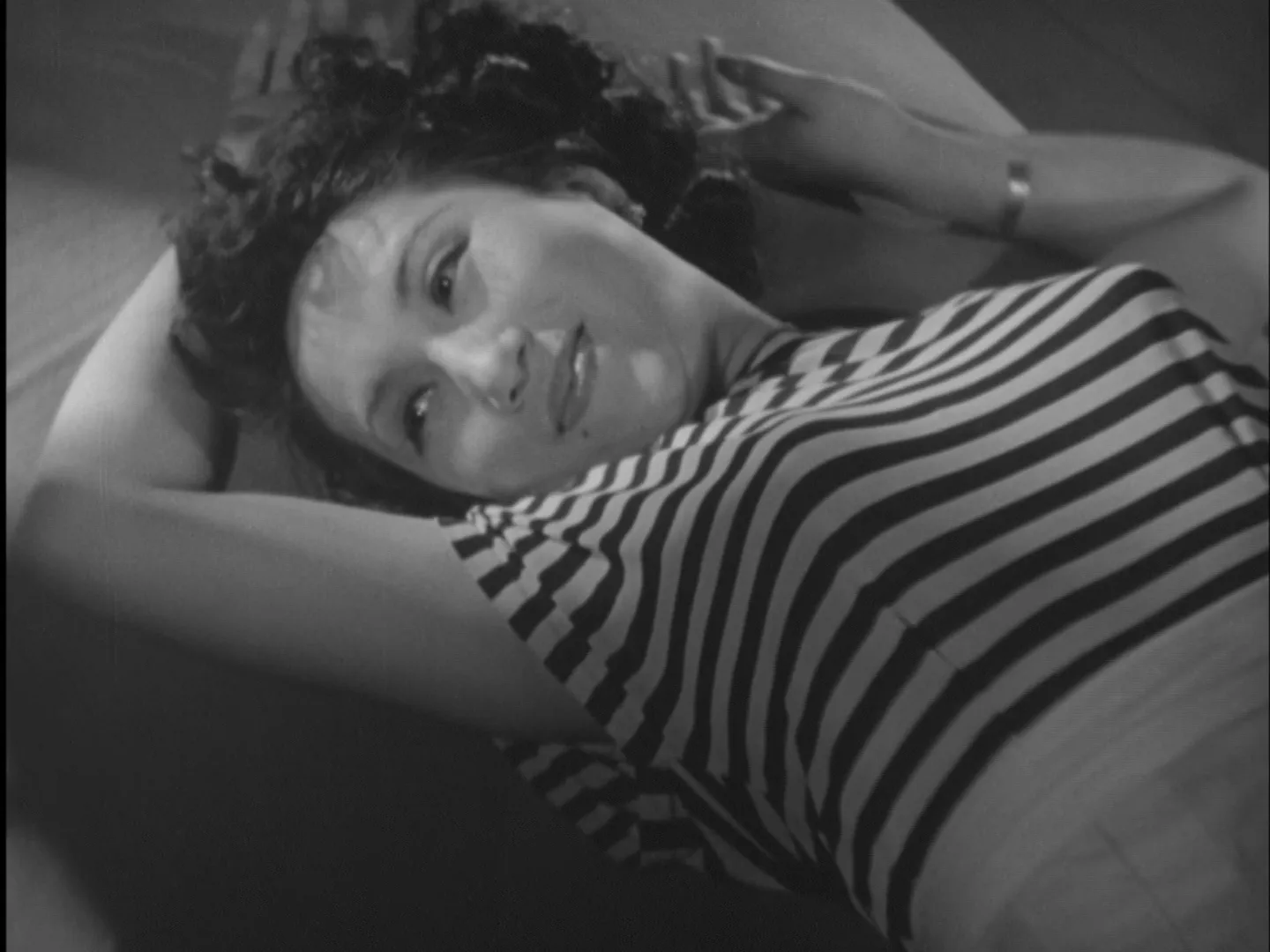
There is also a clearly defined group — a permanent fixture in Japanese cinema — reflecting on the position of women in a modern, modernizing world and using them as a symbol of the nation and a test of its morality. Snow Flake presents modernization as a danger of luxury and moral destabilization. The aforementioned White Beast expresses a lack of understanding of what drives the phenomenon of uncontrolled prostitution in the country and who bears full responsibility for its existence. A Mother’s Love points to the problematic question of motherhood in a world of postwar poverty and unjust patriarchy. Wedding Ring delves into the question of forbidden love neutralized by traditional morality. The Munekata Sisters draws a contrast between tradition and modernity through the conflicting worldviews of the title sisters. Portrait of Madame Yuki goes a step further, arguing that both modern and traditional social roles are in reality traps for women within the patriarchal social order. Battle of Roses, meanwhile, punishes attempts to step outside traditional roles and rewards feminine submission. Ozu thus seeks possibilities for reconciling change with the persistence of old values; Mizoguchi more often indicates that the value system itself is the source of suffering; Naruse and kindred filmmakers observe women’s everyday compromises; and Kinoshita not infrequently neutralizes female desires through morally safe endings.
Cinema was thus clearly trying — with varying degrees of success — to analyze women’s desires, labor, sexuality, duties, and autonomy after the war. Sometimes with sympathy, sometimes with fear, and sometimes retreating toward conservatism, which for some presented itself as an emergency exit in chaotic times. Always, however, in the context of the changes taking place in the country.
Against this backdrop, Rashomon stands apart — a film that does not attempt to reflect on all these threats and responsibilities. Instead, Rashomon calls into question whether people are at all capable of recognizing the truth in any matter. The film does not so much deepen the political and social debates dominant in the cinema of the time as undermine the possibility of conducting them from a position of certainty. The problem here is not corrupt institutions or oppressive traditions, but human nature itself, incapable of freeing itself from the narratives that serve it.
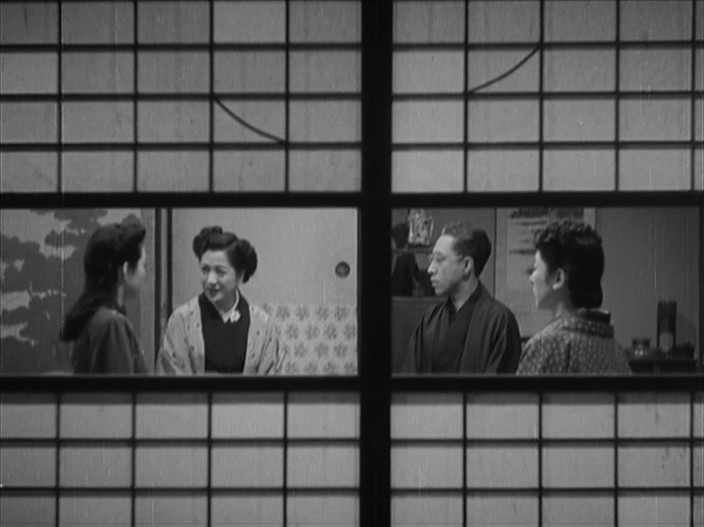
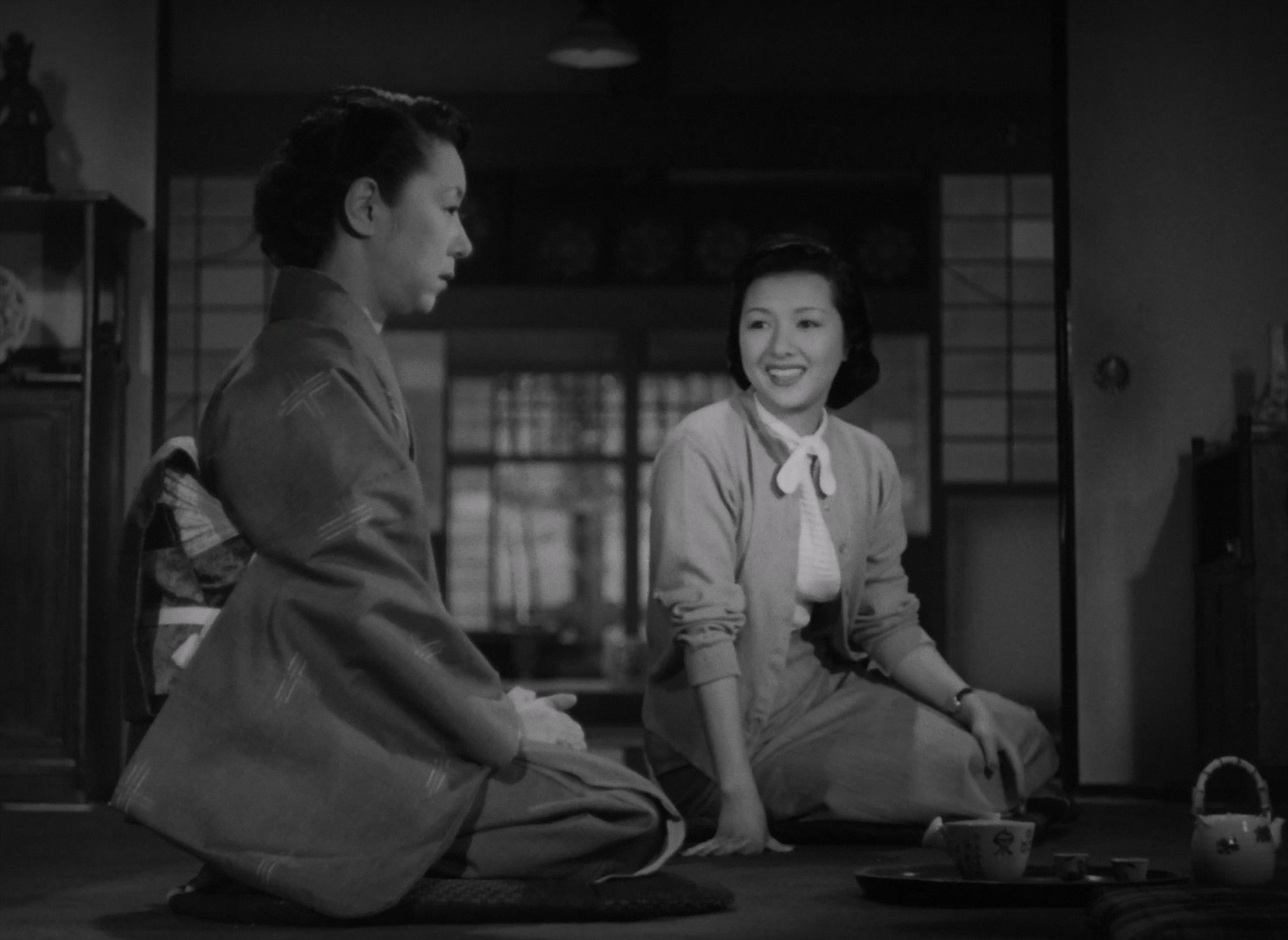
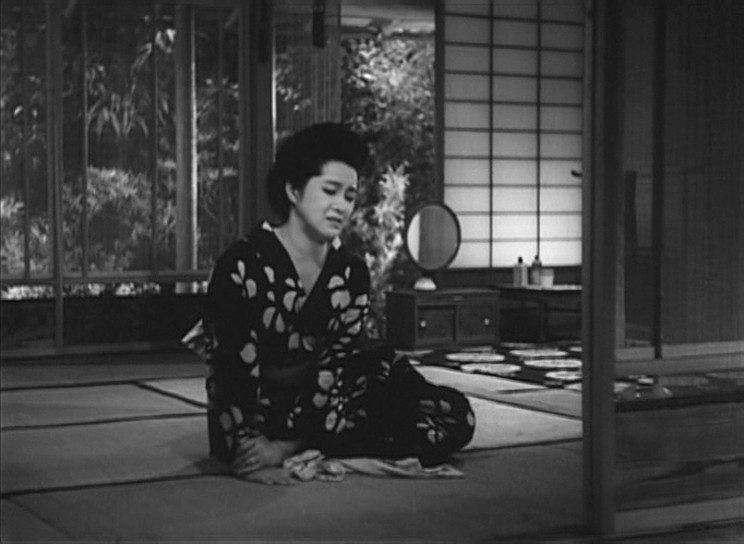
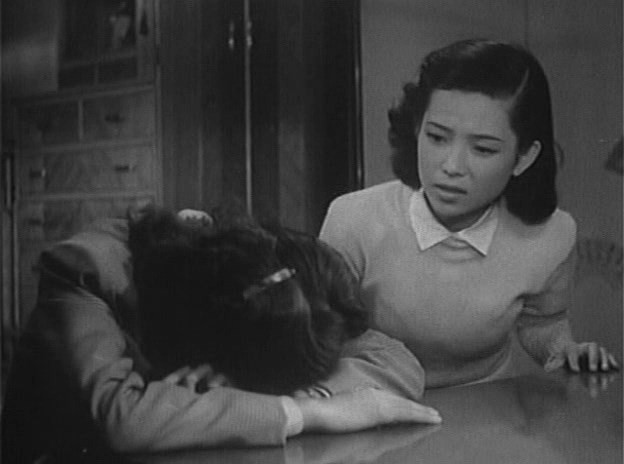
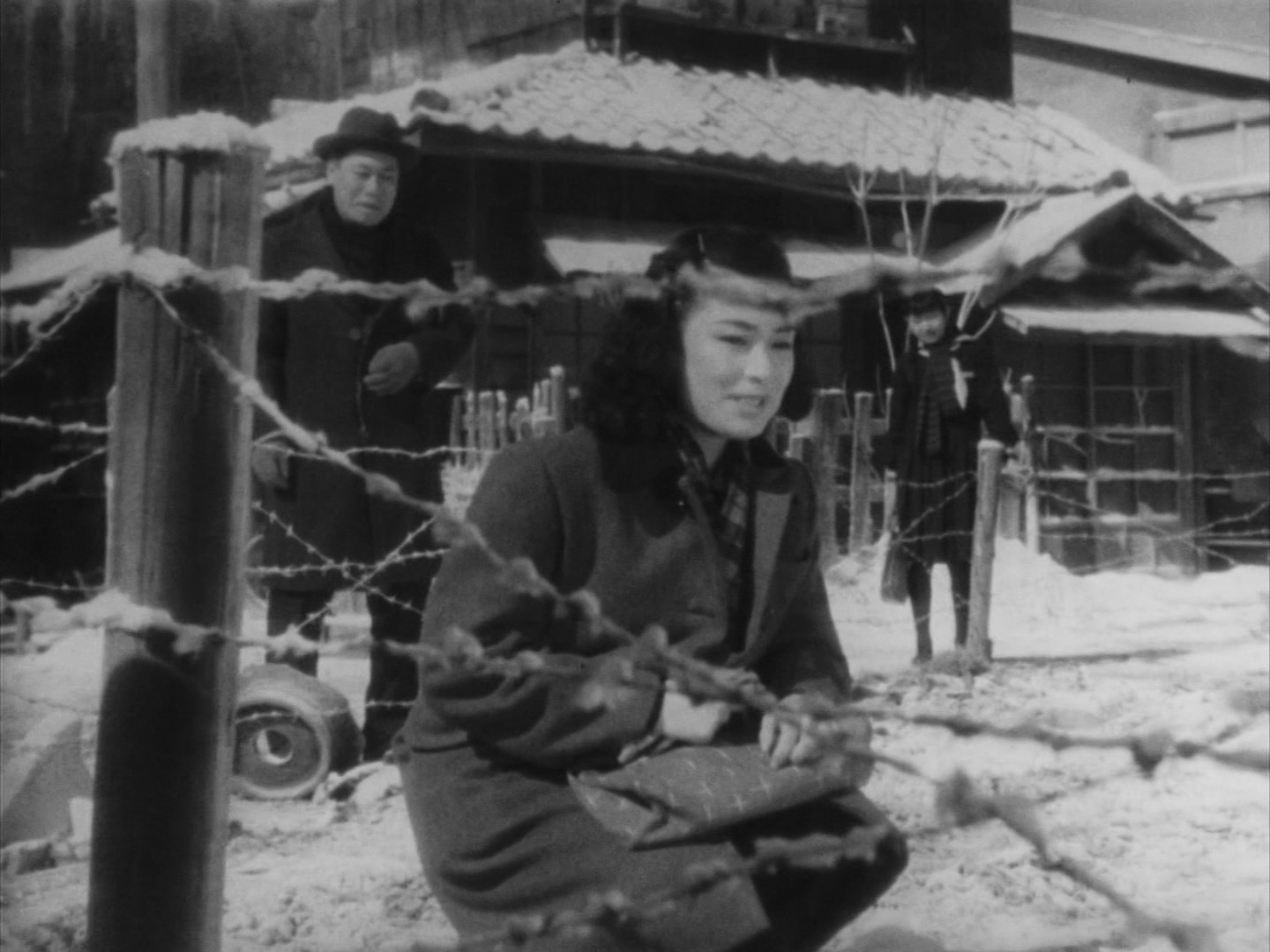
We can therefore, in broad terms, identify several major categories of films dealing with:
- The legacy of the war: Escape at Dawn, Till We Meet Again, Listen to the Voices of the Sea
- Democracy and public life: Town of Violence, Scandal
- The reconstruction of the country and the prevailing poverty: Spring Snow, A Mother’s Love, Devil’s Gold
- Women, modernity, and social expectations: Snow Flake, White Beast, The Wedding Ring, The Munekata Sisters, Portrait of Madame Yuki, Battle of Roses
Above all of them stands Rashomon, doubting whether people are capable of honestly interpreting any question whatsoever. The film seems to take almost no part in any of the above debates; instead it calls into question the credibility of everyone around it.
A somewhat separate category is formed by the reviving genre cinema of 1950, particularly jidaigeki and chanbara, which had previously been blocked by the American forces occupying Japan. Rashomon is a jidaigeki created as philosophical and modern cinema. Fencing Master — not a chanbara per se — points to the symbolic tension between the old and new schools of staging sword-fight scenes and their choreography. Sasaki Kojiro, meanwhile, represents the return, after a prolonged absence, of epic samurai cinema.
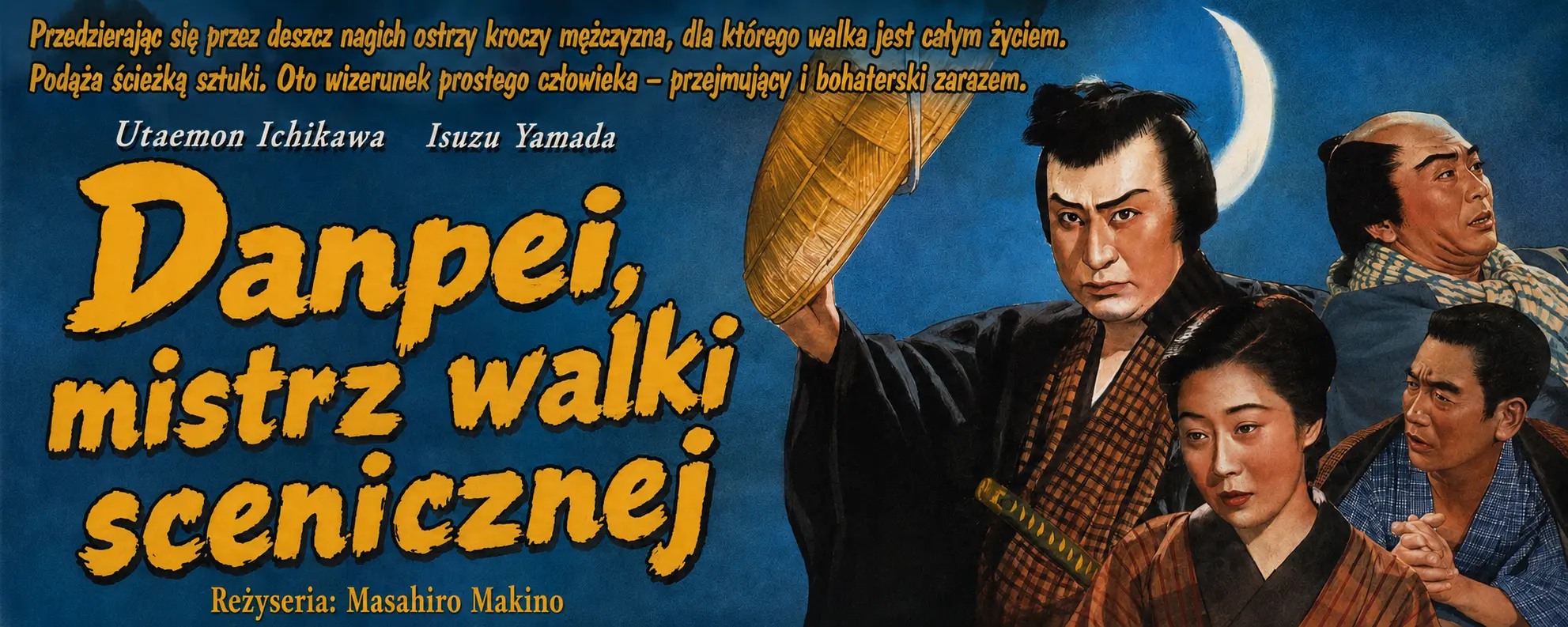
Among these, however, more commercial chanbara cinema — created with simpler entertainment in mind — was also not absent. Unfortunately the genre’s productions premiering in 1950 are currently unavailable outside Japan, but to illustrate the changes taking place in cinema I will use the example of films from the Bored Hatamoto series. That year saw a two-part production: Bored Hatamoto Casebook: Part One — Seven Brides (Hatamoto taikutsu otoko torimono hikae: zenpen – shichinin no hanayome) and Bored Hatamoto Casebook: Part Two — Poison Murder Demon Hall (Hatamoto taikutsu otoko torimono hikae: kōhen – dokusatsu maden). The studio responsible for them was Tōyoko Eiga and both parts were directed by Sadatsugu Matsuda. They constitute in some respects a similar case to the G-Men of Japan series — a representative of another popular genre, the action crime film, set in contemporary times. Both the mass-produced chanbara films and the action pictures of the 1950s became the specialty of Toei, the studio formed from the merger of Tōyoko Eiga and Ōizumi Eiga. What is more, the actors of both aforementioned series became popular stars of the newly formed studio, and Sadatsugu Matsuda one of its most important directors. In both Bored Hatamoto films the lead was played by Utaemon Ichikawa, already possessing star status in genre cinema at the time. The films also featured other actors who would soon become widely recognizable, such as Ryūtarō Ōtomo and Ryūnosuke Tsukigata. According to the National Film Archive of Japan, these were the first postwar productions in a series whose previous installment had been made 12 years earlier, in 1938, also with Ichikawa in the title role. The same archive directly links both productions with the postwar revival of the series’ popularity and of chanbara as such.
These films heralded the arrival of long-running franchises, often made on lower budgets, with quick shooting schedules, similar plots, and recurring actors. The bored hatamoto himself became the protagonist of at least 31 films. What we have here, then, is the resurrection of a prewar series and a prewar star — in other words, the continuation of prewar genre cinema traditions, translating into the mass-produced entertainment cinema of the 1950s. These productions combined elements of criminal intrigue, stories of brave warriors, and a large number of sword-fighting and comedic scenes. Popular actors were cast in the lead roles, offering audiences familiar faces both in the foreground and in the background. Not infrequently a single star appeared in several series, and crossovers occasionally occurred.
The return of chanbara to cinemas in 1950, therefore, following the lifting of the restrictions imposed by the occupation government, should not be viewed exclusively through the prism of the ambitious Sasaki Kojiro or the philosophical Rashomon, but also through the prism of formulaic popular cinema renewing prewar ideas. These films exerted an enormous influence on the development of Japanese cinema, popularizing old heroes among a new generation, launching the careers of numerous actors, generating a steady flow of genre cinema output, and later contributing to the increased production of modern crime pictures, action cinema, the development of yakuza eiga, and much else besides.
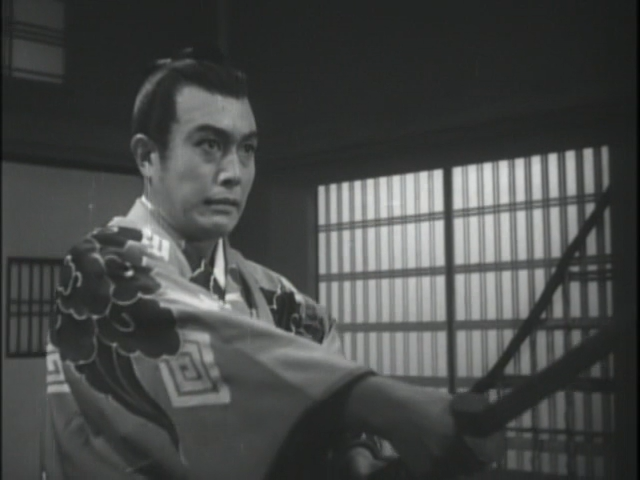
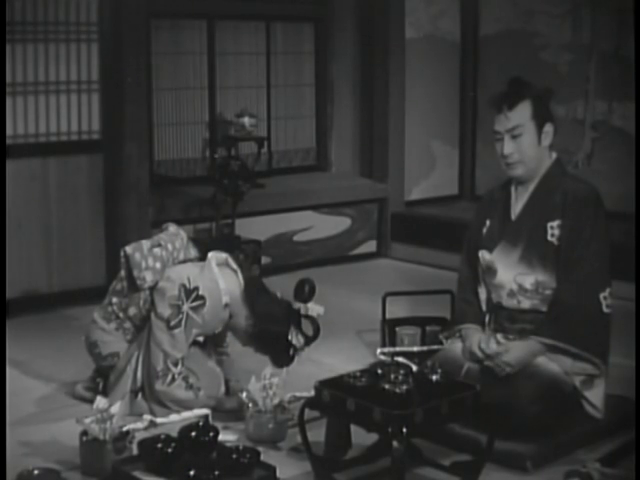
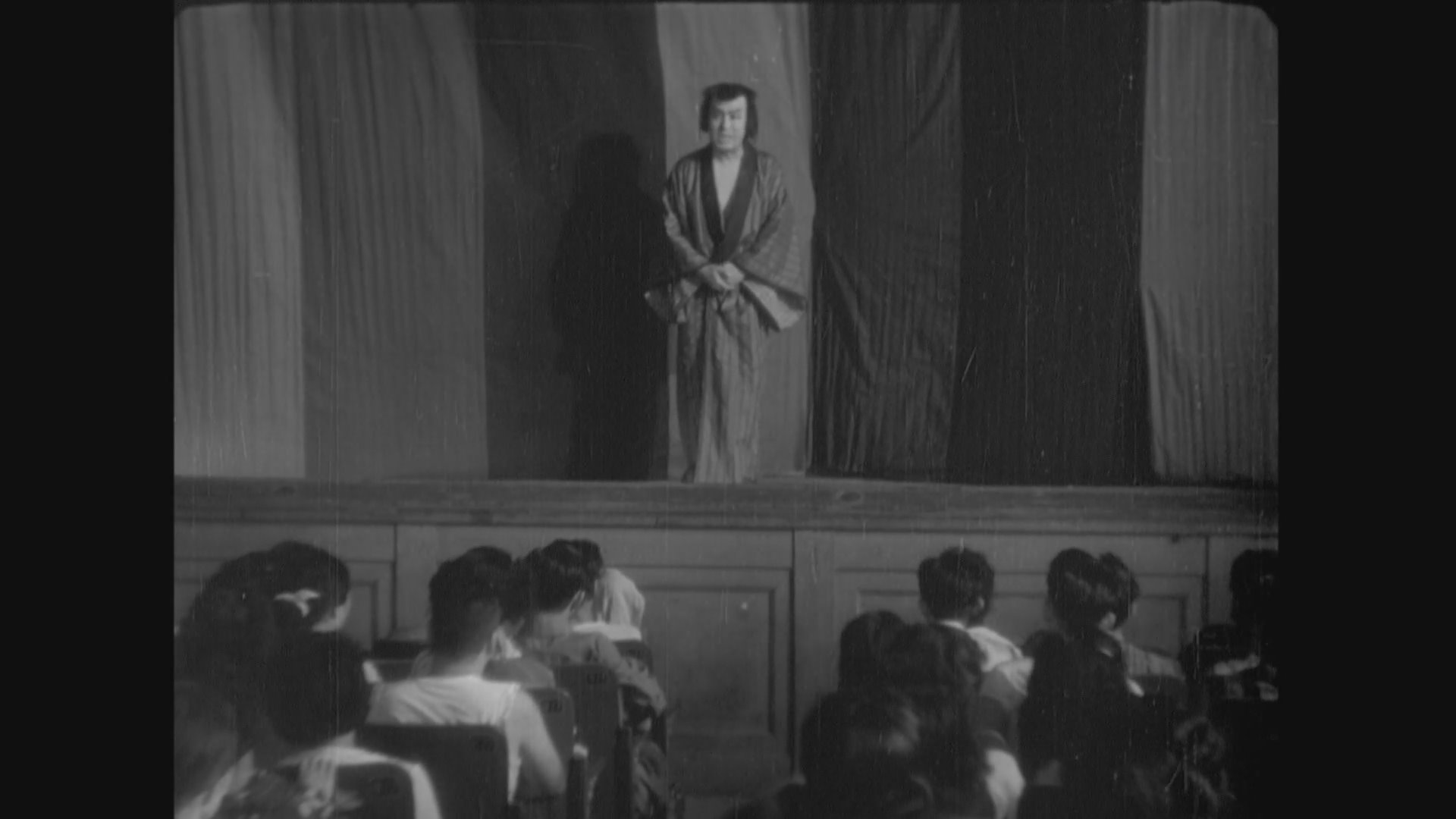
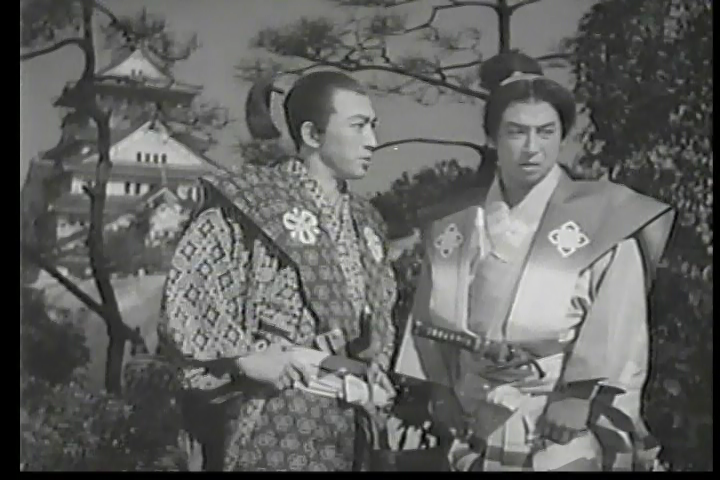
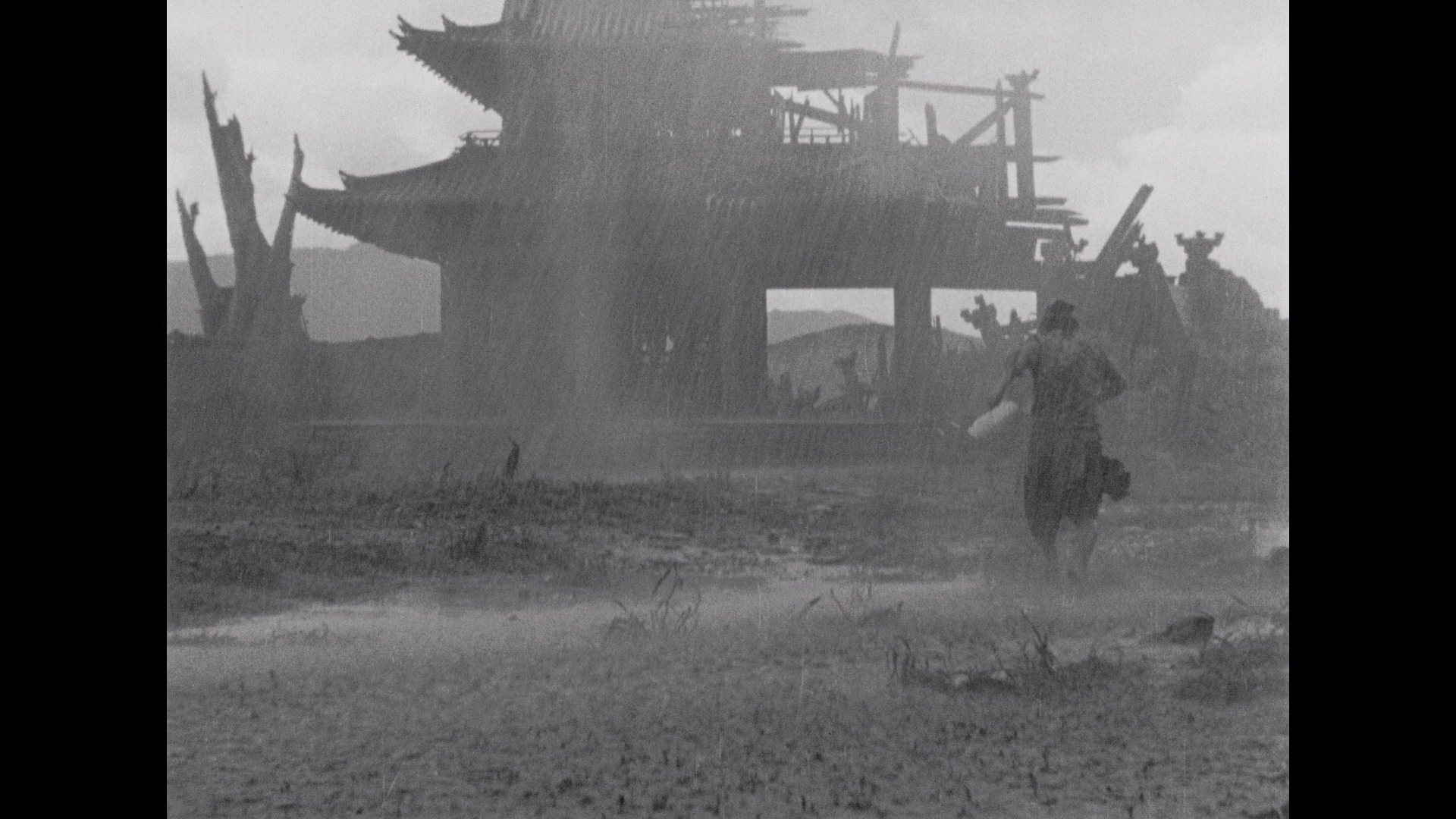
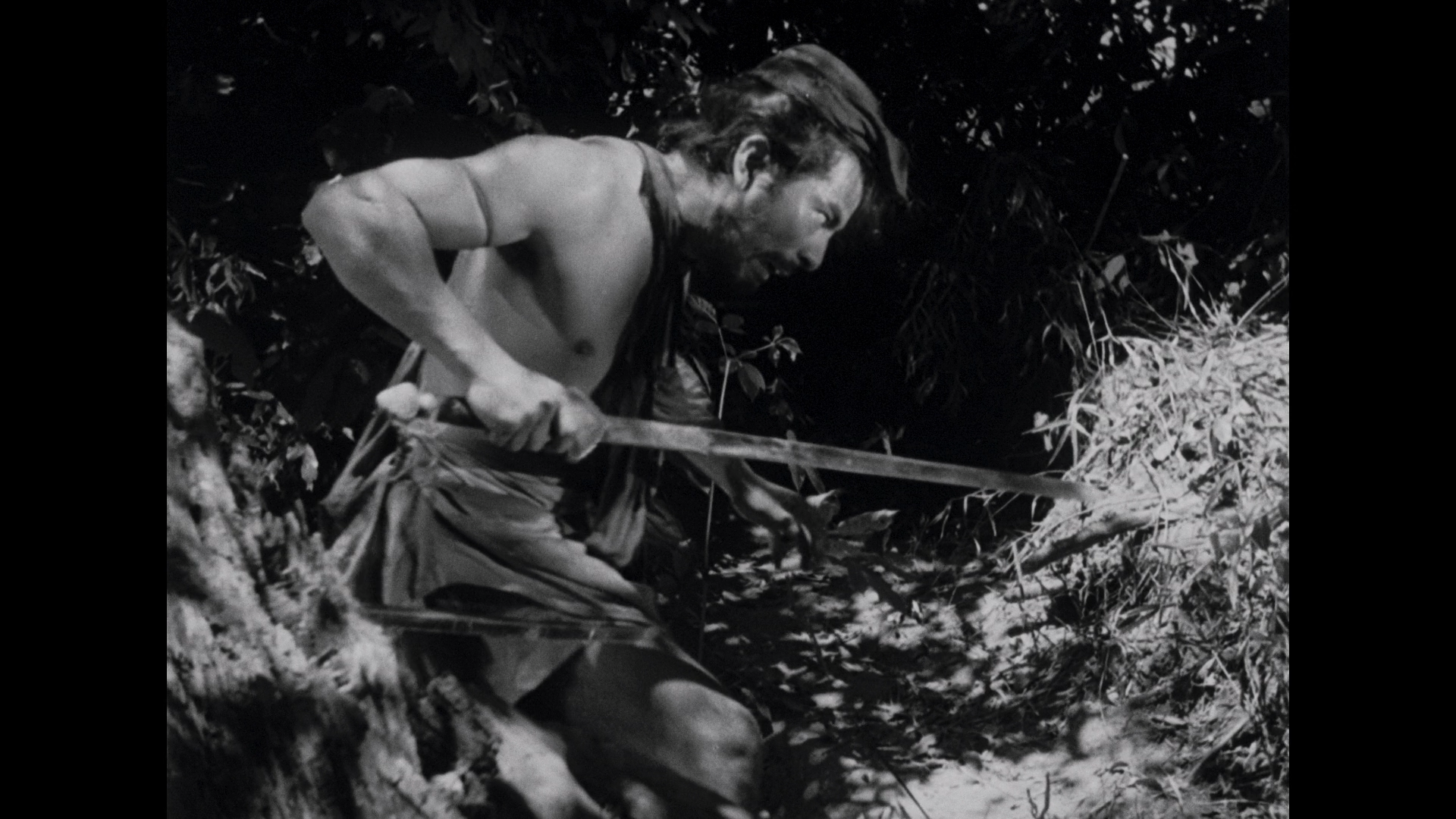
At the close of the summary I publish my personal top 10 films of 1950. This is a purely subjective ranking and should not be taken too seriously.
#10: A Mother’s Love, Hiroshi Shimizu
#9: Scandal, Akira Kurosawa
#8: The Angry Street, Mikio Naruse
#7: Fencing Master, Masahiro Makino
#6: The Munekata Sisters, Yasujirō Ozu
#5: Kojiro Sasaki, Hiroshi Inagaki
#4: Portrait of Madame Yuki, Kenji Mizoguchi
#3: Street of Violence, Satsuo Yamamoto
#2: Till We Meet Again, Tadashi Imai
#1: Rashomon, Akira Kurosawa

Author of “Panorama of Hong Kong and Taiwan Cinema”, a lover of Asian cinema, action films, and space voyages aboard the starship Enterprise. He once studied Polish philology, and later became a citizen of the NSK State in Time. He has published in Kinomisja, Ekrany, Kultura Liberalna, Torii, Dwutygodnik Kulturalny, and others.