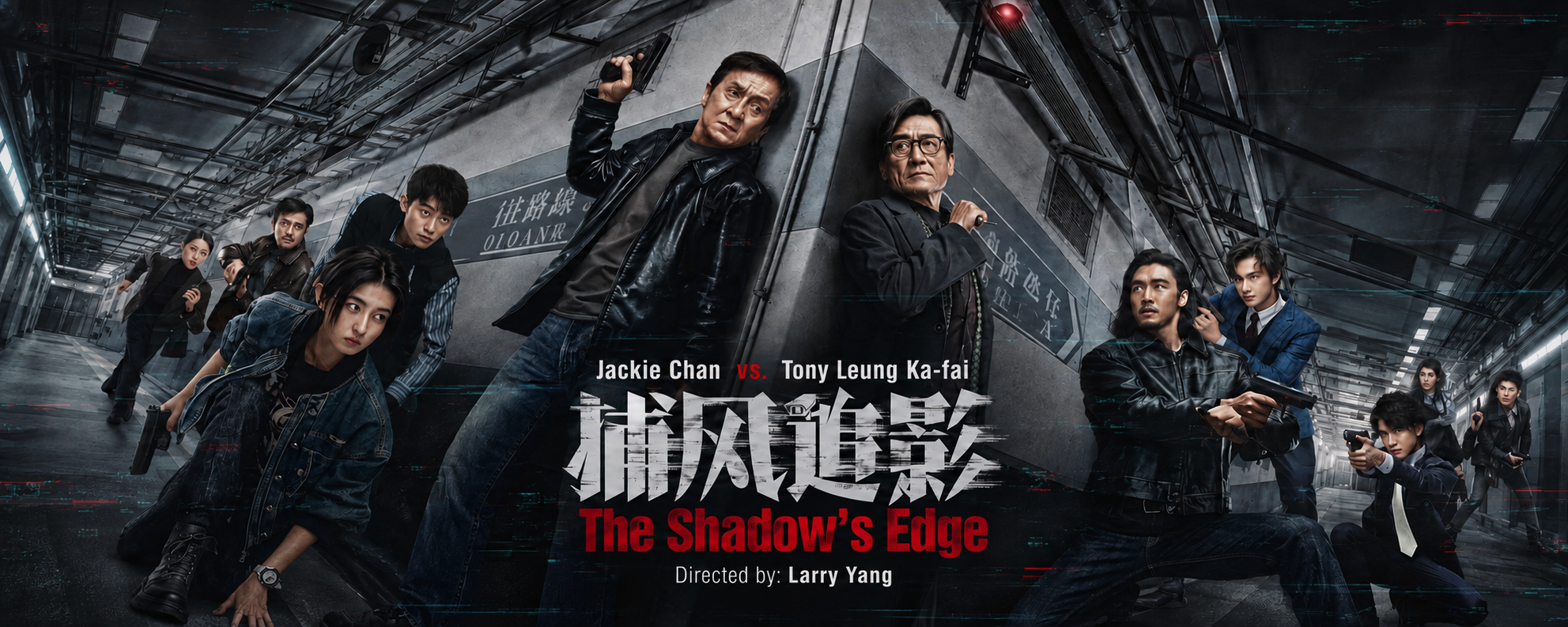
Larry Yang’s The Shadow’s Edge is a Chinese-Hong Kong remake of Yau Nai-hoi’s 2007 Hong Kong police thriller Eye in the Sky. The newer production therefore not only tells a story about a clash between old investigative methods and modern technology, but also constitutes an attempt to rewrite the traditions of classic Hong Kong police cinema in the language of a contemporary Mandarin-language action co-production.
Narratively, The Shadow’s Edge is not particularly complicated. The legendary thief and murderer Fu Longsheng (Tony Leung Ka-fai), known as the Shadow, carries out a spectacular robbery in a skyscraper together with a group of young and ambitious criminals. The police, relying primarily on modern technology led by artificial intelligence, are unable to track down the gang, particularly as one of its members is a gifted hacker. The police commander therefore calls upon the retired Huang Dezhong (Jackie Chan), a famous officer with a long list of astonishing achievements. Huang assembles a team of undercover detectives that includes He Qiuguo (Zhang Zifeng), the daughter of his former partner, who was killed during one of their missions together.
The film won two awards at the 2026 Hong Kong Film Awards. Tony Leung Ka-fai received Best Actor, while Su Hang won Best Action Choreography. The Shadow’s Edge was also nominated for Best New Performer, Best Film Editing and Best Sound Design.
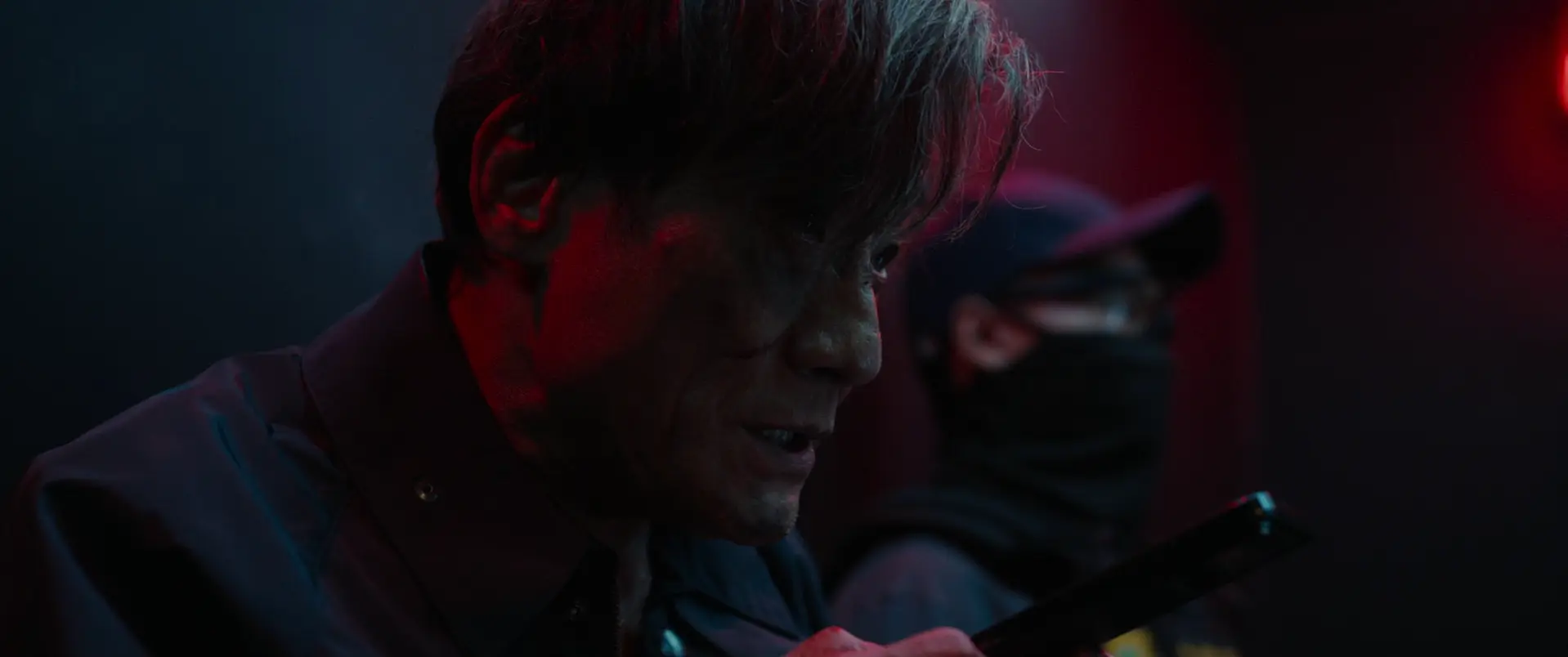
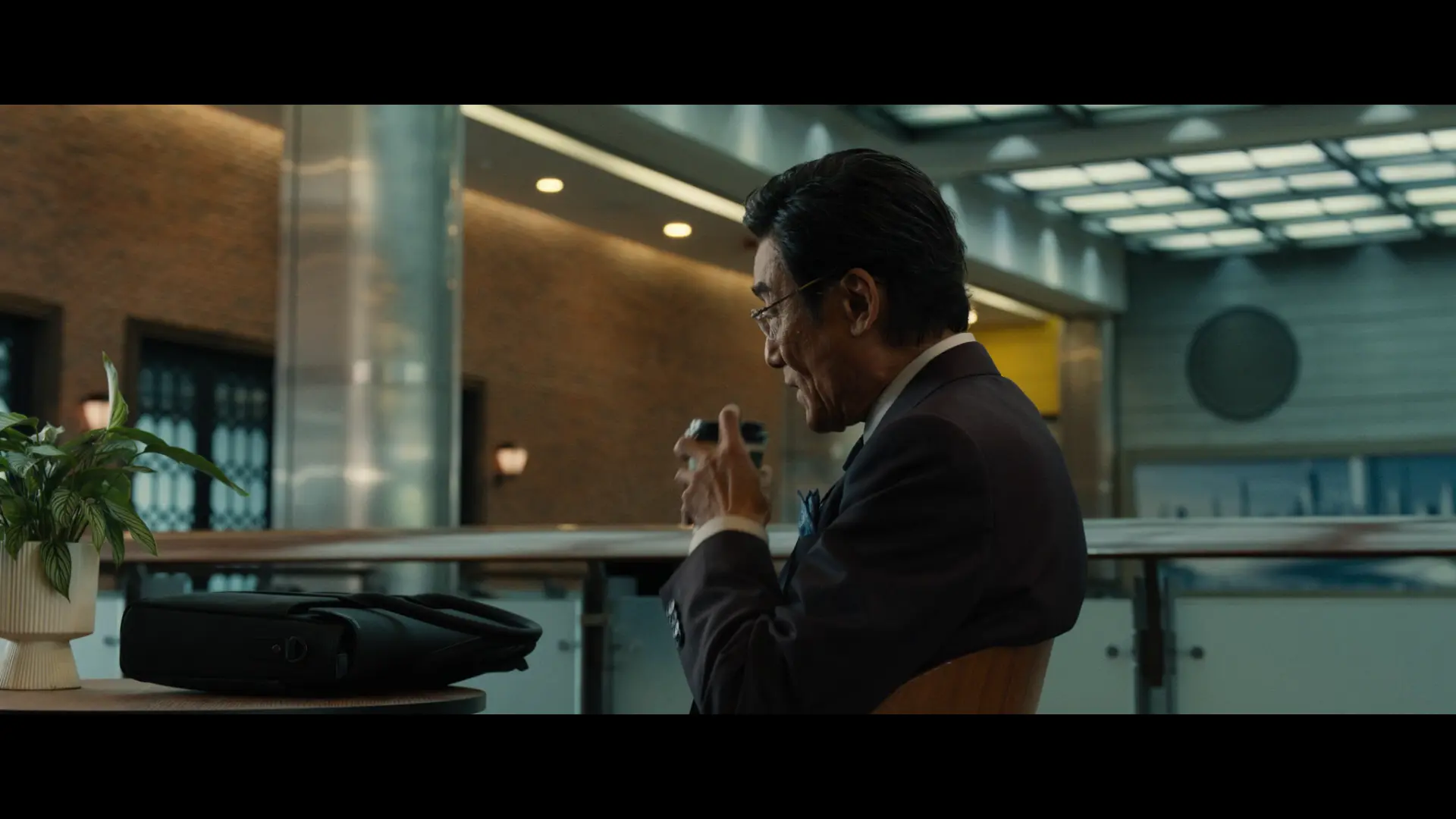
I consider the nominations and victories well deserved, particularly in the case of Tony Leung. His Longsheng is a highly charismatic character capable of being cold, cruel, cheerful or desperate. Leung had already demonstrated that he could extract an entire range of emotions from theoretically one-dimensional villains—for example in Island of Greed (1997)—and the same is true here. The only weakness of his antagonist comes from the screenplay. His resilience, and his ability to emerge relatively unscathed from numerous fights and explosions, is far too exaggerated given the otherwise realistic nature of the film. Leung is at his best in scenes involving interactions with other characters. One particularly memorable sequence has Huang and He pretending to be father and daughter. They invite Longsheng into ‘their’ flat and have an apparently sincere conversation with him. During it, alongside the revelation of genuine information that deepens both the characters and their relationships, the two rivals attempt to conceal their intentions and identities while simultaneously trying to force the other man into making a mistake. The various feints and psychological struggles between Huang, Longsheng and, to a lesser extent, He frequently constitute the film’s principal attraction.
Although The Shadow’s Edge refers back to classic Hong Kong action cinema, while watching it one is more strongly left with the impression of a production heavily filtered through the logic of contemporary mainland Chinese filmmaking. The Mandarin soundtrack* reinforces this impression, but it is by no means the only reason for it. The film is extremely sterile: even its worst neighbourhoods are tidy, there is little excessive violence, and the police officers are morally impeccable. The broadly understood Chinese state space—including Hong Kong and Macau—is also presented as a place where the new—artificial intelligence, modern surveillance systems and young police officers—is perfectly integrated with the old: Huang, traditional values and tried-and-tested investigative techniques. Moreover, everyone is attractive and well groomed. The only less conventionally handsome police officer—who is, naturally, overweight—is used for light comic relief and appears for barely a few dozen seconds throughout the entire film. Yang also considerably expands the scale of the spectacle compared with the 2007 original, shifting an intimate thriller towards high-budget police action cinema in which surveillance, AI and technology have to be complemented by the experience of an old master.
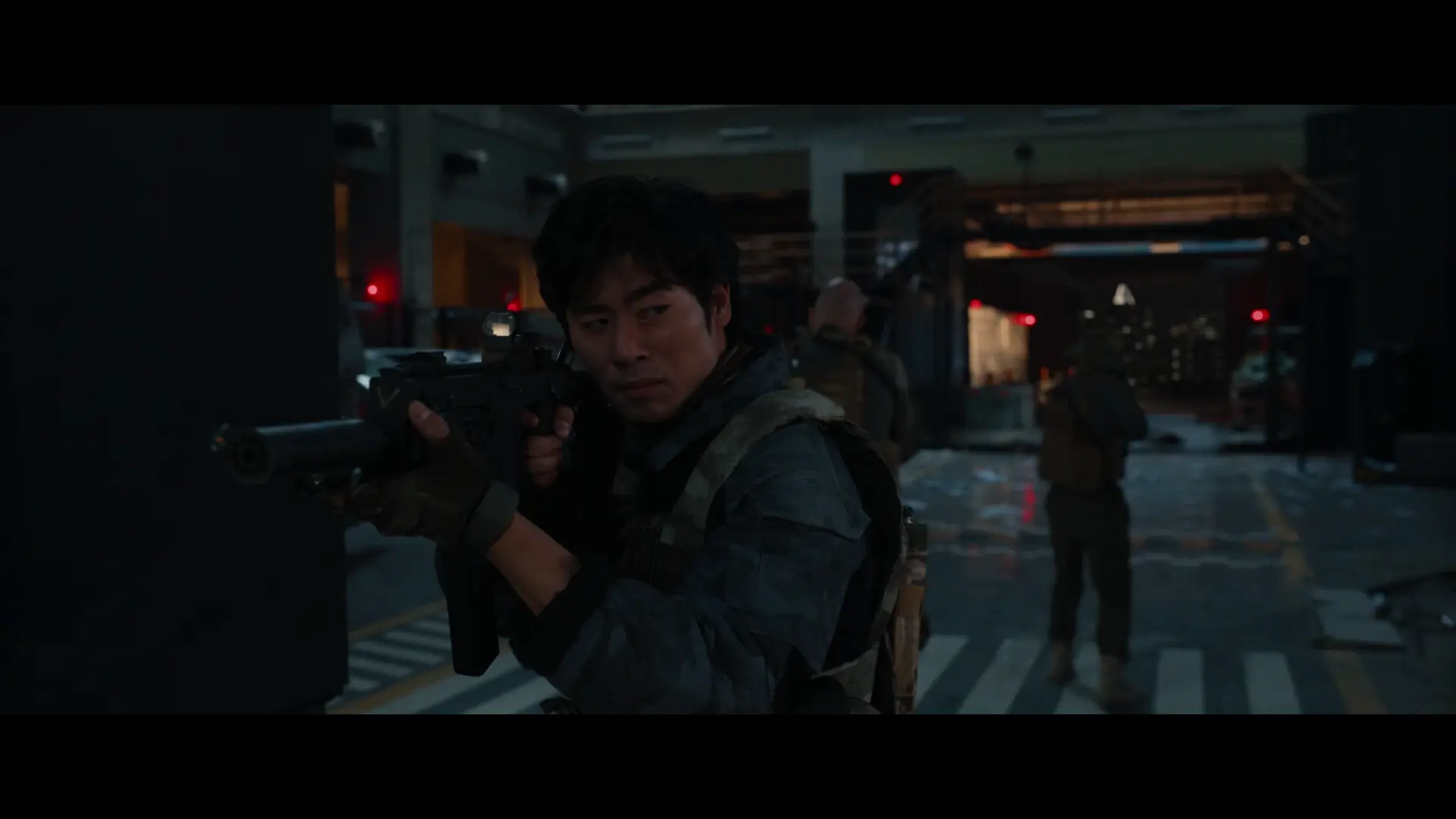
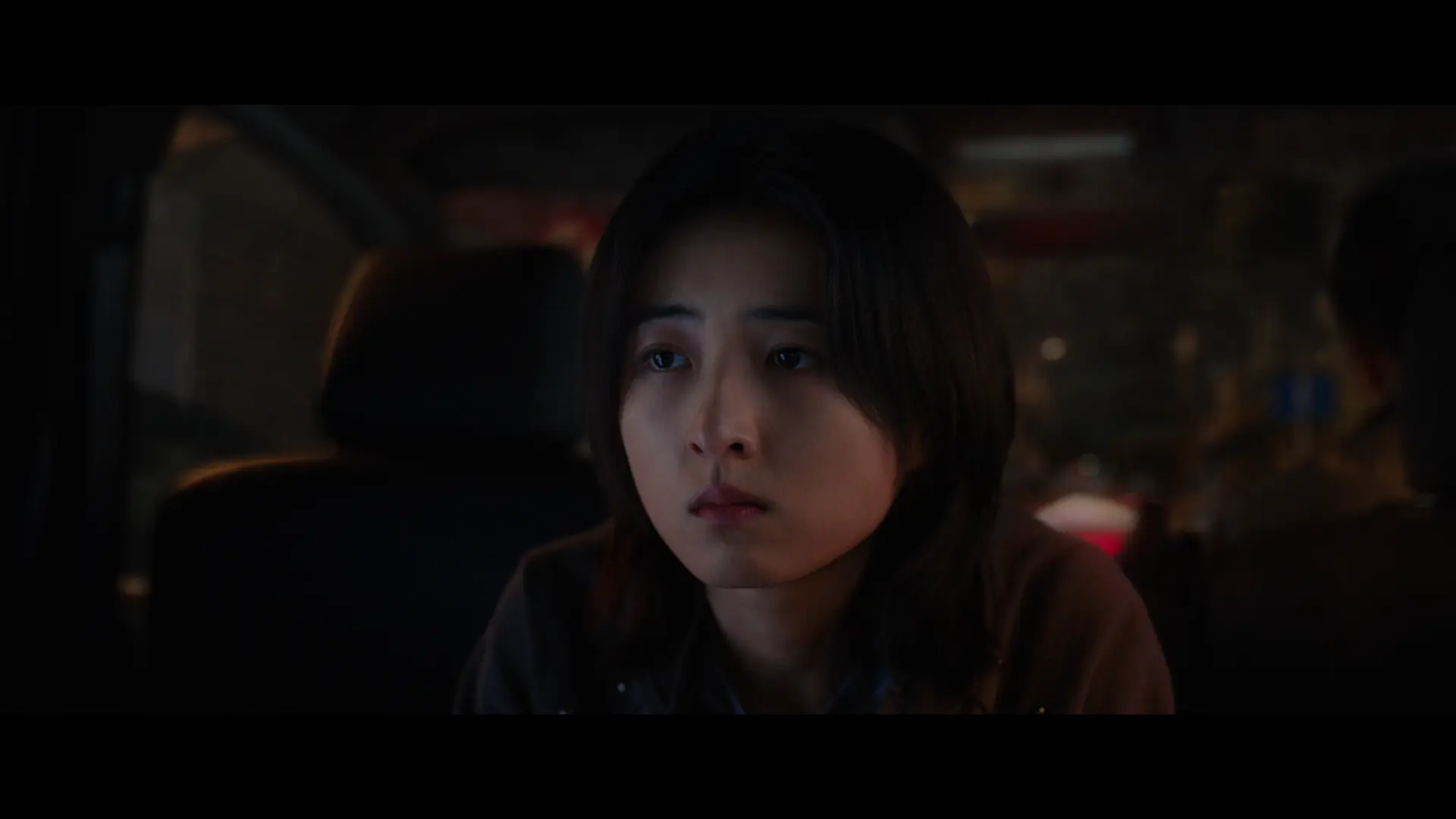
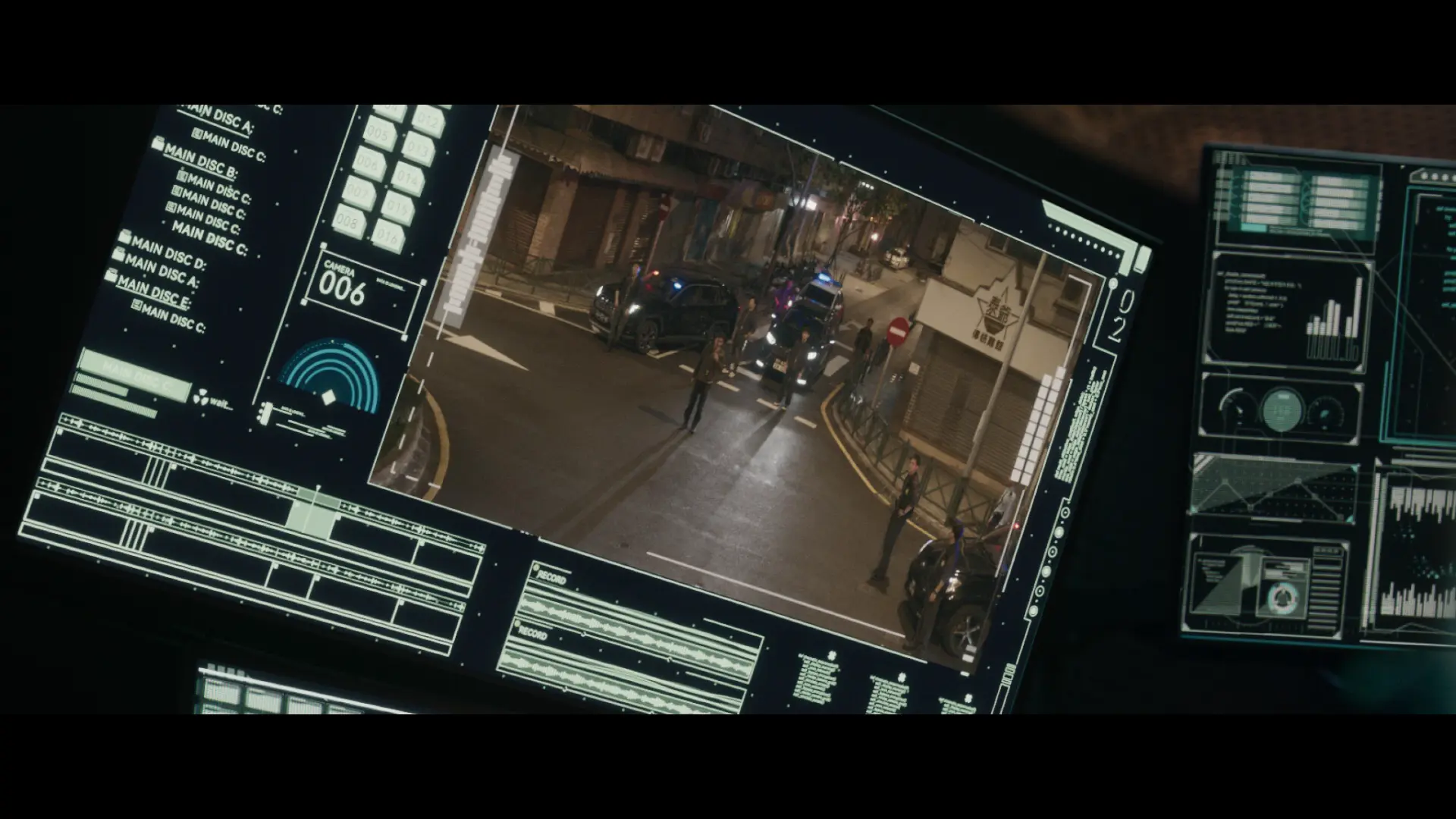
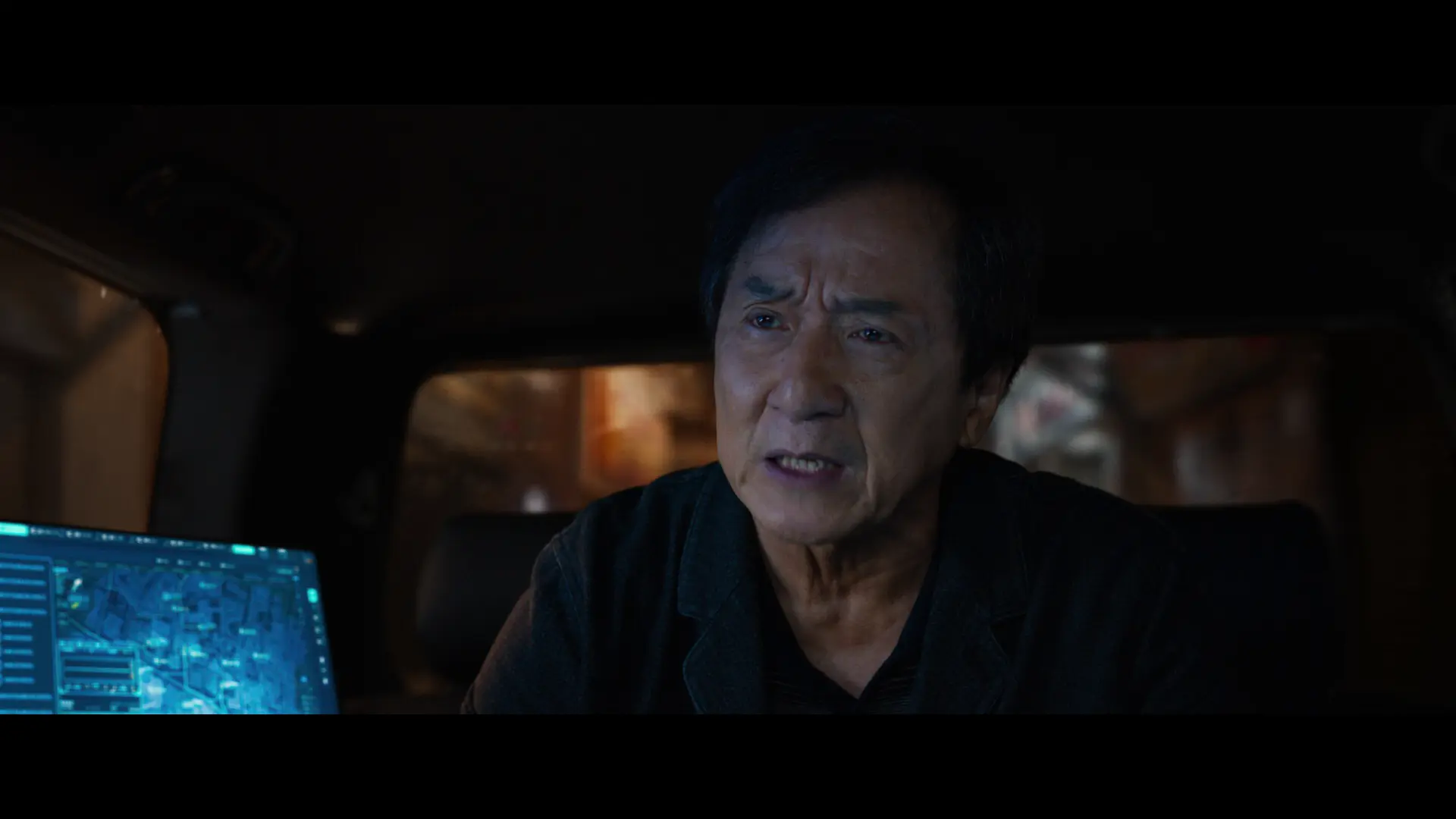
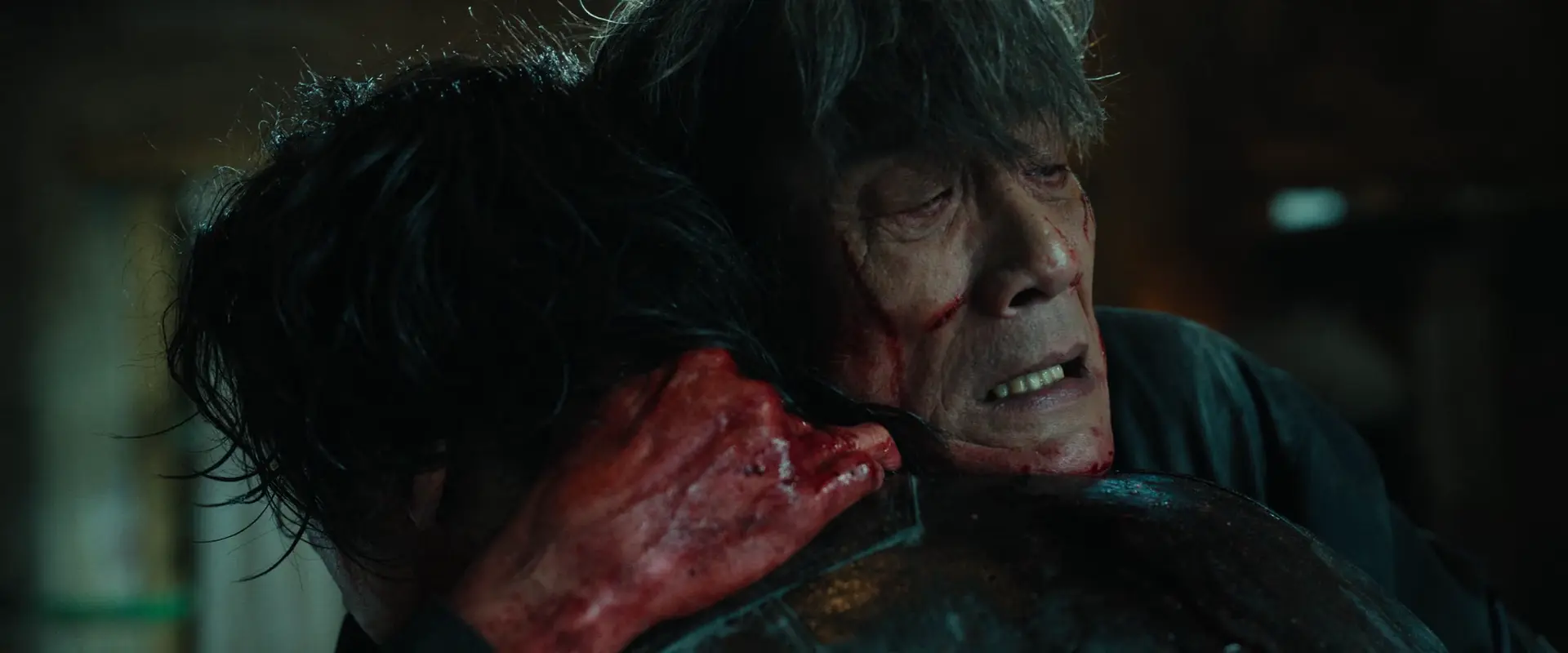
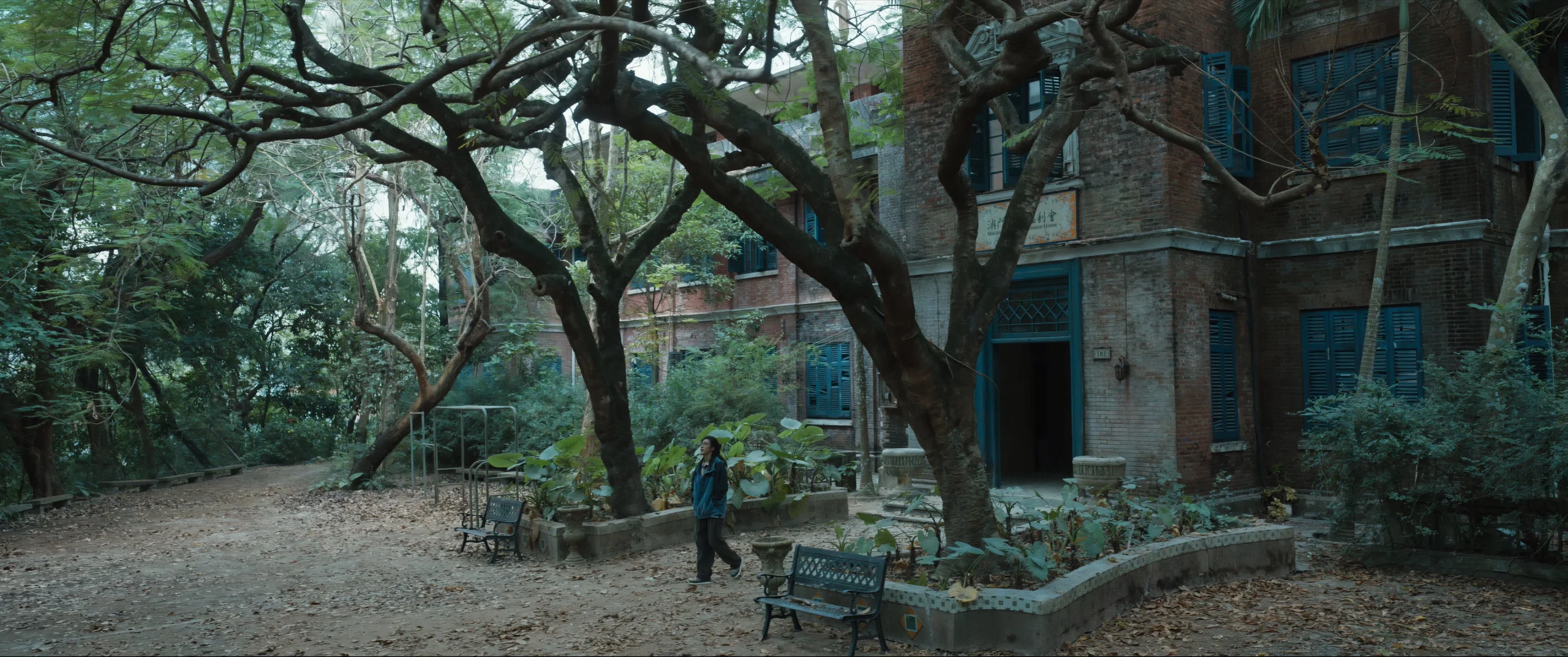
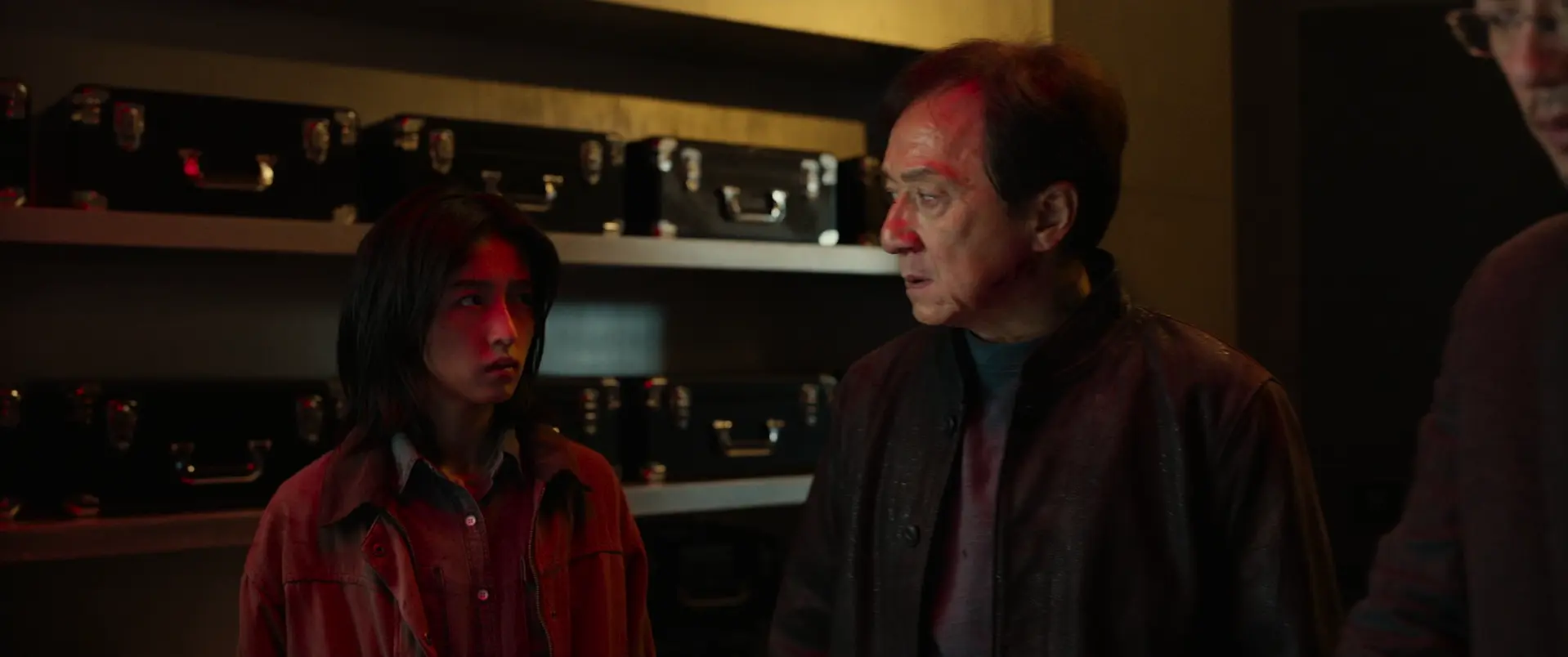
The difficulties the police encounter with artificial intelligence can be interpreted as an indication of the limitations of extreme digitalisation, which is incapable of replacing human judgement and still requires human supervision. In China, The Shadow’s Edge has also been discussed in the context of cultural and generational tensions between China and Hong Kong. On Douban, for example, one can encounter the interpretation that the remake—set primarily in Macau—touches upon the subject of police cooperation and the broader cultural exchange currently taking place in Hong Kong, a place where mainland Chinese, Hongkongers and people from Macau must coexist. In this context, the film can also be understood as posing the question of how the older Hong Kong generation should treat young people arriving from mainland China. The question is not particularly different from one that Hong Kong filmmakers were already considering at the turn of the 1950s and 1960s, as demonstrated by The Greatest Civil War on Earth (1961). Huang represents an accepting approach: he befriends the younger characters, helps them and treats them as partners. Longsheng, by contrast, approaches them from the position of someone seeking to control them and demonstrating that there is no room for coexistence between the two groups. He uses young mainland Chinese for his own purposes. Consequently, when they begin acting independently and following their own ambitions, they become enemies of both Huang and Longsheng, who wages a bloody and destructive war against them. Under such an interpretation, Longsheng may represent a Hong Kong attempting to exploit China, while Huang represents a model of Hong Kong welcoming China with open arms and remaining willing to cooperate with it. It is not difficult to guess which attitude the film favours.
The principal reason most viewers will seek out The Shadow’s Edge, however, is not its possible political contexts but its action scenes. Unfortunately, these are sometimes overdone in terms of editing, particularly in the opening sequences. Even so, this is unquestionably one of Jackie Chan’s best action films in recent years. Yang draws upon stunt work associated with traditional Hong Kong action cinema, elaborate martial-arts sequences and, at the same time, avoids excessive reliance on CGI. In addition to the opening robbery sequence—which combines hand-to-hand combat inside a lift with parachute jumps from a skyscraper and so forth—the film also includes an extensive confrontation between the police and Japanese mercenaries built around gunfire and explosions; Longsheng fighting a swarm of younger opponents with bladed weapons; and Huang confronting two talented—and likewise young—villains in a sequence employing choreography reminiscent of Chan’s classic work, for example through the use of a long staff and elements of the environment such as washing machines. There is also room for the expected and fairly interesting duel between Huang and Longsheng, as well as several other action sequences. There are therefore quite a lot of them, and they are given an appropriate amount of screen time. Their dynamism perhaps leaves something to be desired, as does the editing, but they are by no means badly executed—something reflected in Su Hang’s victory for Best Action Choreography at the 44th Hong Kong Film Awards.
I can therefore recommend the film to fans of Jackie Chan and Tony Leung Ka-fai. Other admirers of action cinema will probably also find plenty to enjoy, particularly if they do not expect anything revolutionary or genre-defining for the years ahead. And although rumours circulated not long ago suggesting that Chan might soon retire from martial-arts cinema, the ending of The Shadow’s Edge clearly indicates that the filmmakers intend to make a sequel.
*The Cantonese soundtrack, although listed in some databases as the original version, is in fact dubbed.
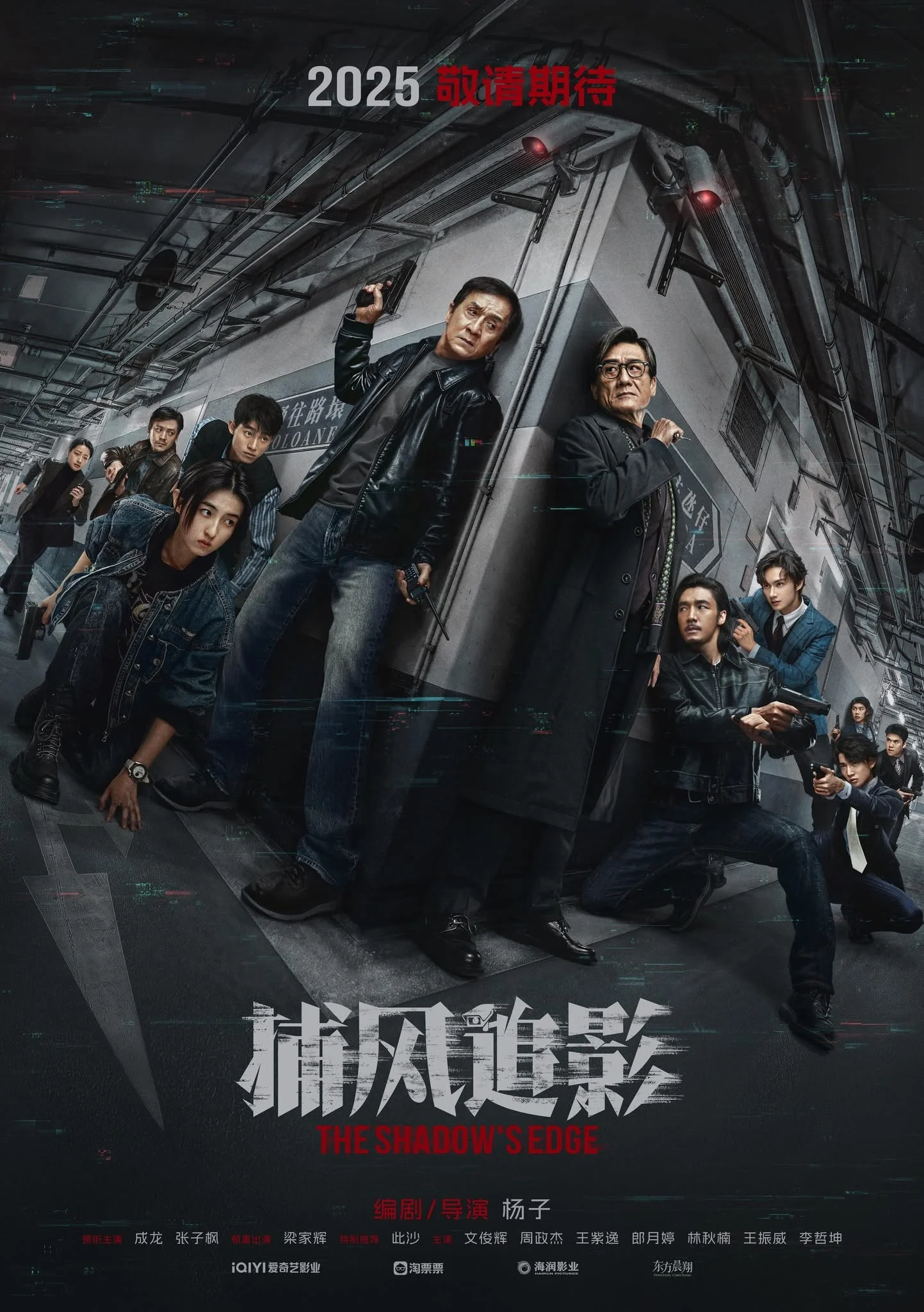
The Shadow’s Edge
(Bǔ fēng zhuī yǐng — literally ‘catch the wind, chase the shadow’ or ‘catch the wind and track the shadow’)
Director and Screenwriter: Larry Yang
Cinematography: Qian Tiantian
Music: Nicolas Errèra
Action Choreography: Su Hang
Assistant Directors: Cao Lei, Diao Zhaoyu
Studios: iQIYI Pictures, Shanghai Taopiaopiao Film Culture, Beijing Hairun Pictures, Dongfang Chenxiang Cultural Investment, Shanghai Chinese Film, Beijing Xinyinglian Film; co-produced by, among others, Huaxia Film Distribution and Hairun Film (Hong Kong)
Premiere: 3 August 2025
Cast: Jackie Chan, Zhang Zifeng, Tony Leung Ka-fai, Jiwu Cisha, Wen Junhui, Zhou Zhengjie, Wang Ziyi, Lang Yueting and others.
Author of “Panorama of Hong Kong and Taiwan Cinema”, a lover of Asian cinema, action films, and space voyages aboard the starship Enterprise. He once studied Polish philology, and later became a citizen of the NSK State in Time. He has published in Kinomisja, Ekrany, Kultura Liberalna, Torii, Dwutygodnik Kulturalny, and others.