Cinema reached China in 1896, but a quarter of a century would pass before Chinese filmmakers made their first feature: Yan Ruisheng, directed by Ren Pengnian. When moving pictures arrived in the Middle Kingdom, the country was still ruled by the Manchu Qing dynasty, which had held power since 1644. Its rule ended with the Xinhai Revolution, which began in 1911 and culminated in the fall of the empire in 1912. Yet the prosperity so many had hoped for failed to materialise. China descended into chaos, and disputes among supporters of the republic, some dating back to the nineteenth century, flared up with renewed intensity. Hopes of rapid modernisation and a flourishing economy gave way to disillusionment, fuelling further conflict.
The revolutionaries chose Sun Yat-sen, head of the Tongmenghui alliance and later leader of the Kuomintang (KMT; Chinese Nationalist Party), as the republic’s first provisional president. To this day, both the People’s Republic of China (PRC) and Taiwan commemorate him as one of the founding fathers of the Chinese republic. His presidency, however, lasted only a few months. He took office on 1 January 1912, and his successor, Yuan Shikai, was sworn in as early as 10 March.
In 1913, Song Jiaoren, one of the KMT’s leaders, was assassinated. A subsequent attempt to overthrow Yuan, known as the Second Revolution, ended in defeat. Yuan consolidated his power and proclaimed himself Emperor of China on 12 December 1915. He was forced to abandon his imperial ambitions on 22 March 1916, but remained president until his death on 6 June. The country then entered a period of rival regional warlords and successive wars. Western powers and Japan took advantage of China’s weakness, seeking to bring it under their political and economic control. It was in these conditions, amid internal strife and foreign pressure, that Chinese cinema took shape.
The Beginnings
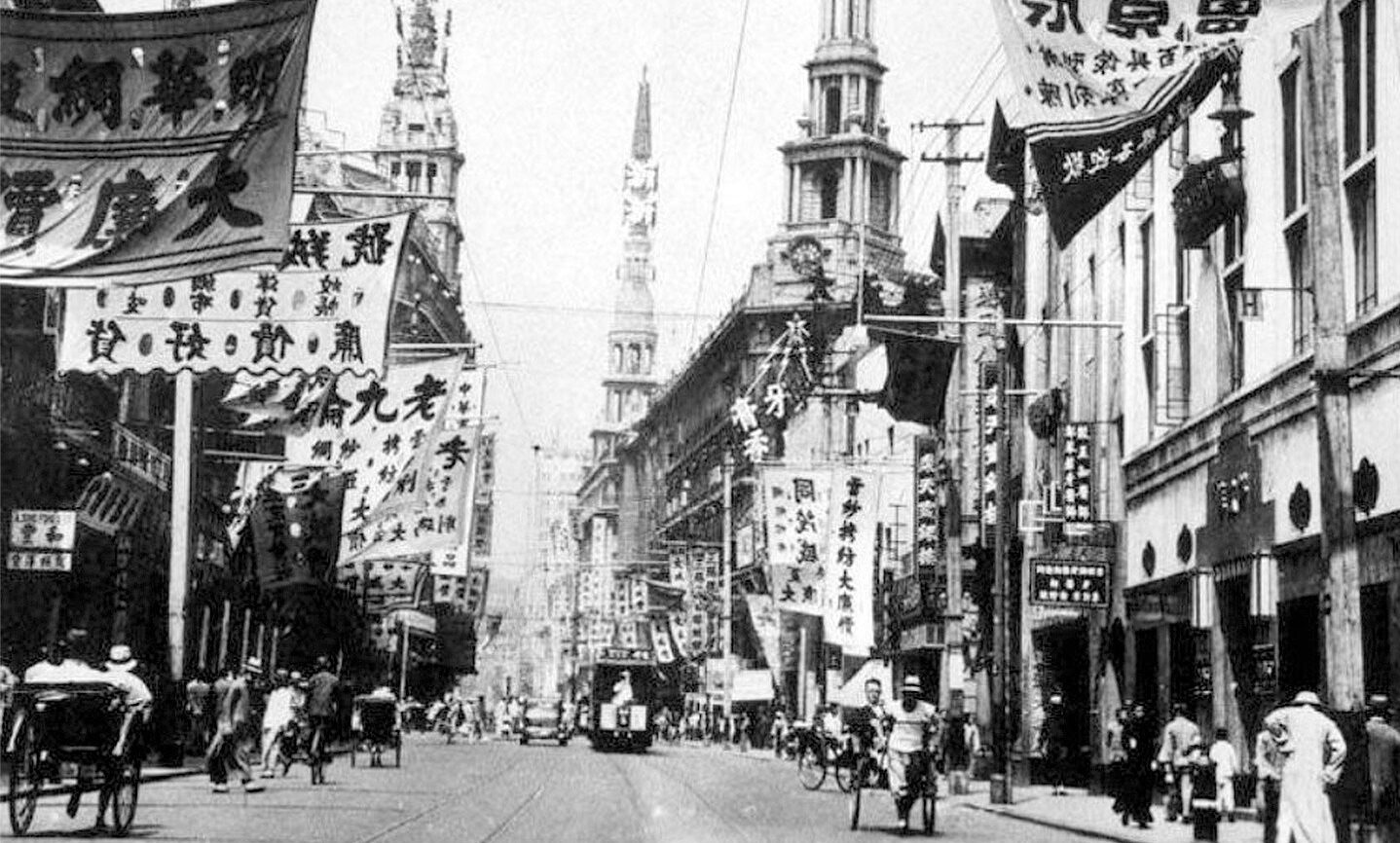
But let us return to 1896. 11 August is generally accepted as the date of the first film screening in China. On that day, moving pictures were shown at Shanghai’s Xu Garden (Xuyuan), where audiences usually came to watch conjurors and acrobats. The screening was most likely organised by a French showman. Some sources credit the event to the Spaniard Galen Bocce, but he probably did not begin operating until 1899. Americans who arrived in China in 1897 also helped popularise the new entertainment, showing films in Shanghai’s teahouses for more than ten days.
Cinema came to Hong Kong in 1897: on 28 April, a screening was held at City Hall using a cinematograph operated by Maurice Charvet. A year later, James White and Frederick Blechynden shot six short views of the colony for the Edison Company. In Taiwan, cinematograph screenings began in 1900, first at Tamsui Hall and then at the Cross Theatre. A film screening also formed part of an important official ceremony in Hsinchu in 1901.
Audiences readily embraced the new medium. Films, then known as yingxi, offered Chinese viewers glimpses of life in distant countries such as France, the United States and Spain. They consisted of short scenes, usually without a coherent story connecting them. Even at this early stage, however, two strands were recognised: the realistic, showing the world around us, and the non-realistic, allowing greater scope for the imagination.
The growing popularity of film encouraged entrepreneurs to open cinemas and establish distribution networks. Both films and equipment were imported from the West, and the earliest film businesses in China often operated within the foreign concessions and were owned by foreigners. In the early twentieth century, foreign entrepreneurs also expanded their activities in Hong Kong and Taiwan.
Before audiences settled into cinema seats, however, they watched films in places such as teahouses and theatres. At teahouse screenings, people chatted, drank tea and enjoyed snacks. These were lively, noisy gatherings, with moving pictures just one of several attractions on offer. Some theatres stayed open all night, keeping hours that suited the courtesans’ working lives. Films were also shown in specially equipped tents. Conditions there were far less pleasant: ventilation was poor, the benches were uncomfortable, and men and women sat separately, with the police enforcing the arrangement. In time, these venues gave way to permanent cinemas.
Chinese filmmaking began in 1905, thanks to the Beijing photographer Ren Qingtai. Demand for new titles was so great that imports could no longer keep pace with audiences’ appetite. Ren decided to provide something for them to watch himself. That spring, with the help of his assistants, he filmed selected scenes from the Peking opera The Battle of Dingjun Mountain (Dingjunshan zhi zhan), based on Romance of the Three Kingdoms (Sanguo Yanyi). In front of the camera was Tan Xinpei, the reigning “king of Peking opera”. The venture proved profitable, so Ren continued filming celebrated performers. A Western invention had thus met one of China’s most important theatrical traditions.
In 1907, with backing from foreign sponsors, Ren also opened Daguanlou, regarded as Beijing’s first cinema. Most cinemas, however, were opening in Shanghai, where Japanese investors, too, hoped to profit from the new craze. Ren’s career as a producer was cut short by a fire that destroyed his studio in 1909. Arson was suspected, but never confirmed. Ren did not return to filmmaking.
Cinema’s Uncertain Development
In the years that followed, filmmakers continued to record scenes from operas, often with the support of Western technicians or sponsors. Benjamin Brodsky, a Russian Jew whose family had emigrated to the United States, figures prominently in accounts of this period. Yet stories have grown up around him that more recent research suggests we should treat with caution.
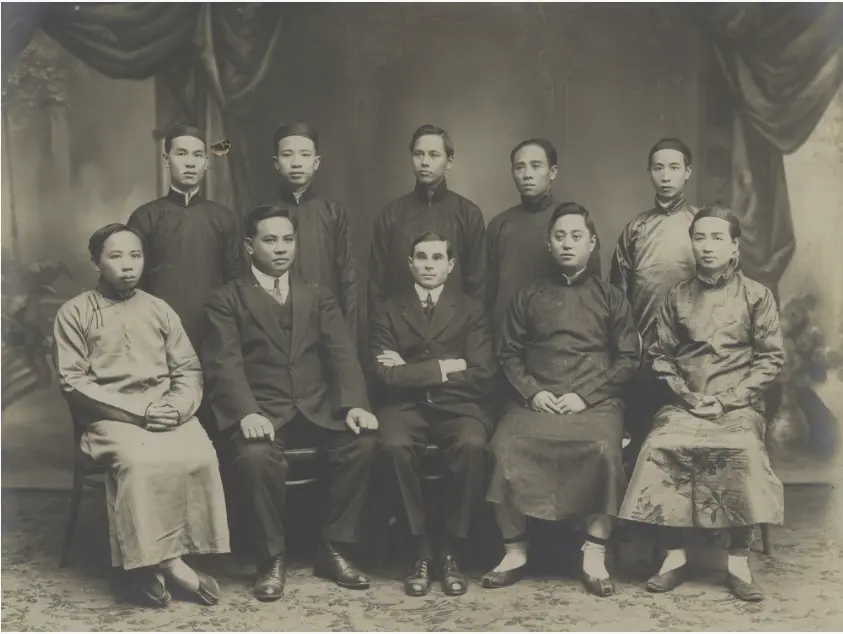
According to the traditional account, Brodsky founded China’s first film production company, the Asia Film Company, in 1909. After making several shorts, he supposedly handed it over to an American named Yashell. Intending to make films about life in China, Yashell needed a Chinese cast and hired Zhang Shichuan as a manager. Over four years, the two are said to have produced around eighteen films, including The Difficult Couple (Nanfu nanqi, Zhang Shichuan, Zheng Zhengqiu, 1913), regarded as the first Chinese narrative film to run to several reels. The trouble is that researchers now question not only Brodsky’s connection to the company and the date of its founding, but even Yashell’s existence.
Similar doubts surround the beginnings of narrative filmmaking in Hong Kong. For years, these were traced to the comedy Stealing the Roast Duck (Tou shao ya), supposedly made in the colony by the Asia Film Company in 1909, with financial backing from Brodsky. The film featured three characters: Fatty, the Thin Thief and the Policeman. Two of them were reportedly played by Liang Shaopo (Leung Siu-po), also credited as the director, and Li Beihai (Lai Pak-hoi). The latter went on to play an important part in the development of Hong Kong cinema: in 1925, he directed its first feature, and in the 1930s he was among the pioneers of sound film.
No print of Stealing the Roast Duck survives. Nor do any stills or production records. There is, however, indirect evidence that the film was indeed made. The dispute concerns its date above all. The year 1909 appears in a text by Cheng Shuren, published in Shanghai’s Cinema Almanac of China in 1927. Cheng attributed four films to Brodsky’s company: Empress Dowager and The Unfortunate Boy, made in Shanghai, and The Haunted Pot and Stealing the Roast Duck, made in Hong Kong. Yet when researchers began reconstructing the entrepreneur’s travels and activities in greater detail, that chronology no longer added up.
Brodsky is known to have been chiefly involved in distributing foreign films and trading in equipment at the time. In an interview in May 1912, he spoke at length about his distribution network across the Pacific, but said nothing about making films of his own. It is a curious silence. Brodsky was always keen to publicise his ventures, so it seems reasonable to assume that he would have boasted of launching film production in China or Hong Kong just three years earlier.
The next chapter of his life also comes in several versions. According to one, Brodsky closed his studio in 1913 and decided to return to the United States. Before leaving China, he supposedly stopped in Hong Kong, where he met the brothers Li Beihai and Li Minwei (Lai Man-wai), then invested in their company, Huamei. It produced just one film: Zhuangzi Tests His Wife (Zhuangzi shi qi, 1914). Yan Shanshan, Li Minwei’s wife, played a supporting role as a maid and is regarded as the first actress in the history of Chinese cinema.
The documents that have since come to light tell a different story. In mid-1913, Brodsky was only just setting up production facilities in Hong Kong. His Variety Film Exchange and Variety Film Manufacturing Company operated at 34 Nathan Road in Kowloon, and the facility became operational in late December. Roland F. Van Velzer, a cameraman and technician hired in New York, arrived there at the same time.
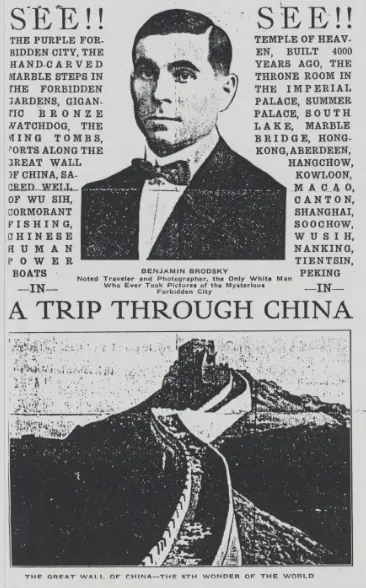
Brodsky’s connection to the Asia Film Company is even harder to establish. More recent research has found no evidence that he owned it, or even that a company of that name existed as early as 1909. Chinese writings from 1921–1922 placed the start of his production activities around 1913. It is therefore possible that the Asia Film Company was a separate venture which later historians associated with Brodsky. There is no certainty, however.
The strongest evidence for dating Stealing the Roast Duck to 1914 comes from an interview with Van Velzer, published on 25 July that year in the American trade journal The Moving Picture World. His account indicates that Brodsky supplied the capital, film stock and technical facilities, Van Velzer operated the camera, and Li Minwei and his theatre troupe provided the actors, sets, costumes and props. Three further comedies, including Stealing the Roast Duck, were apparently made only after the success of Zhuangzi Tests His Wife. If this production sequence is accurate, then the celebrated comedy was made five years later than was long believed, and the distinction of being Hong Kong’s first narrative film belongs to Zhuangzi Tests His Wife.
Zhuangzi Tests His Wife
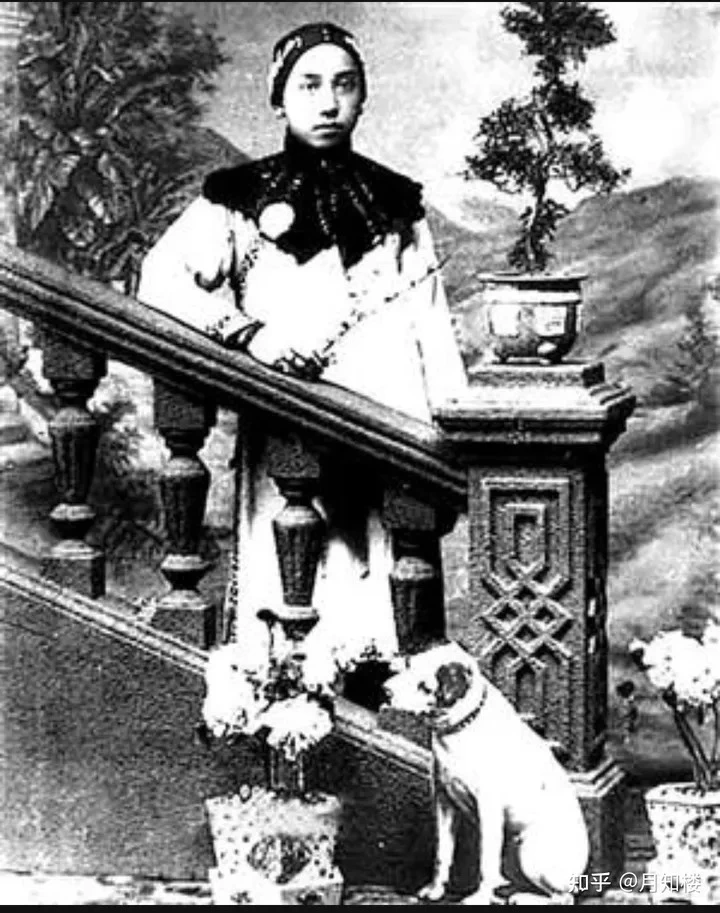
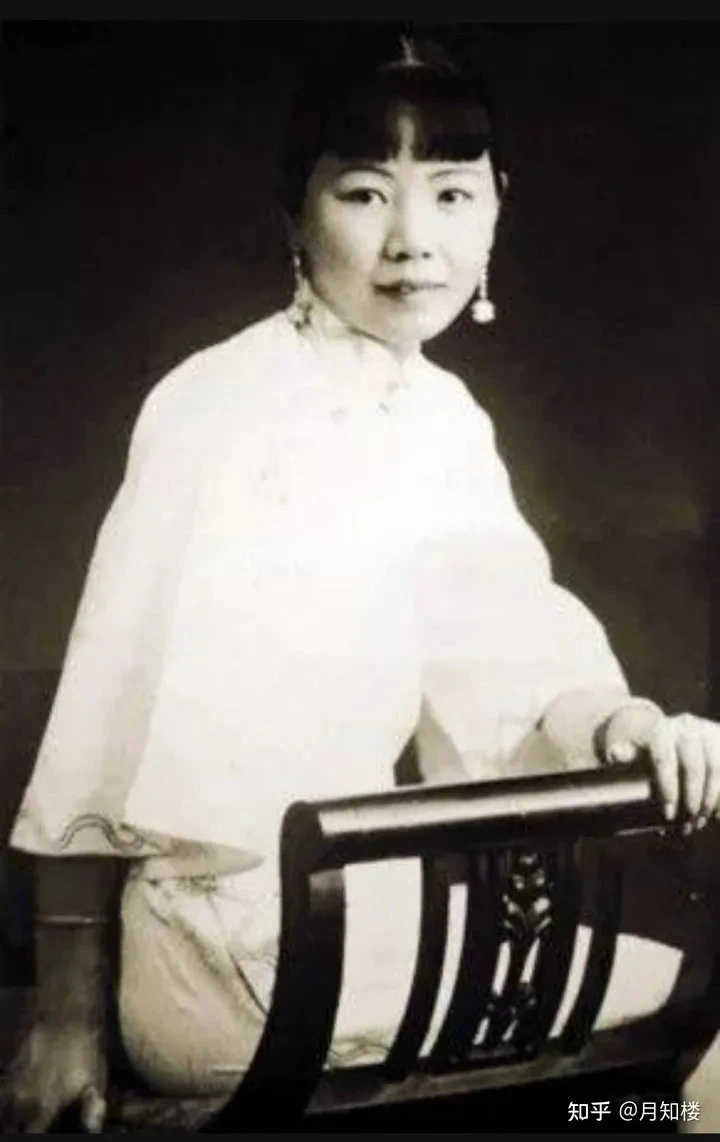
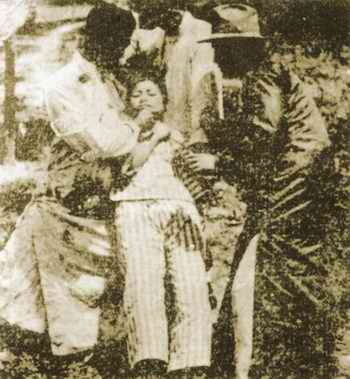
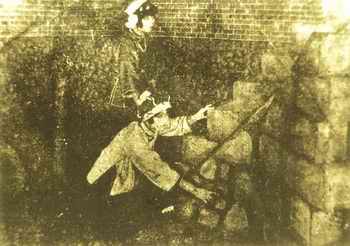
Zhuangzi Tests His Wife, identified by more recent research as Hong Kong’s first narrative film, was made with the support of Benjamin Brodsky. The Li brothers played the leading roles: Beihai appeared as Zhuangzi, while Minwei (above) played his wife. Casting a man in a female role reflected both theatrical tradition and the social conventions of the time. Acting carried a low social status, making it difficult for women to enter the cinema. Even so, the brothers cast Minwei’s wife, Yan Shanshan (below), as the maid. The film also earned a place in cinema history for its location shooting and the simple special effects used to depict a ghost.
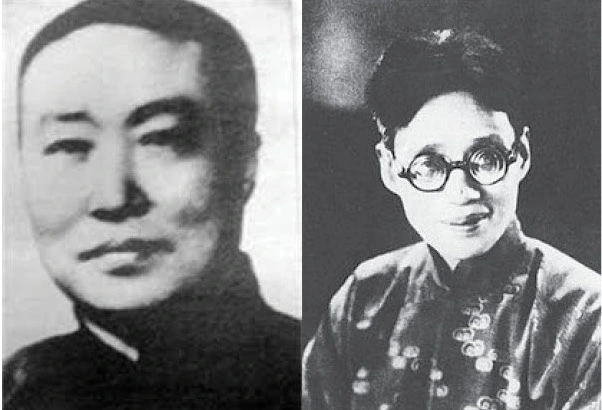
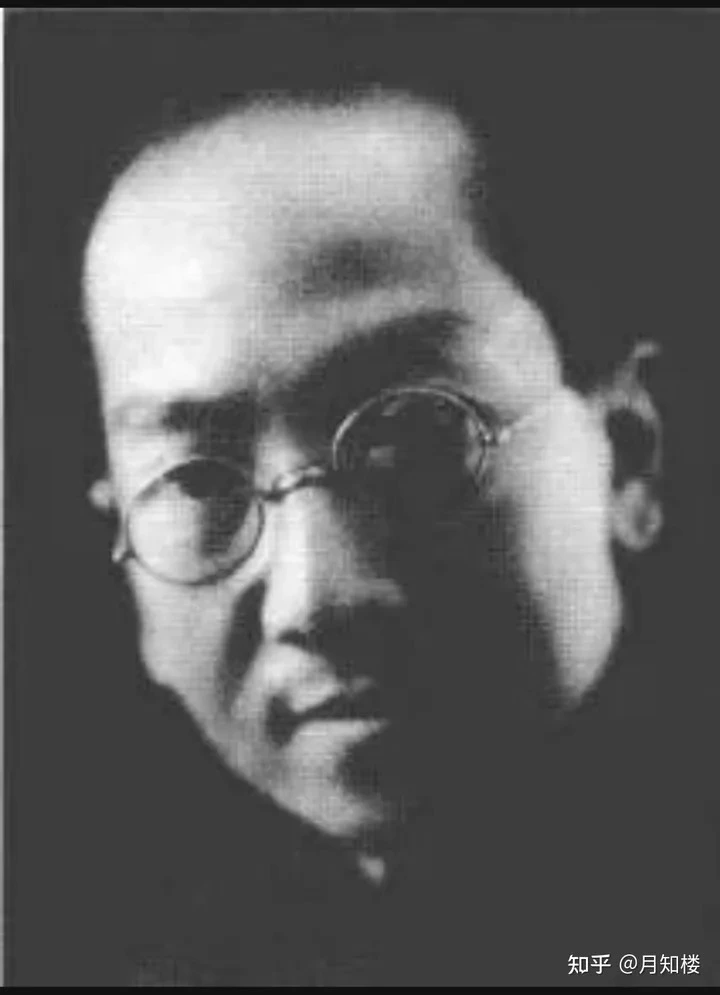
Other production companies came and went. In 1916, Zhang Shichuan, a former employee of the Asia Film Company, founded the Huanxian Film Company with his friend Guan Haifeng. The business closed after producing just one film.
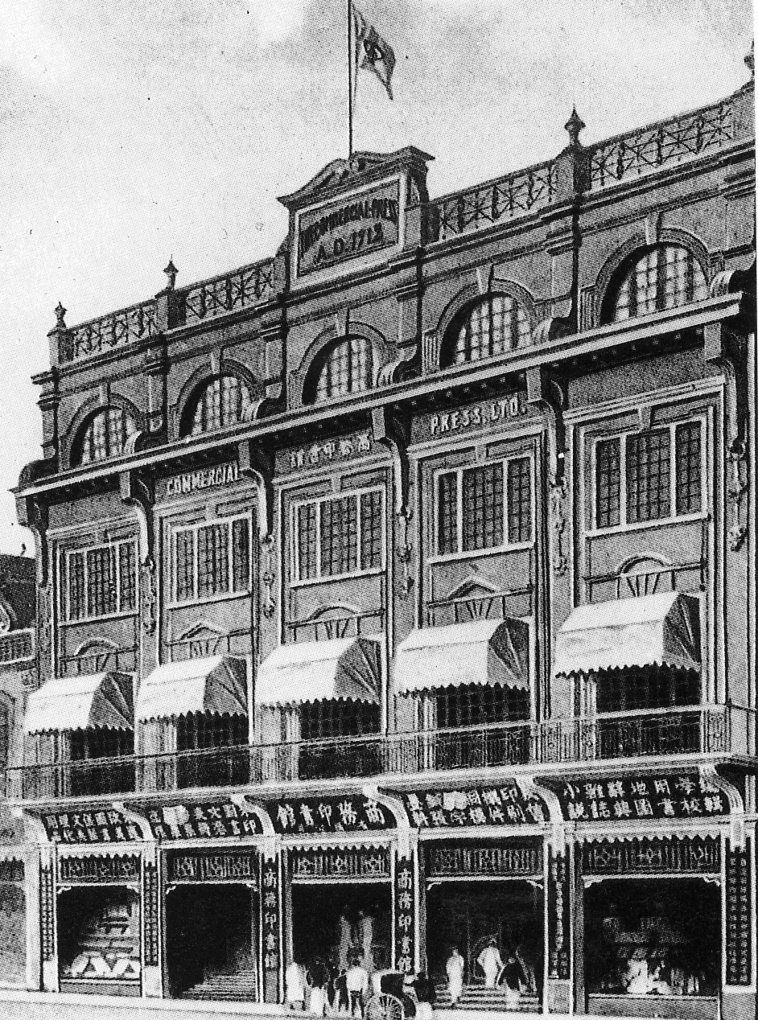
The story of the Commercial Press publishing house’s film division, meanwhile, began with an American’s failed venture. He arrived in China in 1917 with grand ambitions, but went bankrupt and had to sell his equipment to pay for his passage back to the United States. Commercial Press bought it for three thousand yuan. A year later, the publisher established its Motion Picture Department, which made Chinese films and processed film stock for other companies. This time, the idea proved a success: by 1919, the company was importing better equipment from the United States.
The vocabulary was changing, too. For a time, films were known as dianguang yingxi, or “electric shadow theatre”. The resemblance was clear: both the projector and traditional shadow theatre used light to bring figures to life on a screen. Invoking a familiar art form helped audiences make sense of the Western invention and encouraged Chinese viewers to try the new entertainment. In the 1920s, however, the shorter word dianying, “electric shadow”, became widespread and established itself as the standard term for film.
The First Features
The First World War disrupted supplies of films from Europe, and post-war reconstruction placed further strain on European producers. Hollywood filled the gap, strengthening its position in the global market. In China, circumstances also favoured local filmmakers. Audiences kept growing, as did the appetite for domestic productions. In late 1921 and early 1922, the first three Chinese features reached the screen: Yan Ruisheng, Sea Oath (Hai shi, Dan Duyu) and Women Skeletons (Hongfen kulou, Guan Haifeng).
The first drew on events that had recently been the talk of Shanghai. In 1920, Yan Ruisheng murdered Wang Lianying, a courtesan from the city’s entertainment district known as the Queen of Flowers, in order to rob her. The idea of bringing the story to the screen came from the Shanghai Cinema Studies Society. Realism and sensationalism were intertwined from the casting stage: an acquaintance of the real Yan played the murderer, while Wang’s role went to a woman who had herself worked as a prostitute.
Sea Oath, by contrast, told the story of Fuzhu and an artist who loves her. She leaves him for a wealthy man, but regrets her decision on her wedding day and tries to return to her former lover. Rejected, she decides to take her own life. The artist comes to her rescue, however, and the story ends happily. The plot itself may seem conventional today, but it touched on pressing concerns of the time: the right to choose one’s partner, the lure of wealth and the expectations placed on women. It also offered scope for criticism of the widespread practice of arranged marriage, although the heroine’s return to her lover fitted the story’s moralising message. Yin Mingzhu, also known as Pearl Ing, who played Fuzhu, became one of China’s first film stars.
Women Skeletons took yet another route. Loosely based on a French detective novella, it tapped into the popularity of crime stories and thrillers among younger audiences. Doctor Bao is abducted by a group of attractive women who live in a cave. Their leader is the Red Beauty, modelled on Irma Vep from the French serial Les Vampires. His lover, a martial arts expert, sets out to rescue him. Numerous special effects helped make the film a box-office success, and screenings were also held in Japan and Vietnam.
A sensational true-crime story, a romance and a kidnapping adventure: these three films show just how varied the interests of China’s early filmmakers were. They also shared an emphasis on female characters. A courtesan, a young woman choosing her partner, a warrior or a criminal femme fatale could each become a means of exploring urban life in transition: emancipation, the temptations of consumption and the friction between tradition and modernity. Yet the promise of freedom came with anxiety about its consequences. Films could challenge patriarchal norms while also displaying women’s bodies as attractions and punishing their heroines for crossing the boundaries of propriety.
Shanghai’s flourishing intellectual and cultural life provided fertile ground for such stories. The country’s political fragmentation and the authorities’ preoccupation with internal conflicts made it difficult to impose uniform control over the film industry. This left filmmakers considerable room to explore.
Pearl Ing
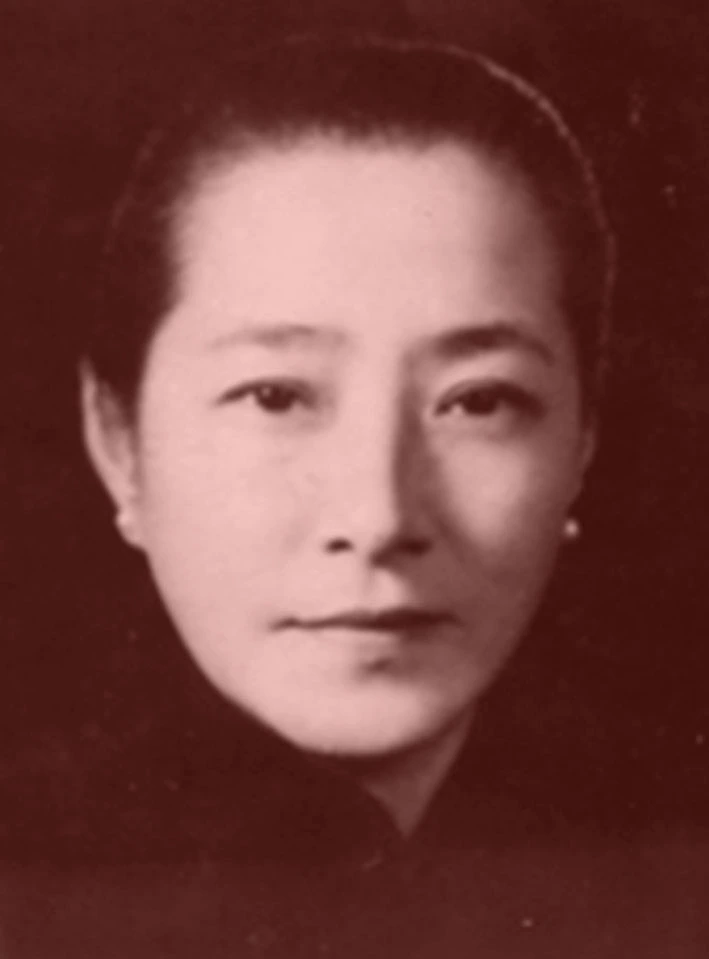
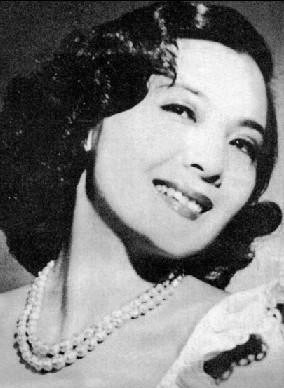
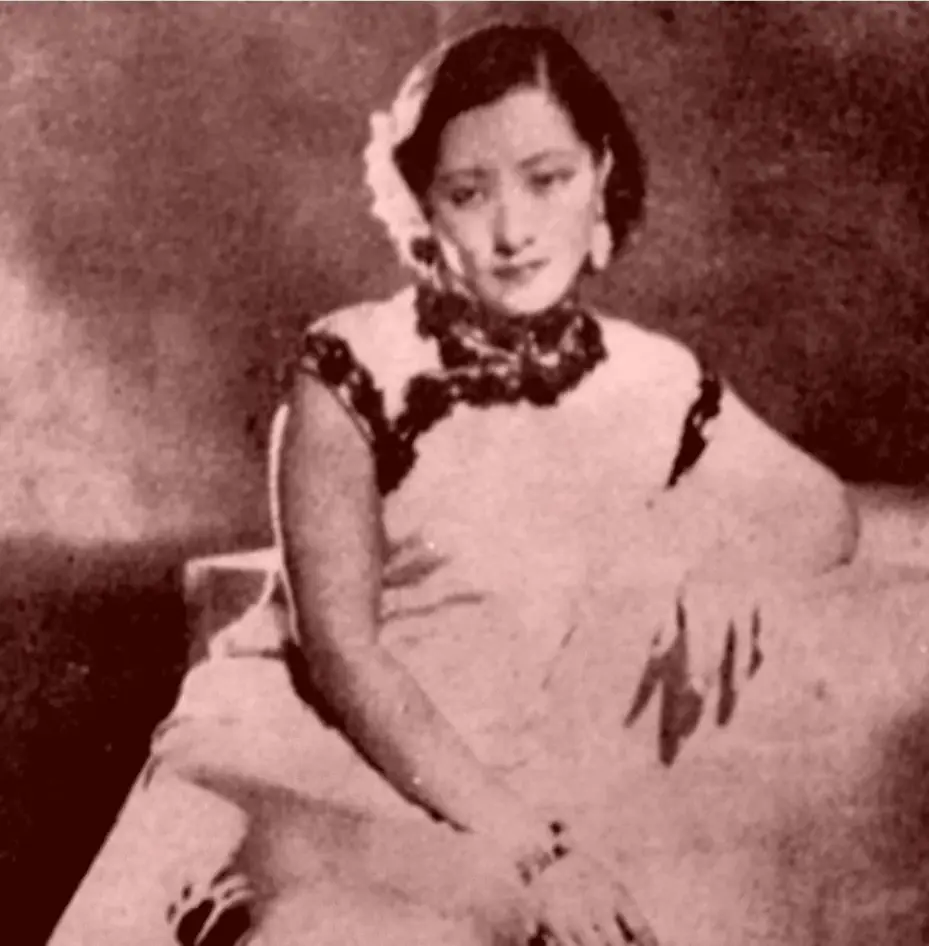
Yin Mingzhu, also known as Pearl Ing, was one of the first stars of Shanghai cinema. Born into a wealthy family in 1904 as Yin Shangxian, she was also known as Longguan and later adopted the name Mingzhu, meaning “pearl”. Her father died when she was a child, but left the family a lottery ticket that won the top prize. This stroke of luck allowed her mother to move with her to Shanghai and enrol her at the prestigious McTyeire School for Girls.
During her school years, Yin became fascinated with the American actress Pearl White, star of the serial The Perils of Pauline (1914). White was enormously popular in China; among foreign actors, only Charles Chaplin was reportedly more famous. Yin designed clothes inspired by Western fashions and became well known among the local elite, who eagerly invited her to their parties. She also held progressive views and shared them with other young women.
At one such party, she met Dan Duyu, a popular painter preparing to make his directorial debut. They shared a fascination with Pearl White, and soon found a common purpose as well: to portray Chinese life on screen and challenge the image of Chinese people as barbarians perpetuated by Western films. Dan offered Yin the leading role. Accepting it, however, meant defying social conventions: particularly among the upper classes, appearing on screen was still considered an unworthy occupation for women. Sea Oath received mixed reviews, but Yin’s performance was widely praised. Her newfound fame failed to persuade her mother, who forbade her to appear in any more films.
Yin then helped her friend Fu Wenhao launch an acting career. Fu appeared in Dan’s next film without her parents’ knowledge. When they discovered her secret, they firmly opposed any further appearances, but she acted in one more production. She later gave up acting, became a doctor and married a tea merchant. She was also the first woman to obtain a driving licence in Shanghai’s foreign concession.
Yin herself returned to the screen after a three-year break. By then, other actresses had made their debuts, and public attitudes towards their profession had begun to improve. In 1925, she appeared in Some Girl (Chongfan guxiang, Dan Duyu), a film with a philosophical bent. In the meantime, she had married a Frenchman, but when he decided to return to his homeland, she chose to stay in Shanghai. After their divorce, she married Dan, and they made films together at his company, Shanghai Yingxi Gongsi, or the Shanghai Shadow Theatre Company. When the Japanese bombed the studio in 1932, she helped her husband establish another company, this time devoted to sound films.
Following the Japanese attack on Shanghai in 1937, Yin moved to Hong Kong with her husband and daughters. Her command of English helped her find work in a bank, while Dan earned his living as an illustrator. She never returned to acting. Her daughter Judy Dan, however, went on to pursue a screen career. In 1952, Judy won the Miss Hong Kong title and was second runner-up in Miss Universe, then began acting in the United States a year later. She settled there permanently. Yin remained in Hong Kong, where she died in 1989.
In Taiwan, which had been under Japanese rule since 1895, cinema developed under different conditions. One of the earliest local productions was the propaganda documentary An Introduction to the Actual Condition of Taiwan (Taiwan jikkyō shōkai), made in 1907 by Toyojirō Takamatsu at the colonial authorities’ request. Cinemas mostly showed imported films: Japanese, European and American, later joined by Chinese productions. Silent screenings were accompanied by the commentary of narrators, known in Japan as benshi. Taiwanese performers worked in this profession alongside their Japanese counterparts.
The first narrative film shot on the island, Eyes of the Buddha (Da fo de tong kong), brings us to another disputed date. Older accounts gave 1921 as the year of production and 1922 as the year of release. They also presented the film as a propaganda project overseen by the Japanese Bureau of Culture. Lee Daw-ming, however, dates it to 1924 and attributes it to the independent company of Edward K. Tanaka, also known as Tanaka King. What is more, although it was filmed in Taiwan, its story was set in fifteenth-century Nanjing.
In Hong Kong, meanwhile, the First World War slowed the growth of film production. Filmmakers relied on film stock imported from Germany, and the outbreak of war cut off supplies. The Li brothers ushered in a new phase: in 1921, Minwei, Beihai and Haishan founded the New World cinema, followed in 1923 by the Minxin production company. Two years later, it produced Hong Kong’s first feature, Rouge (Yanzhi). Filming took place in Guangzhou because Minxin’s premises had no running water and the colonial authorities were delaying permission to build a studio. Despite these obstacles, the film was a box-office success.
The celebrations were short-lived. The great Canton–Hong Kong strike broke out in 1925 and continued into 1926. This anti-imperialist protest paralysed the colony’s economy for sixteen months; shops, businesses and cinemas closed. In these circumstances, Li Minwei decided to move the company to Shanghai. Local production faltered once again, although a dozen or so films were made in Guangzhou. The industry there also failed to gain a lasting foothold. Once production resumed in Hong Kong, Guangzhou’s filmmakers found it increasingly difficult to remain profitable. High taxes on film materials, censorship and the promotion of Mandarin as the national language added to their difficulties. It was not until 1956 that the Chinese authorities established the Zhujiang studio in Guangzhou.
Film Fever
The 1920s brought a veritable film fever to mainland China. Cinema’s popularity and a succession of box-office successes attracted entrepreneurs, who opened screening venues and founded production companies. By the middle of the decade, the country had 106 cinemas with a combined capacity of around 68,000, while films were also being shown at other entertainment venues. There were no fewer than 176 production companies, 146 of them based in Shanghai alone.
Behind these numbers, however, lay fierce competition. Many companies went bankrupt before completing their first film or closed immediately after their debut. The medium’s popularity also attracted fraudsters. Some raised money from investors for productions they had no intention of making; others shot films for next to nothing with friends and family. They exploited the demand for new titles and the limited supply of both domestic and foreign films. Cheap, poor-quality productions soon flooded the market. The price of a print fell from seven or eight thousand yuan to one or two thousand, and Chinese cinema’s reputation suffered badly.
During this period, Japanese practices also inspired attempts to combine screenings with theatrical performances in programmes known as lianhuanxi. Filmed scenes alternated with live acting. Financial and organisational difficulties soon put an end to the experiment: the performers seen on screen had to attend every such show in person.
As conditions deteriorated, six major Shanghai studios decided to join forces against their smaller rivals, Tianyi above all. In 1928, Mingxing, Minxin, Da Zhonghua-Baihe, Shanghai Film Company, China Theatre and Youlian formed Liuhe, or the United Six. The ensuing struggle became known as “Liuhe’s encirclement of Tianyi”. The alliance’s studios copied their competitors’ ideas, gave them bigger budgets, used more modern equipment and hired popular actors. They also tried to get their own films into cinemas before their rivals could, undermining the competing productions’ earning potential. The strategy soon achieved the desired results, and the number of production companies quickly fell to around ten.
The alliance also sought government backing, lobbying for the creation of a body to oversee the film industry. It bolstered its position with patriotic and nationalist rhetoric, portraying its smaller competitors as a gateway to harmful foreign influences. These efforts were among the factors that encouraged stricter censorship. Earlier forms of oversight had been local; national institutions and regulations only took shape in 1930–1931. The authorities were particularly hostile to martial arts films, especially those drawing on legends and myths. Such productions were accused of spreading superstition and hindering scientific progress. For many small studios that depended on cheap wuxia films and related productions, the new restrictions proved the final nail in the coffin.
Although entertainment dominated the market, filmmakers’ social and political concerns became increasingly apparent during the 1920s. Among the most popular productions were adaptations of romances from the so-called Mandarin Ducks and Butterflies school, widely read by urban audiences. Their protagonists found themselves at a crossroads between tradition and modernity, so the screen versions also slipped in questions about social change.
Most filmmakers avoided openly taking sides in political disputes, but there were exceptions. Ren Pengnian made films that placed the good of the nation and the community above individual happiness. In Orphan Rescues Grandfather (Guer jiu zu ji, 1923), Zhang Shichuan argued for the importance of education, while Hou Yao and Li Zeyuan addressed women’s emancipation in The Divorcee (Qifu, 1924). Socially engaged cinema was not yet a dominant force, but the foundations for its later development were already clearly visible.
Meanwhile, 1925 saw the founding of the Taiwan Motion Picture Study Society, an association seeking to develop local film production. Its debut, Whose Fault is This? (Shui ji guo, Liu Xiyang, 1925), is regarded as the first narrative film made on the initiative of the Taiwanese themselves. It combined melodrama, romance and adventure in the story of a young man who rescues a woman embodying the “modern girl” type. The film’s commercial failure led to the society’s dissolution, but some of its members continued to try their hand at filmmaking. Another production emerged from this circle: Blood Stains (Xie hen), which Lee Daw-ming dates to early 1930. Taiwan, however, would still have to wait for an enduring film industry.
To be continued.
Bibliography
Jean Ma, Sounding the Modern Woman: The Songstress in Chinese Cinema, Durham, 2015.
Stephen Roddy, Frederik H. Green, Wei Menkus, “China on the Move: Travel, Exile, and Migration in Chinese Literature and Film of the 20th Century”, in: Journal of Modern Literature in Chinese, vol. 15, no. 2, 2018.
Weihong Bao, “From Pearl White to White Rose Woo: Tracing the Vernacular Body of Nuxia in Chinese Silent Cinema, 1927–1931”, in: Camera Obscura 60, vol. 30, no. 3, 2005.
Emilie Yueh-Yu Yeh, Darrell William Davis, Taiwan Film Directors: A Treasure Island, New York, 2005.
Yingjin Zhang, Chinese National Cinema, New York, 2004.
Websites:
https://en.wikipedia.org/wiki/Orphan_Rescues_Grandfather
https://en.wikipedia.org/wiki/Qing_dynasty
https://era.ed.ac.uk/bitstream/1842/9466/2/Zheng2013.pdf
https://gpi.culture.tw/news/16676
https://history.state.gov/historicaldocuments/frus1913/d89
https://www.1905.com/mdb/film/2130705
https://www.academia.edu/36065224/Pearl_Ing_Chinas_First_Film_Actress
https://www.academia.edu/4377262/A_Brief_History_of_Taiwan_Cinema
https://www.davidbordwell.net/blog/2009/04/06/stalking-a-roast-duck/
https://www.filmarchive.gov.hk/documents/18995340/19057014/newsletter25_e.pdf
https://www.filmarchive.gov.hk/documents/18995340/19057015/ebrochure_01.pdf
https://www.filmarchive.gov.hk/en/web/hkfa/rp-hk-filmography-series-10.html
https://www.filmarchive.gov.hk/en/web/hkfa/rp-tv-film-companies-8-2.html
https://www.filmarchive.gov.hk/en/web/hkfa/rp-tv-historical-studies-02.html
https://www.filmarchive.gov.hk/tc/web/hkfa/rp-hk-filmography-series-1-2.html
https://www.yatsen.gov.tw/en/cp.aspx?n=6695

Author of “Panorama of Hong Kong and Taiwan Cinema”, a lover of Asian cinema, action films, and space voyages aboard the starship Enterprise. He once studied Polish philology, and later became a citizen of the NSK State in Time. He has published in Kinomisja, Ekrany, Kultura Liberalna, Torii, Dwutygodnik Kulturalny, and others.