I watched Holy Mother the day after Yoshihiro Nishimura’s death, which made it difficult to regard the film merely as another cheap, bizarre and, to some viewers, probably repulsive splatter movie.
For years, the Japanese filmmaker had been one of the most recognisable figures in extreme gore cinema, responsible for the special effects, make-up and direction of films in which the human body invariably underwent more or less grotesque transformations, involving both extreme, bloody injuries and mutations into bizarre weapons. The body could therefore become an object of humour, desire or horror. It could also serve as an instrument of revenge, or even a political manifesto. Tokyo Gore Police remains one of the most important and accomplished examples of Nishimura’s imagination: distasteful, punk, excessive, yet remarkably consistent. Holy Mother attempts to return to similar territory, but also reveals the limitations of the later stage of the Japanese filmmaker’s career.
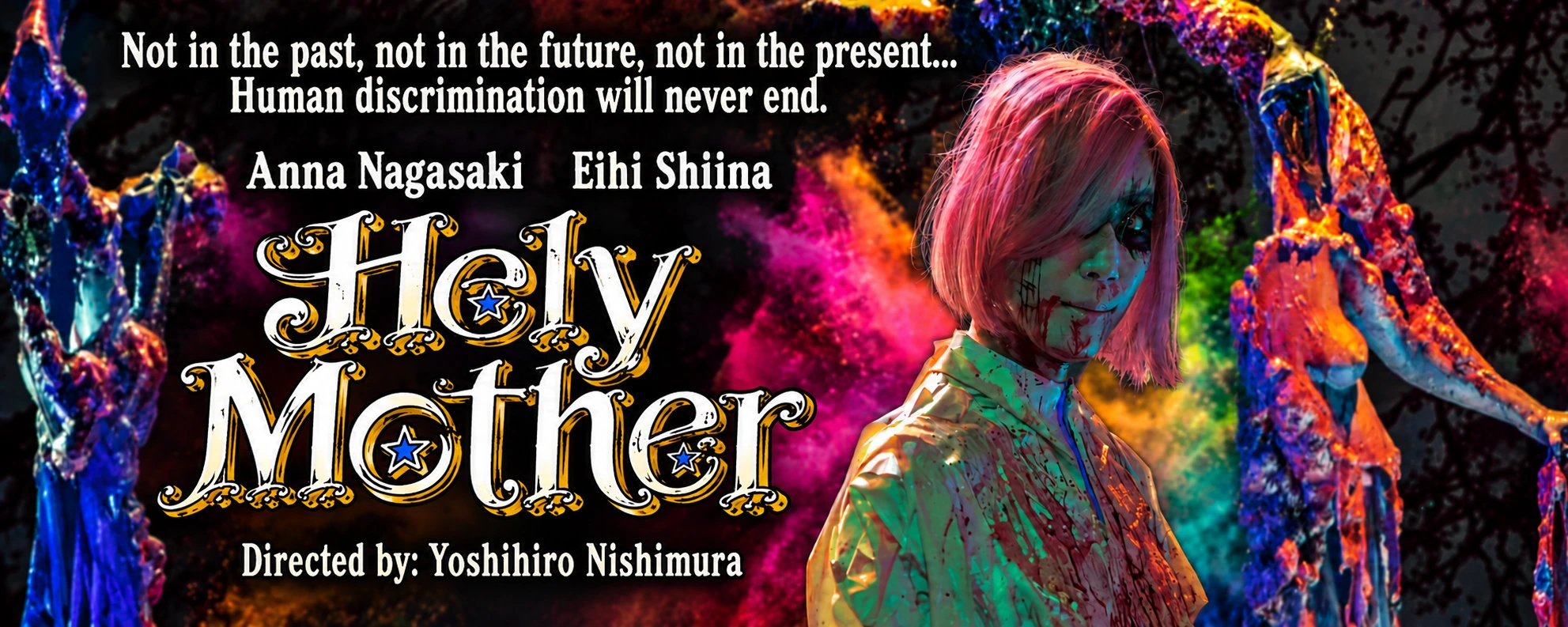
The film tells the story of Maria (Anna Nagasaki), a transgender woman who appears in a world where a racist, sadistic organisation is gaining increasing power, attempting to seize control of Japan, eliminate undesirable people and impose its own order upon society. Around her revolve yakuza, murderers, grotesque creatures, religious allusions, an anti-discrimination message and Nishimura’s customary fountains of blood. The premise is therefore extremely promising. The director constructs Maria as a figure who is simultaneously sacred and obscene: a mother, warrior, avenger, protector of the marginalised and a body that cannot easily be accommodated within the system of social normalisation.
It is Maria herself who represents the film’s greatest achievement. Nishimura does not place her among the monsters preying upon the vulnerable, but on the side of the poor, the rejected and the persecuted. Her transgender identity is neither a problem to be solved nor a cheap plot twist, but part of her physical and social difference. The film remains exploitation cinema, of course, so it does not portray her subtly. Quite the opposite: she is presented as attractive, erotic, strange, brutal and superhumanly strong. Her revealing outfits, the bewildered men in the bathhouse and the ripping off of a man’s penis after he harasses her make it clear that the camera seeks to bring out Anna Nagasaki’s magnetism and physical attractiveness while remaining firmly within a world of excess, black humour and violence. Contrary to what one might expect, this is one of the film’s more successful decisions. Maria is not reduced to a grotesque curiosity, but remains alluring, dangerous, protective and sacrilegious all at once.
At its best, Holy Mother works as a filthy, splatter-soaked parable about bodies that the system cannot classify and therefore attempts to erase. The racist organisation, which promotes extreme class divisions, seeks to cleanse the country and eliminate people deemed incompatible with its vision of the world. Maria is the opposite of this order: excess, impurity, miracle and threat. Nishimura does not create elegant queer cinema, but a loud, almost crude hymn to those who exist outside the norm. In this sense, Holy Mother is a pro-trans film, even if it expresses its message in an entirely Nishimura-like fashion: through blood, mutations, grotesquerie, fetishisation and visual excess.
The problem is that the film immediately stops working whenever it loses sight of Maria. Halfway through, the protagonist is weakened and pushed aside, replaced by a parade of random characters, lengthy conversations, forced scenes and bizarre ideas of wildly uneven quality. Nishimura has always been a chaotic filmmaker, but in his best films the chaos possessed a distinct rhythm. In Tokyo Gore Police or Helldriver, successive ideas could seem absurd, yet they usually emerged naturally from the energy of the fictional world. In Holy Mother, they increasingly resemble arbitrary additions with which the director attempts to fill the void left by the loss of the film’s central figure.
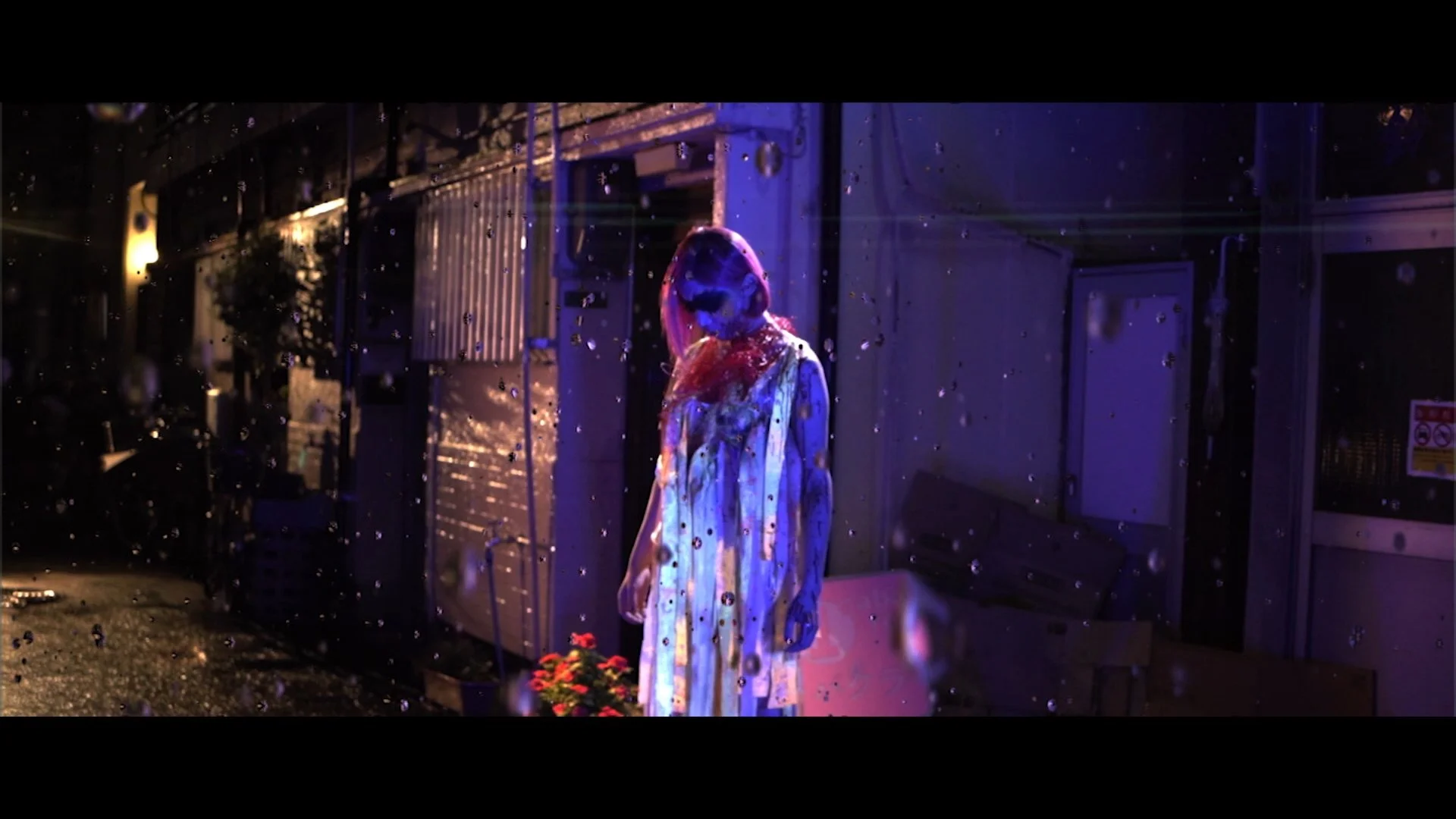
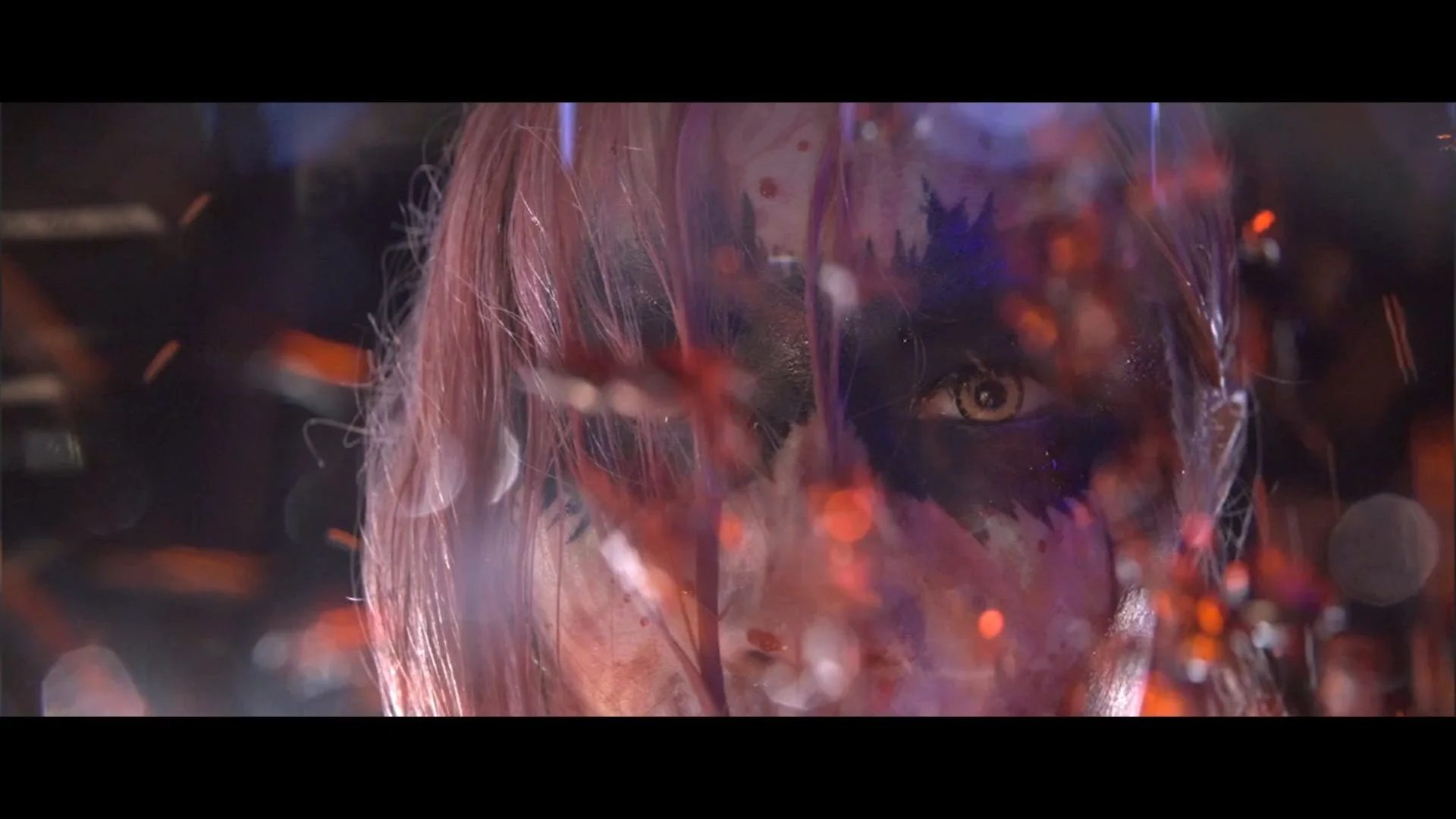
It does not help that the splatter no longer possesses the same impact as it did during Nishimura’s finest period. The practical effects can still be inventive, and some of the monster designs retain a familiar, comic-book charm, but the execution often looks cheaper and less convincing than it once did. The director attempts to conceal the budgetary limitations through close-ups, rapid editing and chaotic framing, but the result is not greater intensity; it is disorientation. Nishimura’s gore ought to be tangible, wet, aggressive and gleeful in its excess. Here, all too often, it feels smaller, weaker and more anxiously concealed from the viewer.
The action scenes fare even worse. Nishimura has never been a director of fight sequences in the classical sense, but his earlier films made much better use of movement, space and grotesque physicality. Tokyo Gore Police, Helldriver, The Ninja War of Torakage and even Tokyo Dragon Chef possessed considerably more energy and choreographic inventiveness in this respect. In Holy Mother, choreography takes a back seat, and the film behaves as though the mere presence of strange effects, blood and mutations were enough to constitute an action scene. Unfortunately, they are not. When Maria fights, the imagery should become an extension of her physical power. Instead, it all too often becomes a succession of incomprehensible close-ups and gestures.

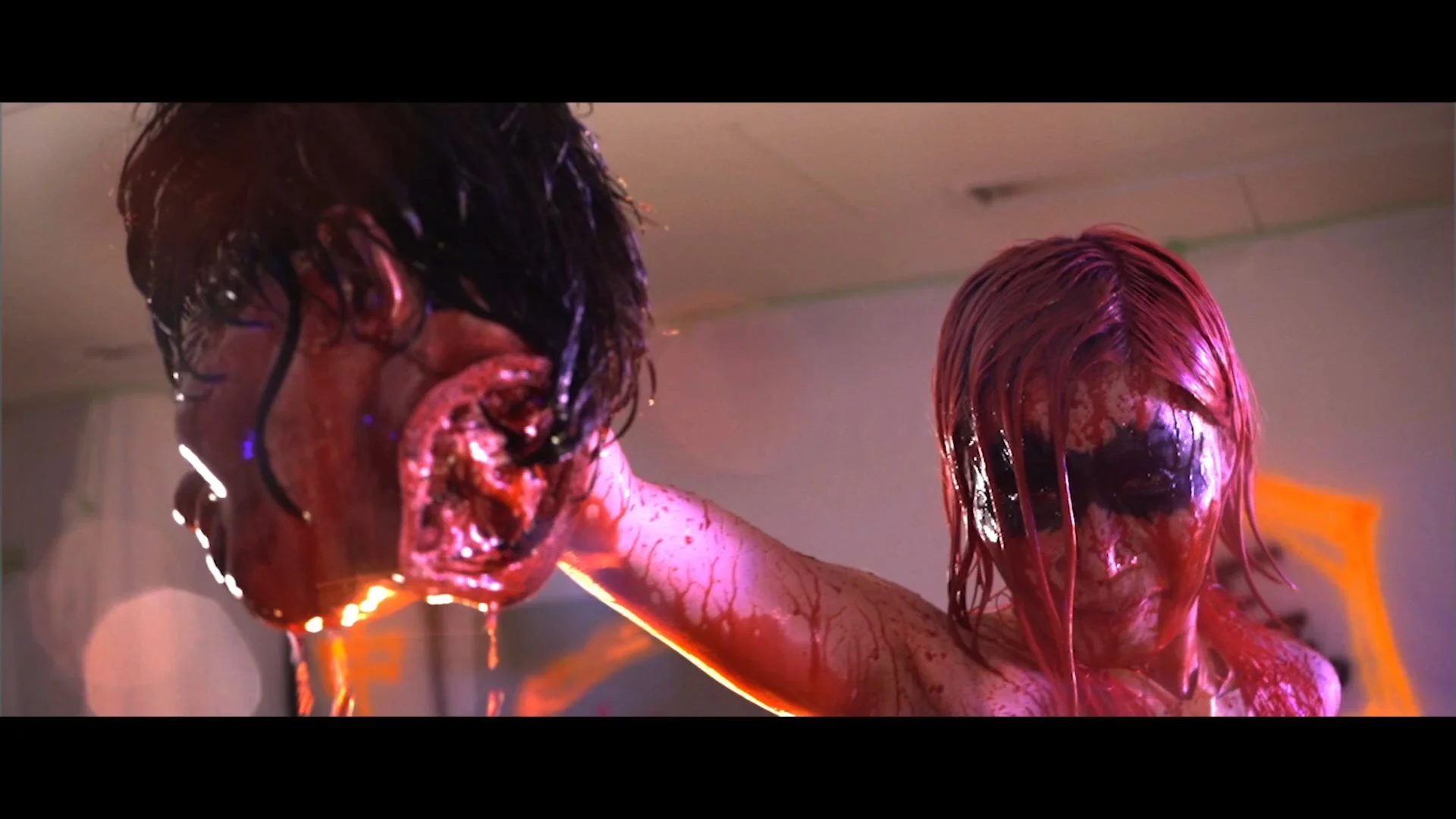

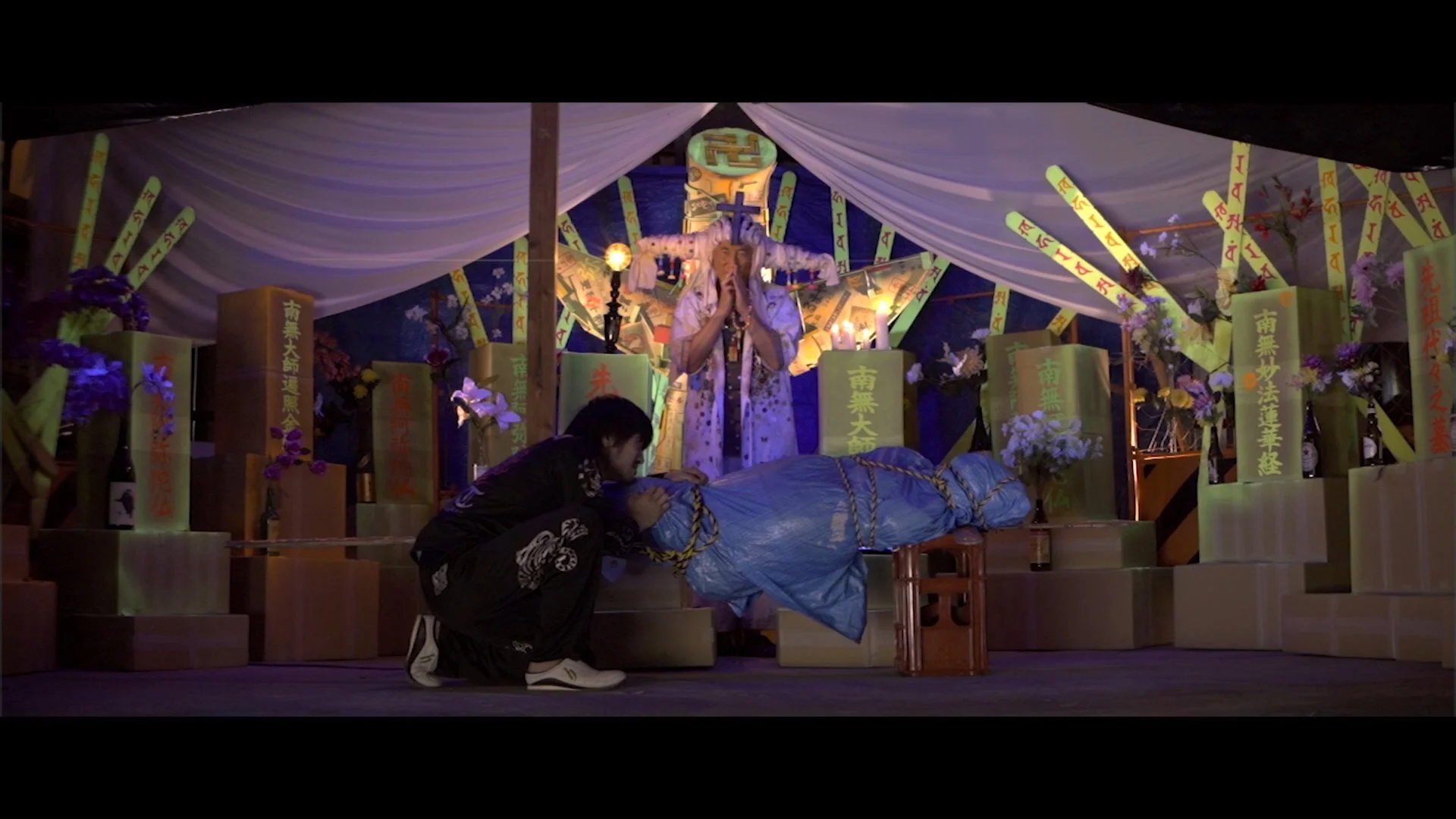
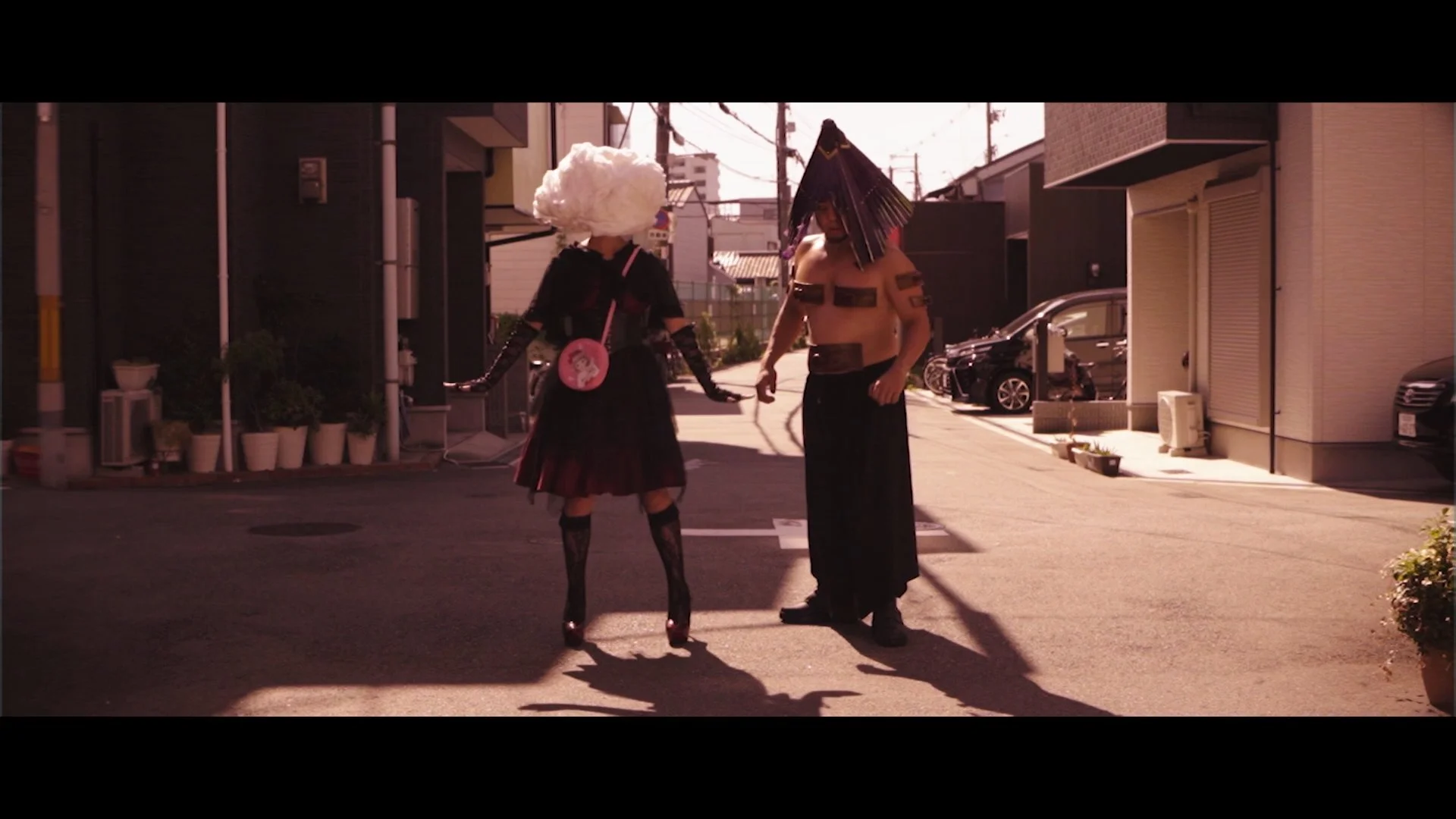

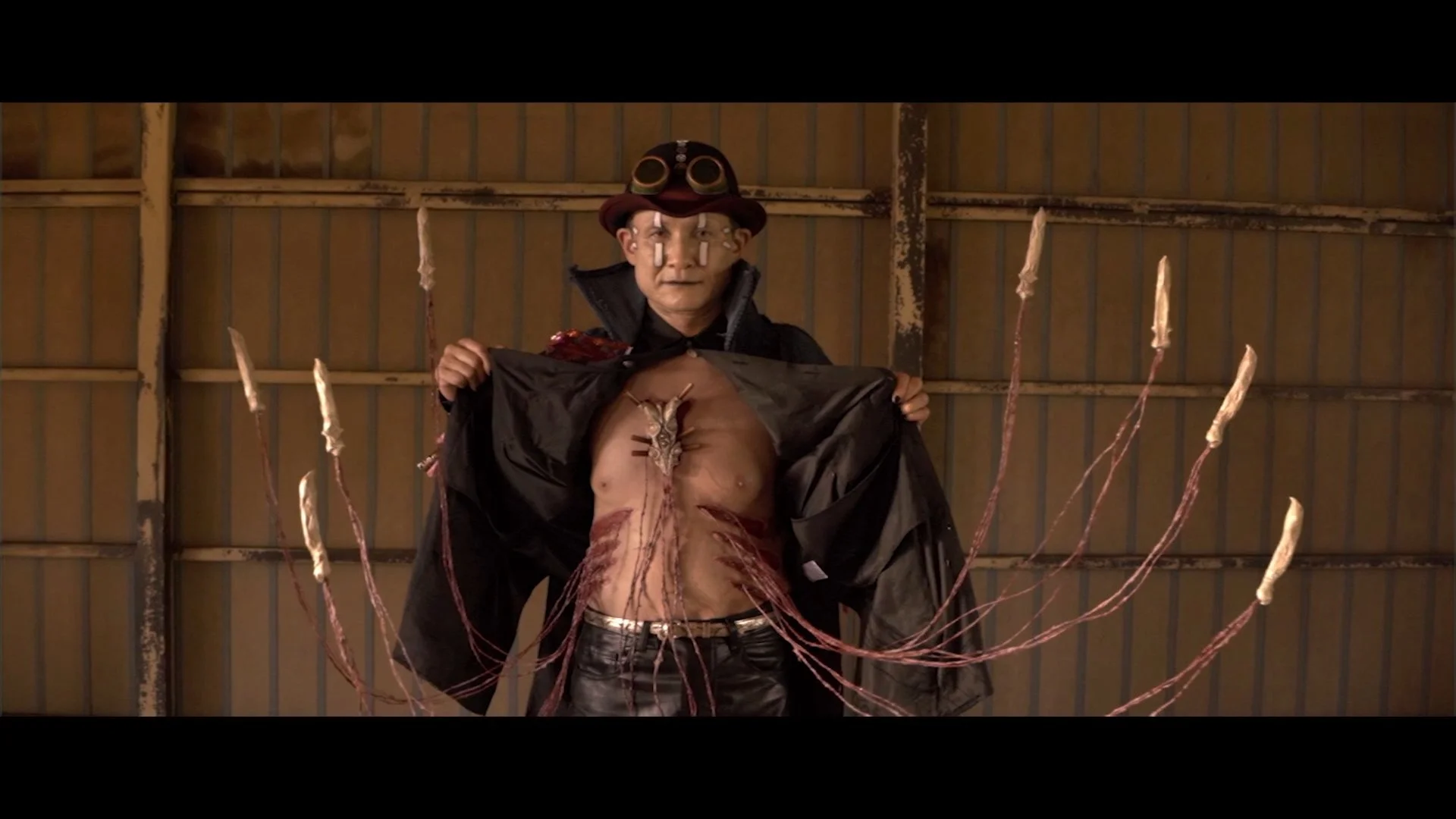
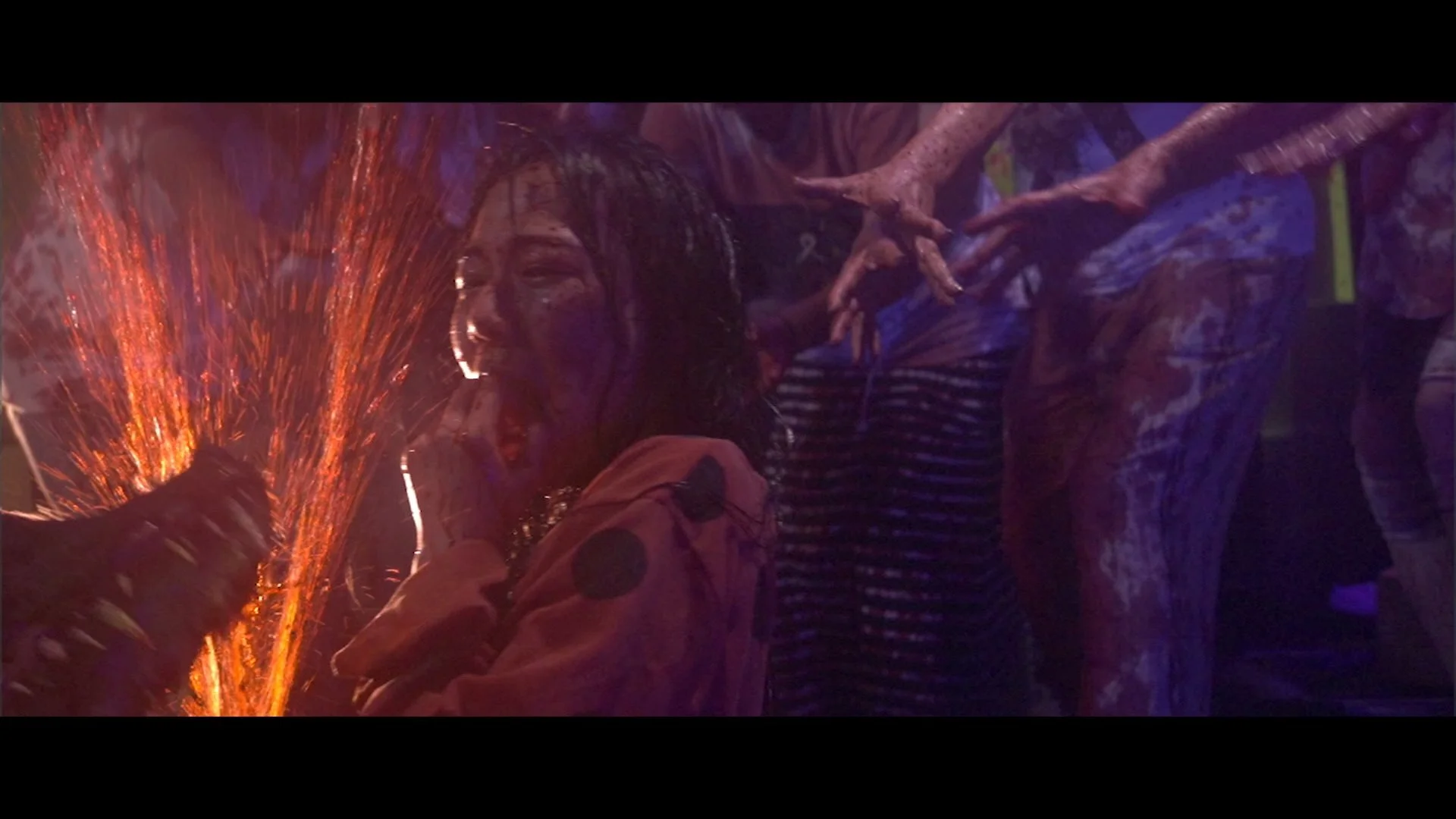
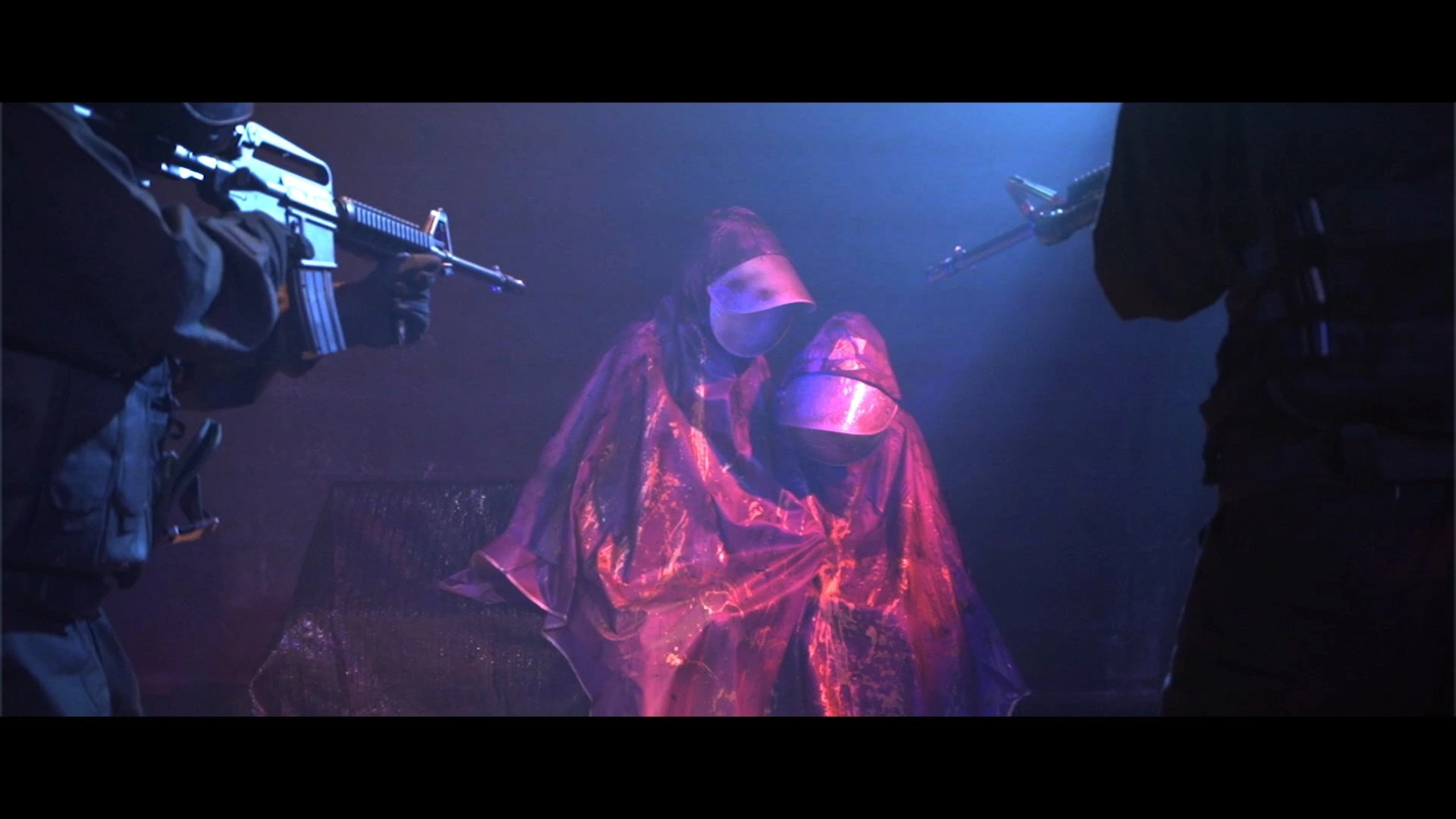
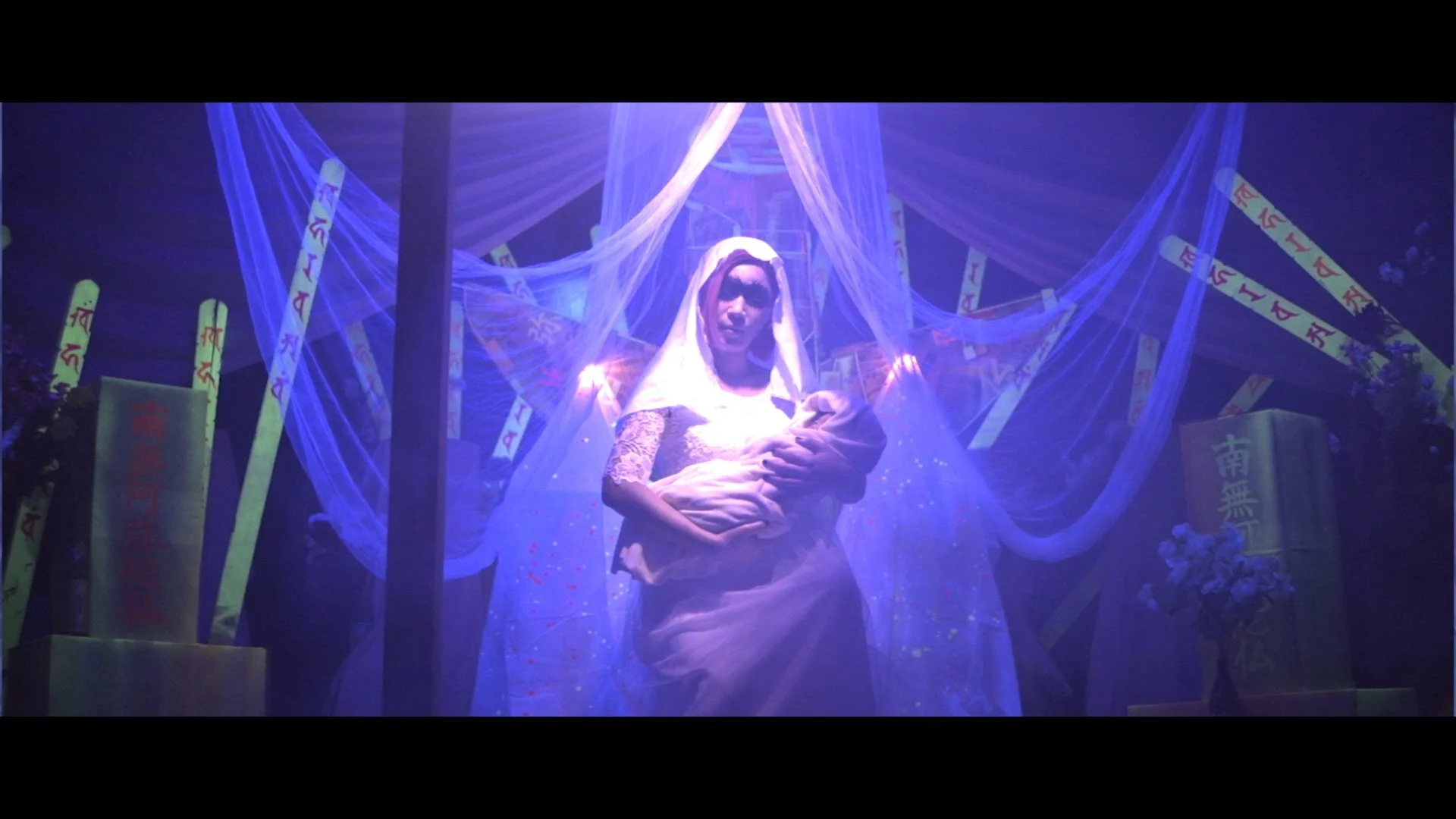
Nishimura also draws upon the entire tradition of Japanese and international transgressive cinema and punk violence. The film directly quotes or mentions Audition, Ichi the Killer, Burst City, Crazy Thunder Road, The Terminator and Mad Max. These are not random titles. Together, they form a map of the cinematic imagination from which Holy Mother emerges: cinema of mutilated desire, urban decay, countercultural rebellion, vehicular chaos and bodies subjected to extreme transformations. At the same time, many of the ideas for monsters and deformities clearly resemble Nishimura’s own earlier films, particularly Tokyo Gore Police. For viewers familiar with his filmography, however, this is hardly an advantage. Rather, it feels like more of the same, suggesting that the Japanese filmmaker was beginning to run short of both ideas and money for new projects.
What is most interesting, then, is that Holy Mother is sometimes more compelling thematically than it is effective formally. The film’s heart is in the right place: with the marginalised, the poor, the persecuted and those who do not fit in. Its anti-discrimination message is clear, even if delivered in the form of a bloody farce. Maria is not a joke at the expense of transgender people, but a splatter saint of the rejected. If the film leaves any lingering doubt as to whether she brings salvation or plague, it is more because Nishimura thinks in terms of apocalyptic, corporeal myths than because he wishes to condemn her.
It is simply a shame that this central idea is surrounded by such an uneven film. Narratively, Holy Mother is weaker than many of Nishimura’s earlier productions, despite being scarcely less chaotic. When the protagonist disappears from the centre of the narrative, the pace falters, the dialogue begins to drag, and successive episodes resemble loosely connected jokes and displays of special-effects make-up. Rather than bringing a delighted smile to the viewer’s face, the increasingly exaggerated violence is more likely to provoke a pitying one. The protagonist’s subsequent recovery amounts to a deus ex machina, while the confrontation with the final antagonist proves surprisingly anticlimactic. The film prepares the viewer for an explosion of manic energy, only to resolve the conflict in a manner that is far too simple and unsatisfying.
This is why Holy Mother is a film that is easy to like but difficult to rate particularly highly. It contains much of what makes Nishimura worth appreciating: shamelessness, grotesquerie, politically messy empathy, bizarre bodies, religious and splatter symbolism, and a punk hostility towards normality. It also has Anna Nagasaki, whose presence gives the whole film a centre, appeal and emotional weight. At the same time, however, it is cheaper, formally weaker, less surprising and more exhausted than the director’s finest works.
Ultimately, Holy Mother can be regarded as a late, uneven footnote to Yoshihiro Nishimura’s career. It is not a return to form, but rather a film demonstrating that his imagination was still capable of generating interesting figures, even as it became increasingly difficult for him to sustain rhythm, narrative coherence and purely cinematic energy. It is chaotic, occasionally irritating and cheap, but not without heart. And in Nishimura’s case, that heart has always beaten amidst blood, refuse, mutations and the people whom the civilised world would rather not look at.
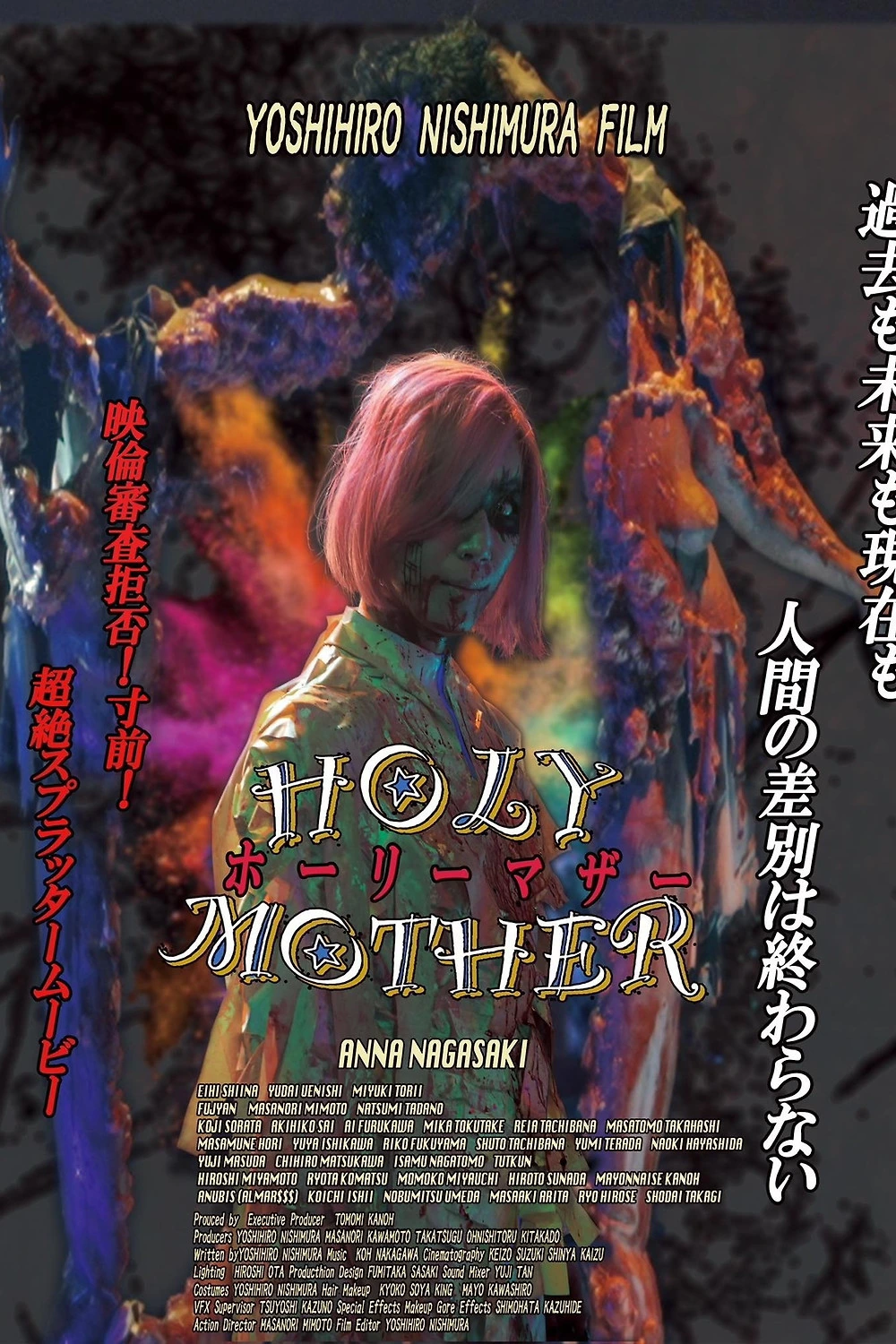
Holy Mother
Hōrī Mazā
Directed, written and edited by: Yoshihiro Nishimura
Photography: Keizo Suzuki, Shin’ya Kaizu
Music: Kō Nakagawa
Cast: Anna Nagasaki, Eihi Shiina, Yudai Uenishi, Masanori Mimoto, Natsumi Tadano, Akihiko Sai i inni.
Author of “Panorama of Hong Kong and Taiwan Cinema”, a lover of Asian cinema, action films, and space voyages aboard the starship Enterprise. He once studied Polish philology, and later became a citizen of the NSK State in Time. He has published in Kinomisja, Ekrany, Kultura Liberalna, Torii, Dwutygodnik Kulturalny, and others.