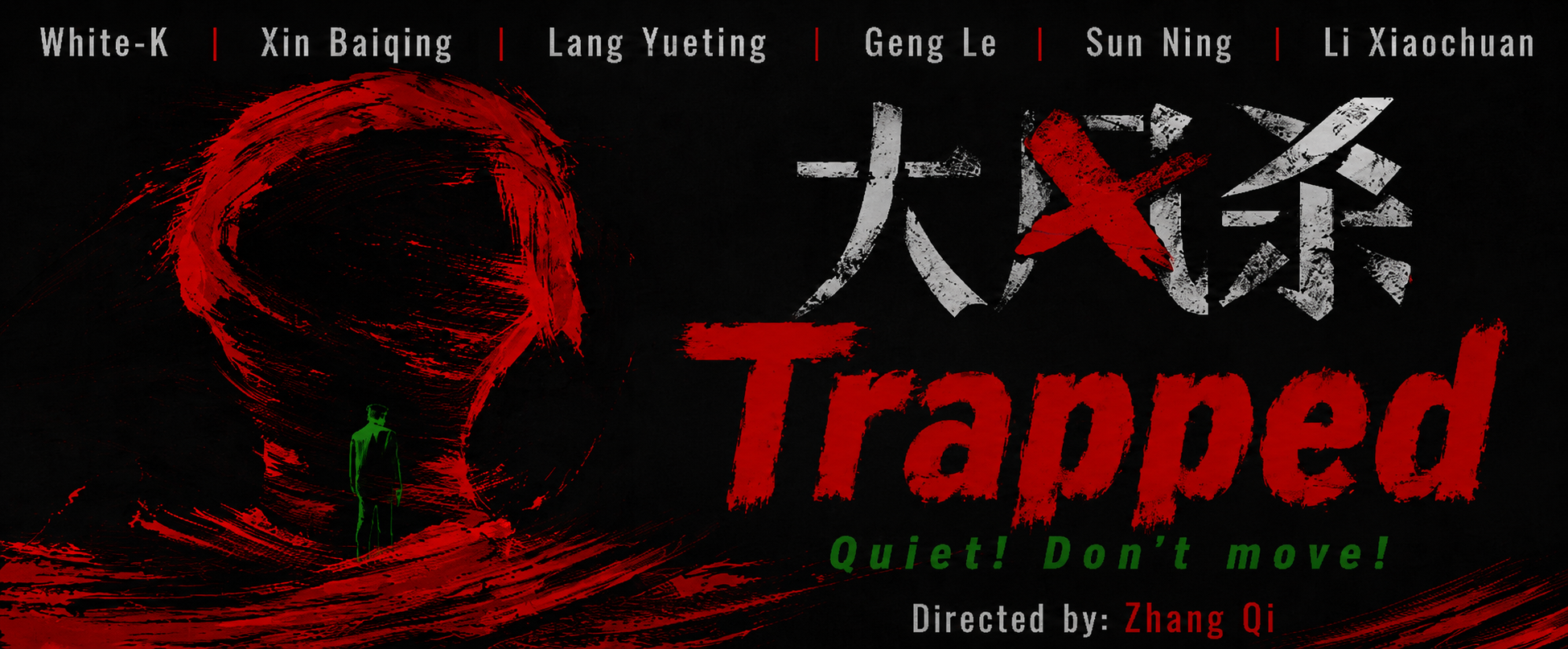
The story of Trapped takes place in 1995, one year before China’s gun-control law came into force. Director and screenwriter Zhang Qi uses this moment as a boundary between an old order governed by violence and a new order of law and state authority. The film depicts the transformation of one into the other through a series of intriguing combinations: the desert western about a besieged town with film noir, a Chinese aesthetic that valorises representatives of the law with Hong Kong police cinema, and genuine political contexts with a world reminiscent of the mythical jianghu.
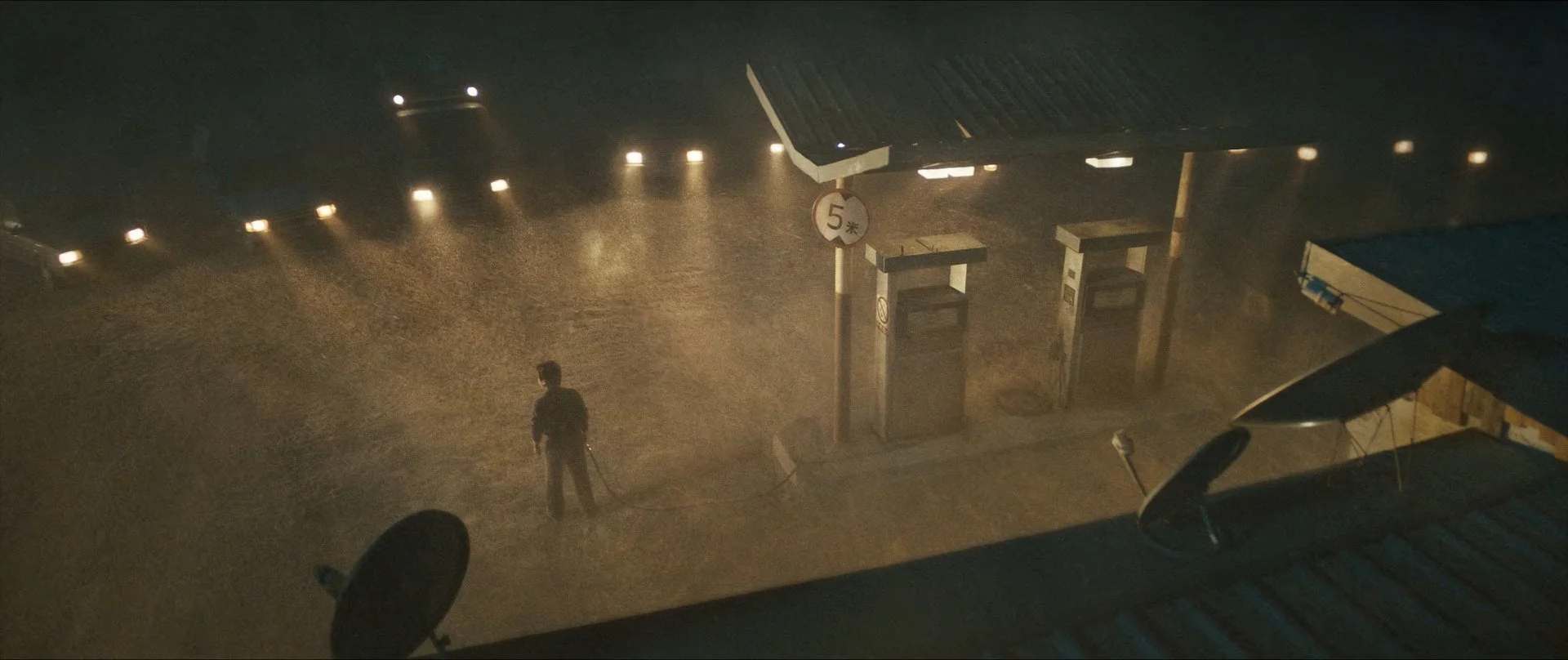
The film begins with an excellent, atmospheric opening sequence set during a sandstorm. A group of criminals travelling in an ambulance and several cars, their headlights cutting through the nocturnal landscape, arrive at a petrol station in the middle of a desert wasteland. The sequence is visually striking and makes excellent use of the sand, darkness, figures concealed in shadow, car headlights piercing the unfathomable night and a mysterious killer moving behind translucent windows.
During this sequence, we learn about Beishan (Xin Baiqing), a powerful gangster who has faked a critical medical condition in order to escape from prison. The doctor he bribed, however, administered too high a dose of medication, causing Beishan to regain consciousness far more slowly than planned. This leads to a split among his men, some of whom begin plotting to kill him and seize his fortune.
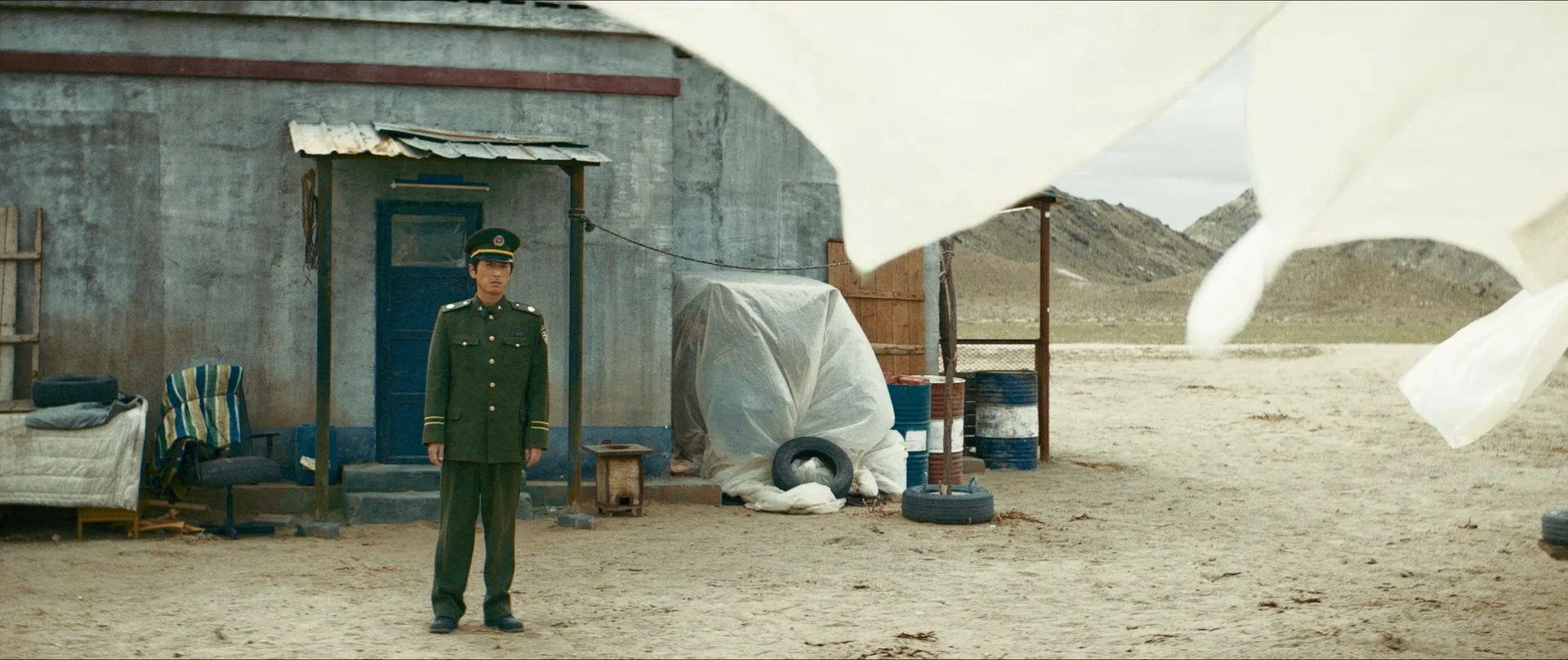
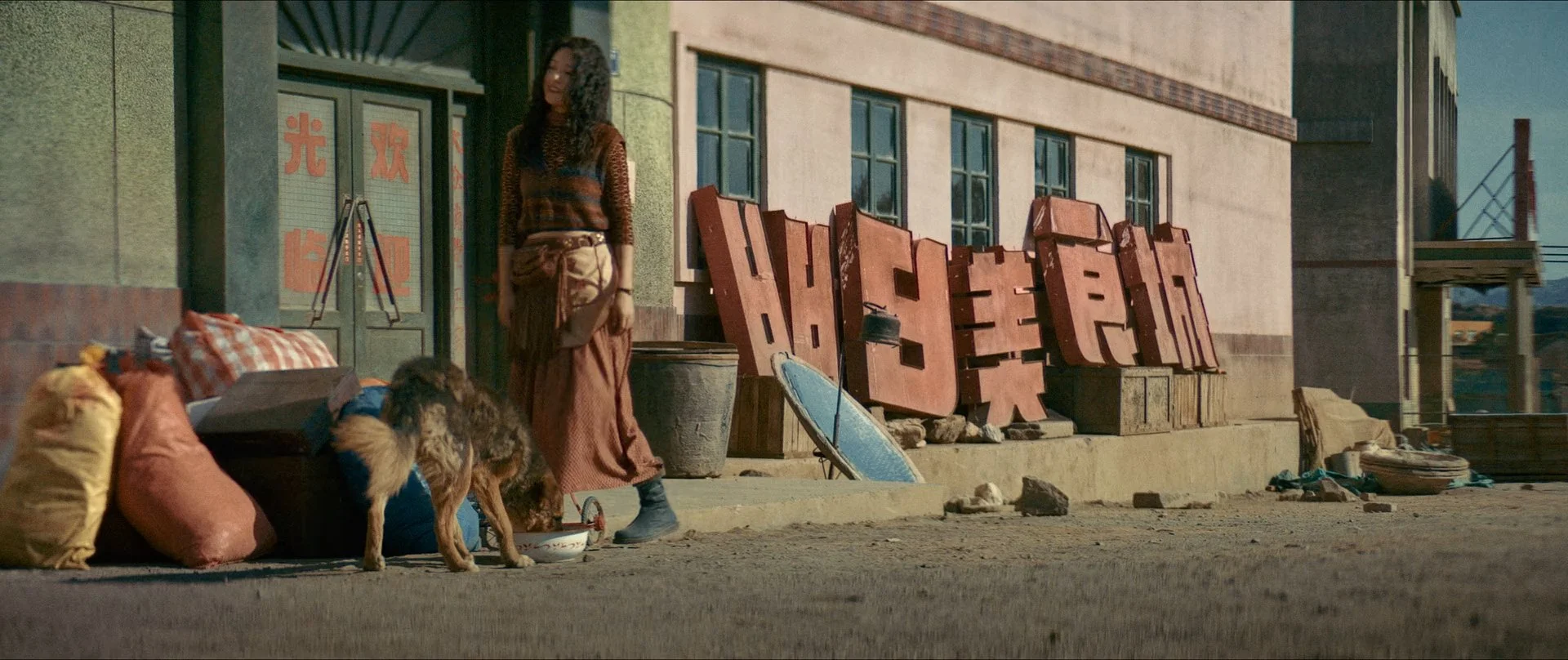
Beishan’s money and valuables are hidden in locations scattered around Mangya, a small, half-abandoned desert town in north-western China. By destroying the communication lines and stealing the petrol from the town’s only filling station, the criminals cut it off from the outside world. Facing a group of more than forty armed bandits are three police officers equipped with a single pistol and a handful of bullets. They are led by Xia Ran (Bai Ke), a war veteran nicknamed Night Owl. Also living in the town is Beishan’s former lover, Li Hong (Lang Yueting), the only person who knows the locations of her former partner’s crates of money.
The film was shot in Shitanjing, in the city of Shizuishan, Ningxia. Numerous remnants of the former mining industry survive there and were used to recreate the regional landscape of the 1990s. Mangya, described as a ‘little Shenzhen’, also provides an important backdrop to the story. It was supposed to become a prosperous frontier town, but after the border crossing was closed it fell into a state of suspension between a bright past and a lifeless present.
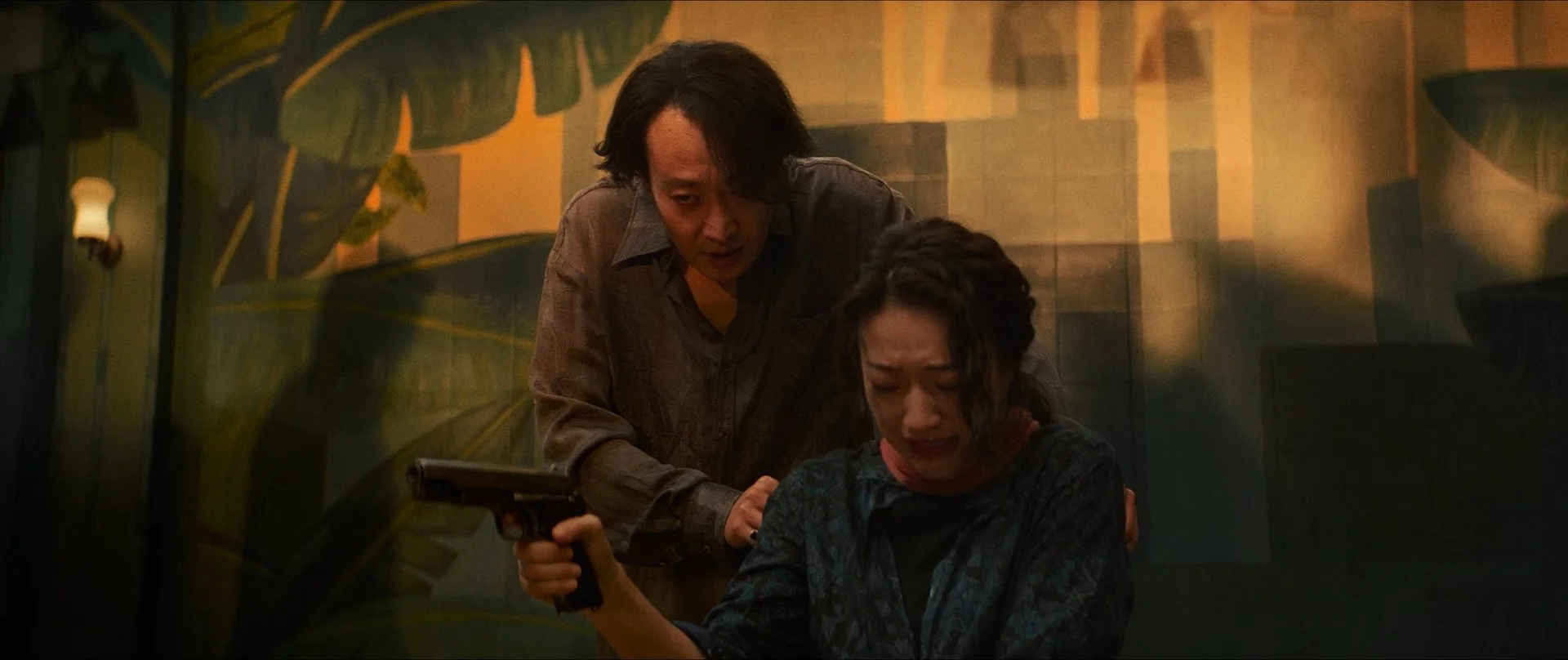
The characters of Trapped exist within the same kind of limbo. Xia struggles with war trauma and a sense of meaninglessness. Beishan attempts to force blind loyalty from his men through violence, but the gangsters increasingly exchange loyalty for greed. Li tries to gather enough money to free herself from the shadow of her cruel former lover, yet she remains forced to act as a pawn in his sadistic games.
Trapped therefore possesses an excellent opening, intriguing characters, a superb choice of setting and interesting ideas, and even manages to avoid the excessively nationalist tone that characterises so many comparable productions. Naturally, praise for Communist Party policies and the uniformed services remains visible, but it does not constitute the film’s central message.
It is also interesting that the film does not concentrate upon an open struggle between good and evil characters. The police officers spend much of their time locked inside the station, afraid to go outside and confront an enemy that vastly outnumbers them. Apart from several shoot-outs and the final fight, they mostly engage in verbal battles with Beishan. Zhang uses the enclosed, isolated spaces occupied by the characters as metaphors for their closed minds, unable to free themselves from futile dreams and suffocating traumas.
The film is Zhang’s directorial debut. Until this point, he had worked exclusively as an editor—on films including Hidden Man, Youth and Be Somebody—and in his first feature as a director he sometimes seems more interested in the film’s formal qualities than in its content.
While Trapped begins at an exceptionally high level, Zhang experiences increasing difficulties with its dramaturgy as the film progresses. The prolonged conflicts within the criminal group eventually become excessively repetitive. Several times, Zhang disposes of one ‘principal’ conspirator plotting against Beishan, only to replace him with another.
Xia, meanwhile, trains a young police officer suffering from problems with his eyesight. This storyline is overly expository, however, and calculated to produce cheap sentimentality. Li’s story follows excessively predictable paths, although at least her narrative is free from unnatural interruptions. It is simply unfortunate that, following a successful introduction, she loses her agency and only regains it very late in the film. This is all the more disappointing because Li Hong initially appears capable of complicating the straightforward division between representatives of the law and bandits.
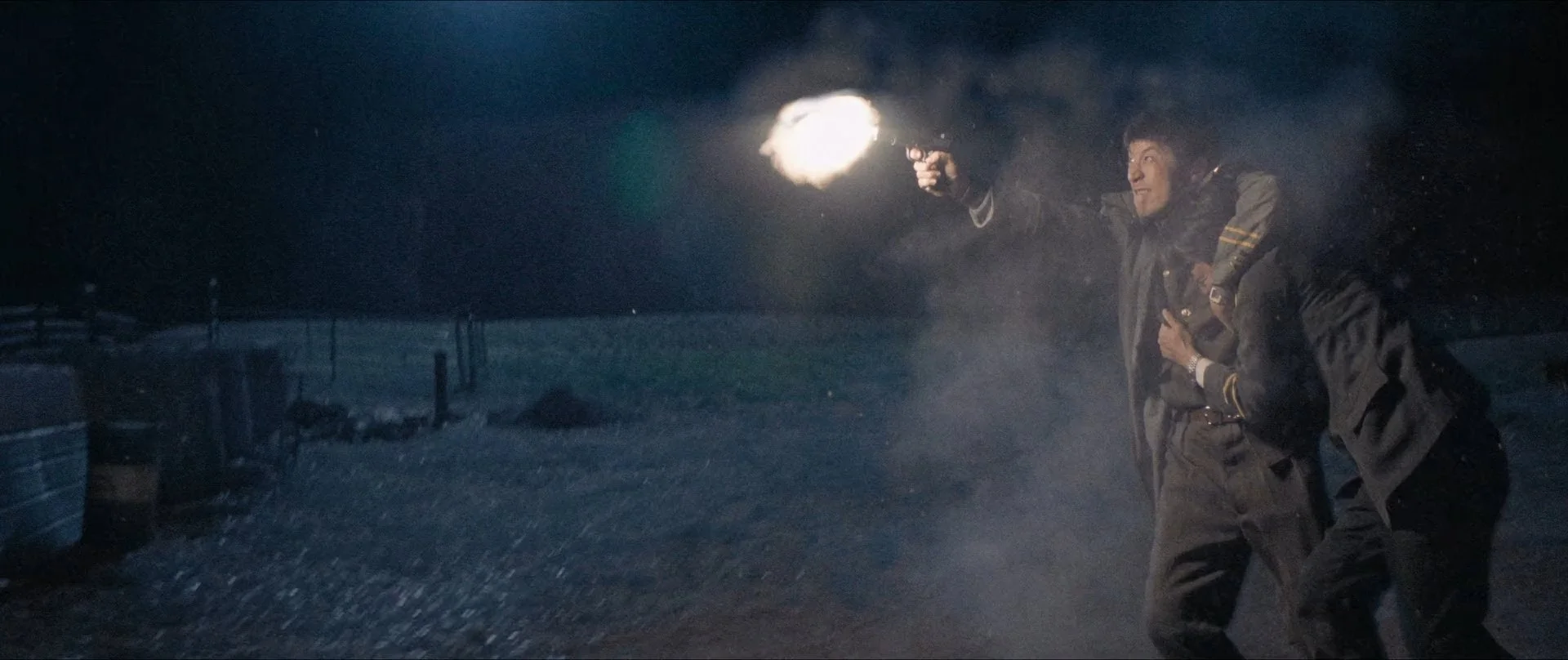
Zhang also occasionally overindulges in editing and stylistic showmanship. Some of the shoot-outs attempt to engage the viewer through unusual perspectives, but these choices make the exchanges of gunfire difficult to follow. The fight scenes—and even conversations—are frequently presented with too many cuts. This deprives the fights of energy and makes the dialogue scenes distracting.
At times, it seems as though Zhang is incapable of allowing any shot to remain on screen for even a moment. In many other sequences, however, he demonstrates considerable narrative talent. Perhaps, as a first-time director, he simply needs more experience in making stylistic choices.
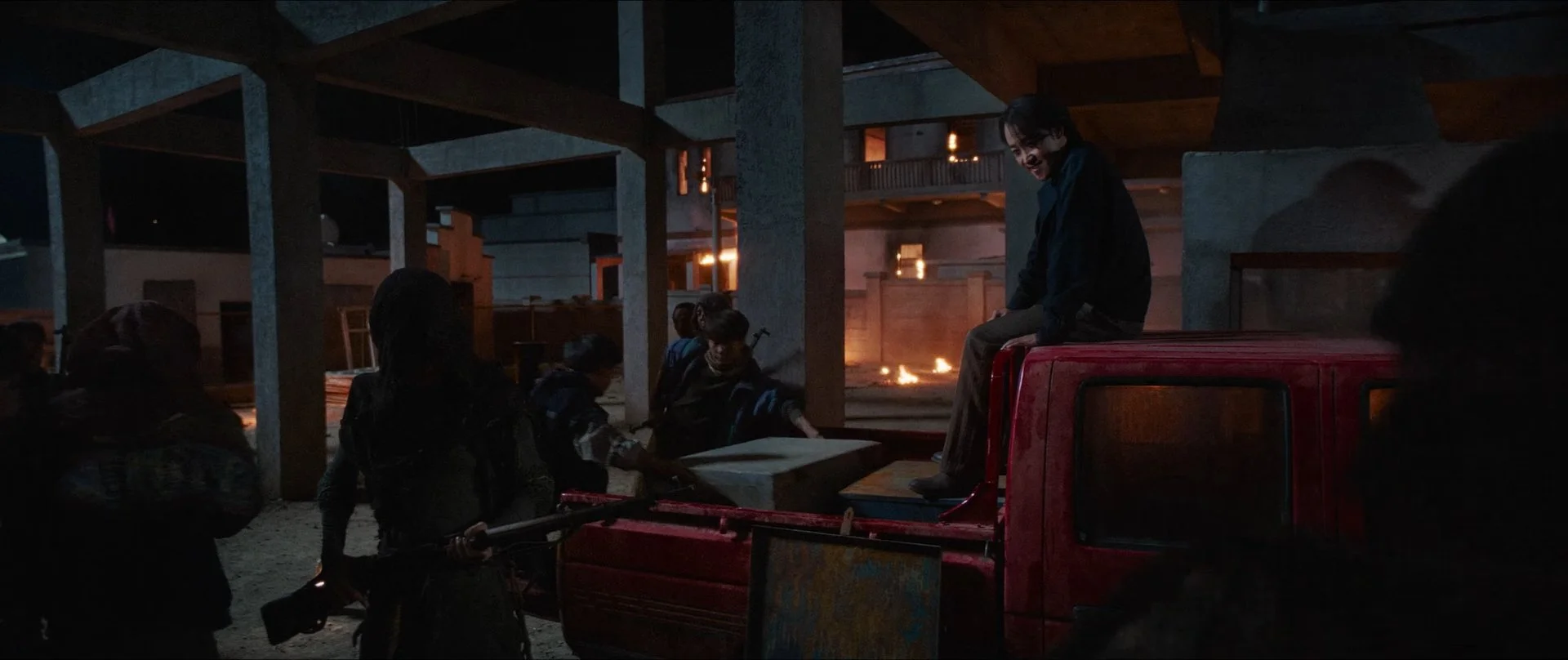
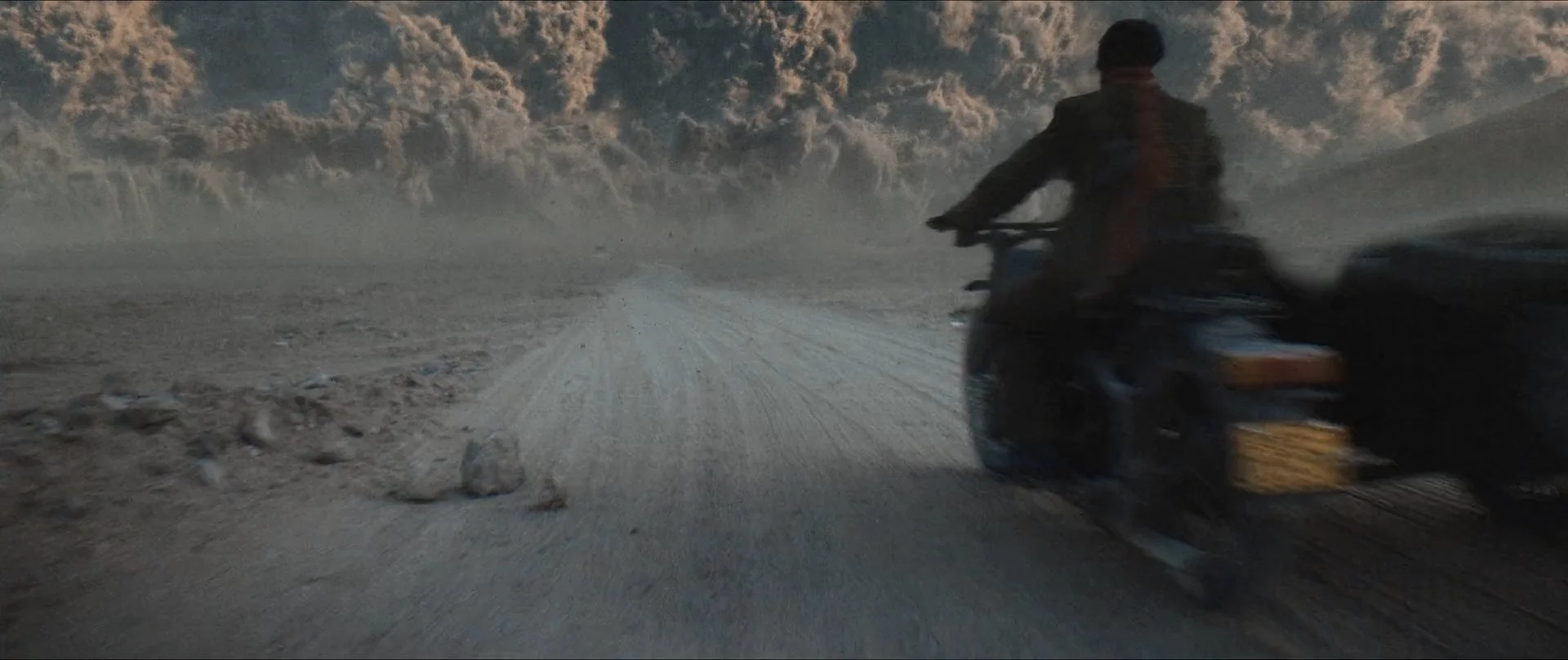
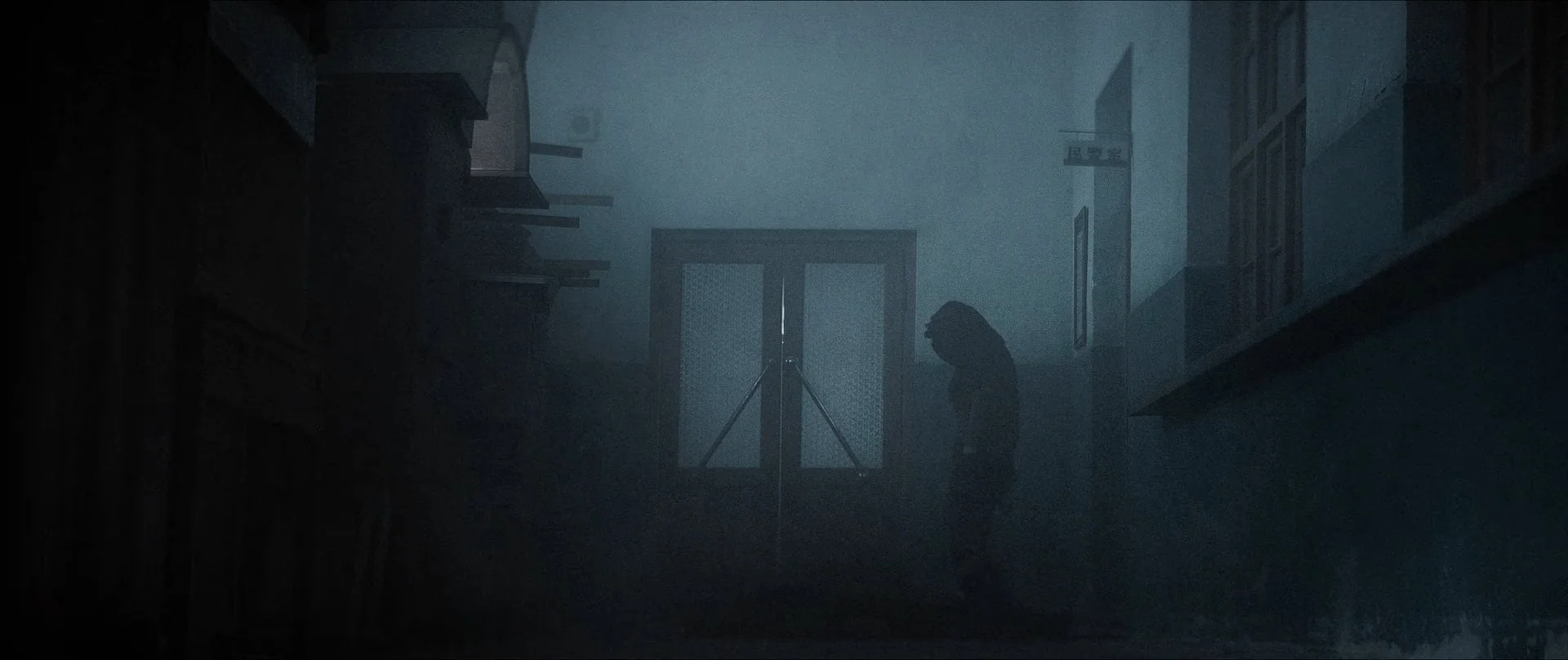
In genre terms, Trapped is simultaneously a siege western, a police thriller and a desert noir, all subordinated to an atmosphere of an era coming to an end. The press described the film as a noir neo-western inspired by works such as Ning Hao’s No Man’s Land, the Coen brothers’ Blood Simple and John Carpenter’s Assault on Precinct 13.
As a story of entrapment and isolation—both physical and psychological—it attempts to depict a transitional point between the old rules of violence and the order brought by legal change. It is in this respect that Trapped most clearly reveals its nationalist undertones, although they remain unobtrusive and are almost entirely focused upon the issue of firearms. Within this particular context, it is difficult to dispute that restricting access to guns contributed to a dramatic reduction in crimes committed with them.
The director has also explained in interviews that his film is not a story about heroism, but about fear. As mentioned above, the conventional struggle between virtuous representatives of the law and evil bandits does not occupy the majority of the running time. It erupts only occasionally and relatively late.
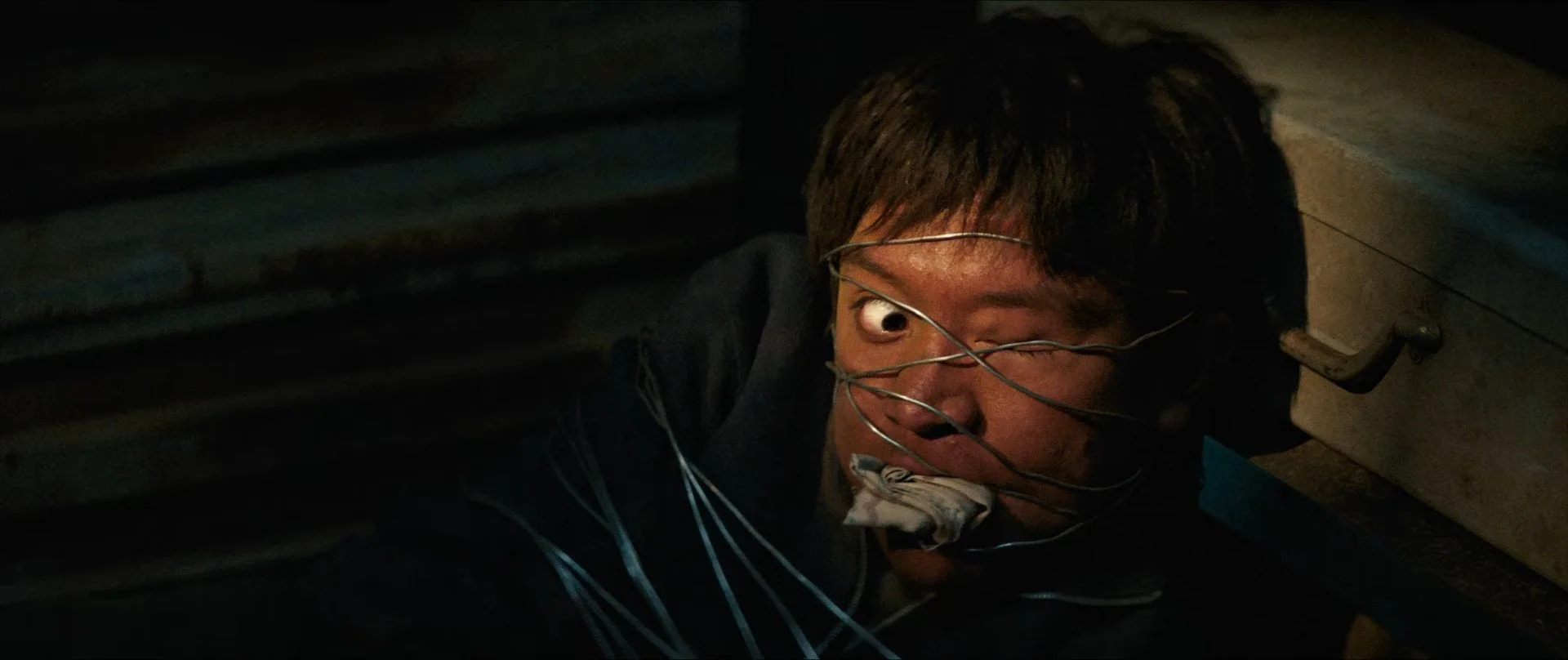
This is not a film about a stereotypical veteran who, as a solitary hero, eliminates criminals one by one. Instead, it is characterised by darkness, chaos and fear—experienced by police officers and villains alike—as well as by the difficulty of coping with the extreme circumstances confronting everyone involved.
Zhang stated that through Trapped he wanted to express kunjing: entrapment, deadlock and an existential trap. To achieve this, he placed his characters in extreme conditions, far removed from civilisation and ordinary social order.
His ambitions are not fully realised, however, primarily because of the aforementioned dramaturgical problems, but also because towards the end Zhang seems to decide that Xia must finally deal with the bandits. The film consequently turns towards more straightforward genre cinema and proceeds to an open confrontation between Xia and Beishan. As a result, both the climax and the epilogue provide excessively simple solutions to the accumulated problems.
Ultimately, Trapped remains an intriguing film that combines numerous ideas and styles in a manner possessing more strengths than weaknesses. Zhang attempts to make an anti-heroic police film containing all the elements of a heroic narrative while consistently undermining that heroism through fear, chaos, uncertainty and moral exhaustion. His ambitions, however, exceed his directorial experience, resulting in an uneven narrative and difficulty maintaining the balance between psychological and existential concerns and conventional action cinema drawing upon the western.
It is not a film I would recommend particularly strongly, but I believe that any admirer of the genres mentioned above will find moments and ideas here that they find appealing.
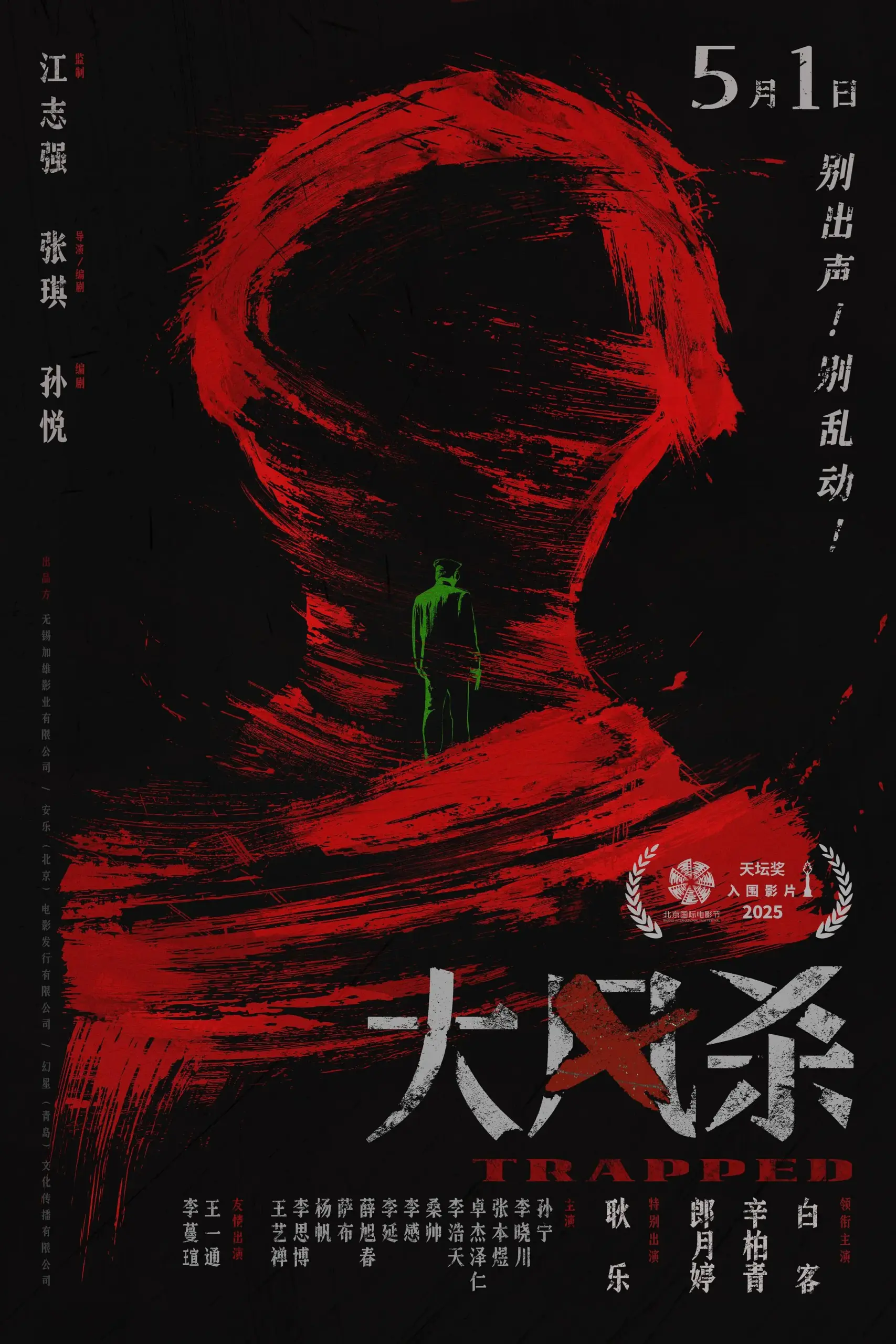
Trapped
Dàfēng shā
Directed by: Zhang Qi (some sources mention Sagara as a co-director)
Written by: Sun Yue, Zhang Qi
Cinematography: Wang Jiehong
Music: Björn Shen
Action choreography: Shi Zhanbiao with the help of army consultant Huang Hansen
Studio: Wuxi Jiaxiong Film Industry Co., Ltd., Huanxing (Qingdao) Cultural Communication Co., Ltd.
Premiera: 19.04.2025
Cast: Bai Ke / White-K, Xin Baiqing, Lang Yueting, Geng Le, Sun Ning, Li Xiaochuan, Zhang Benyu, Zhuo Jie Zeren, Sang Mingsheng
Awards:
Beijing International Film Festival 2025
- Winner: Best Screenplay — Sun Yue, Zhang Qi
- Winner: Best Supporting Actor — Geng Le
- Nomination: Best Feature Film
Author of “Panorama of Hong Kong and Taiwan Cinema”, a lover of Asian cinema, action films, and space voyages aboard the starship Enterprise. He once studied Polish philology, and later became a citizen of the NSK State in Time. He has published in Kinomisja, Ekrany, Kultura Liberalna, Torii, Dwutygodnik Kulturalny, and others.