The primary and most immediate association with the term “film noir” is of crime pictures from the 1940s and 1950s containing more sex and violence than similar productions from the preceding decade and characterized by dark shades of grey — both literally and metaphorically. This definition, however, cannot be said to suffice even to a small degree for understanding what noir cinema is and why it gained such great popularity. Among critics and film historians there is not even agreement on whether noir denotes a genre or a style, whether its defining characteristic is visual or thematic; indeed, there is not even consensus on what that visual quality or thematic content should actually be. What is more, noir is not merely a term for a cultural phenomenon but also a construct created in critical discourse by critics and scholars to describe that phenomenon. It should therefore be noted at the outset that this article is an attempt to describe only a particular type of cinema.
Most critics — primarily French ones — agree that the fundamental source from which the noir trend derives is pulp fiction and literature of a similar kind. The particularly significant writers standing behind its literary inspirations are certainly Dashiell Hammett, Raymond Chandler, James M. Cain, Cornell Woolrich, W. R. Burnett, and David Goodis. This conviction about modeling on their work stems partly from the fact that many noir films of the 1940s were based on their novels and short stories. And while it cannot be said that cinema merely sought to reproduce the moods contained in the written word, it can certainly be stated that the popularity of pulp and other crime stories exerted a strong influence on the popularity and mode of presentation of this subject matter both in cinema and in comics, for example.
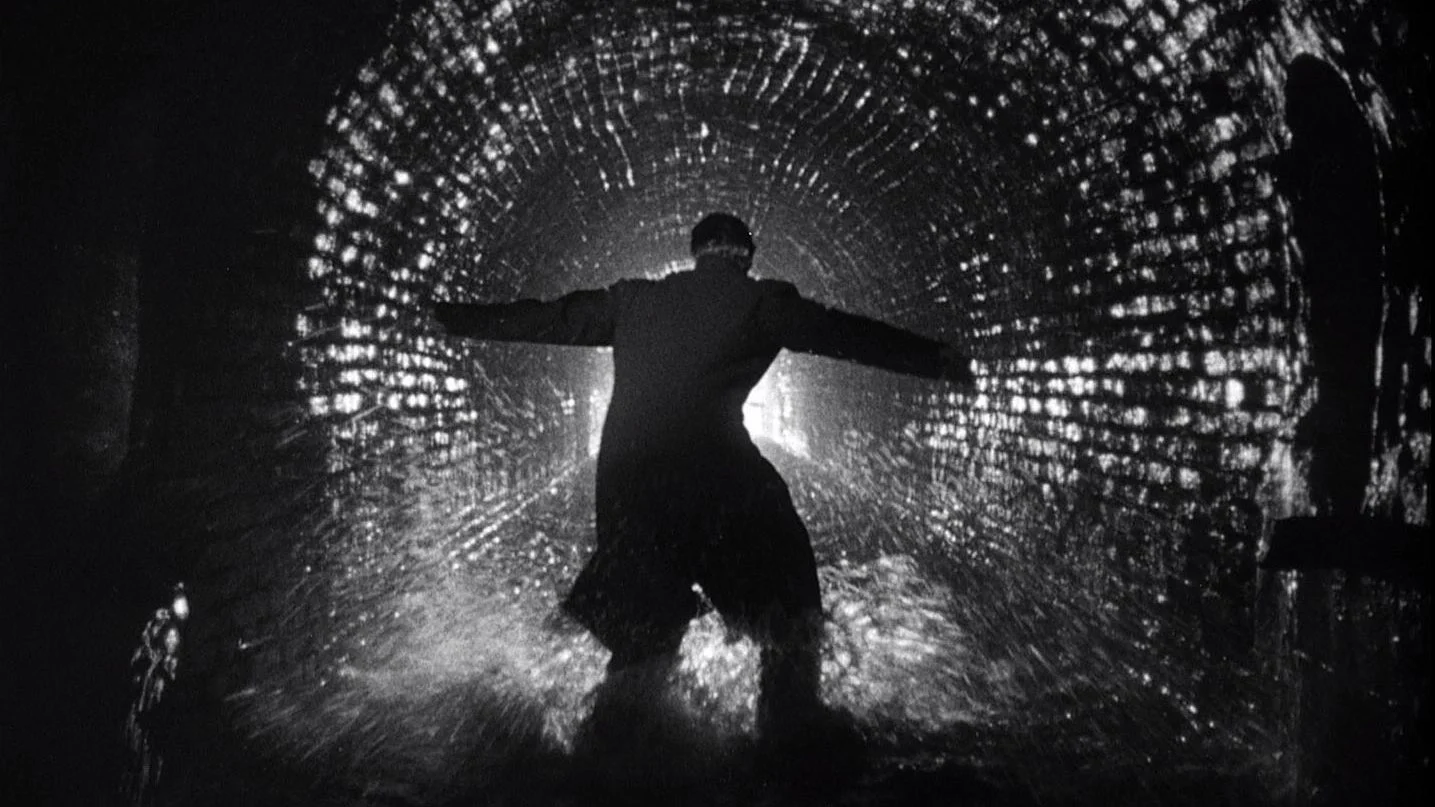
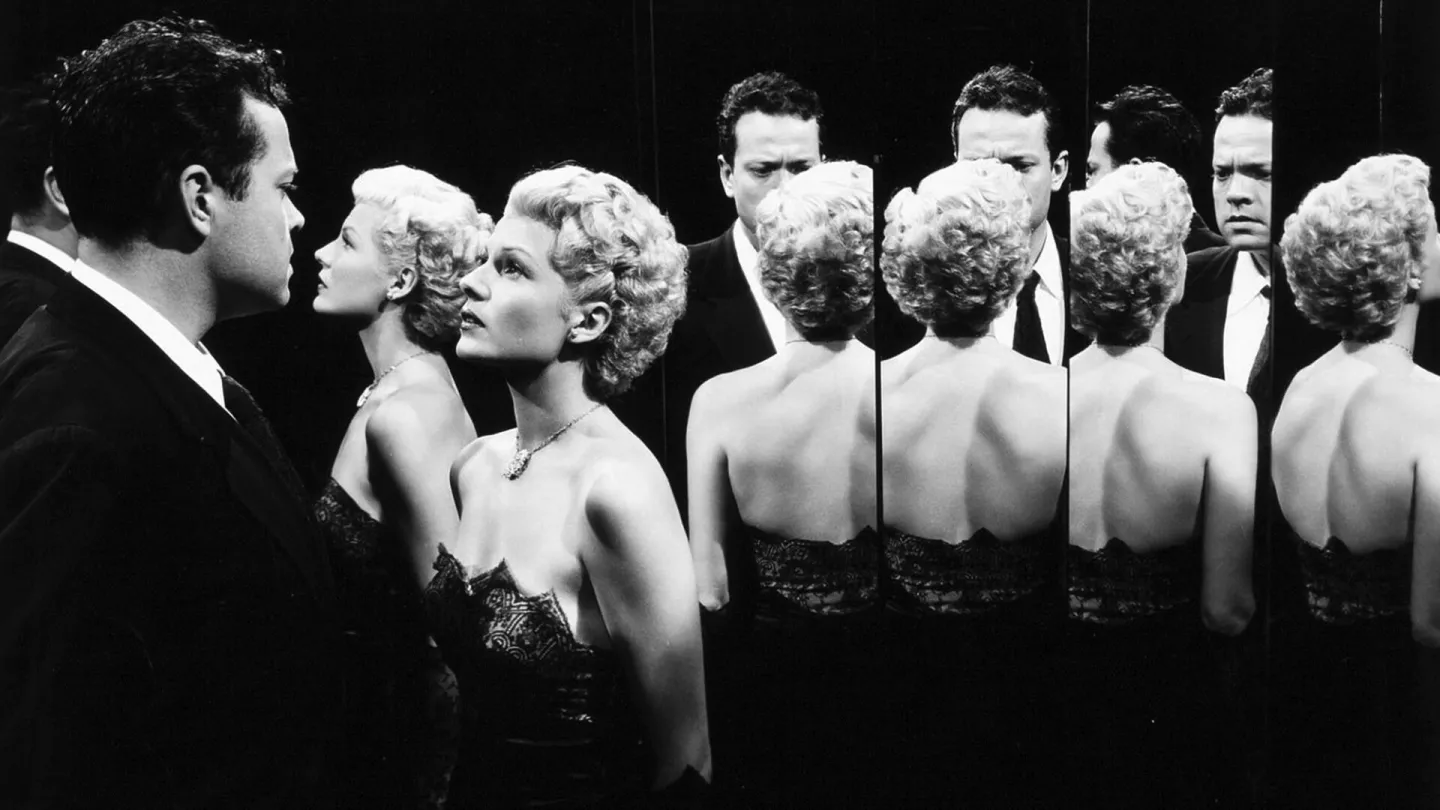
An important characteristic of these films is their formal dimension. One of the more obvious distinguishing marks of noir is its deep shadows, which — as Andrew Spicer wrote — were “dark mirrors of American society and challenged the fundamental optimism of the American dream.” Noir stood out sharply from other Hollywood productions, however, not only through its specific use of shadows. Night scenes were filmed at night rather than during the day; full depth of field was employed; wider shots were used; symmetry was disrupted; unusual angles were deployed; characters were shown in shadow or partially obscured — practically none of these techniques were present in typical Hollywood productions. To this must be added the particular character of the lighting. Low, frontal lights created zones of darkness broken by brightness. Fill lights, on the other hand, were avoided, the principal lights accentuating the austerity of the sets and thereby evoking associations with German Expressionism. Together with the distinctive composition and cinematography, this created an impression of surface instability, which was regarded as a visual expression of alienation and human despair, while the frequent display of mirror reflections of characters — particularly the femme fatale — underscored both their beauty and their duplicity.
The presence of Expressionism in Hollywood cinema should come as no surprise to anyone. After Adolf Hitler’s seizure of power in Germany in 1933, many directors — such as Fritz Lang, Robert Siodmak, Edgar G. Ulmer, and Karl Freund — fled the country and, often after a period in France, settled in the United States. Even so, the visual dimension of noir cannot be explained solely by the arrival of these filmmakers. German Expressionism had its heyday 20 years before the flowering of noir, and many later titles made by German filmmakers were in no way connected with dark crime pictures.
The actual stylistic similarities are impossible to overlook, however. German Expressionism was characterized by a sense of menace and unreality; stylistically and thematically it existed on the border of delirious nightmare. Many of the techniques used to achieve such a mood can be observed in noir cinema. The aforementioned full depth of field, moving camera, filming from peculiar angles, heavy use of shadows, specific lighting, and the use of fog — all of these can be found in the silent productions of our western neighbors. There is no complete certainty, however, as to how many of these techniques were genuinely absorbed by noir from German Expressionism and how many originated in American cinema, where they were developing independently of European film. It has been suggested that at least some of them were already present in the United States at the beginning of the 20th century, even before their use by the Expressionists.
It is also worth recalling that many German filmmakers, after fleeing their country but before arriving in America, worked in France. There they frequently worked within the trend known as poetic realism, in the context of which they continued to employ similar stylistic solutions as before. Moods, shadows, and lighting were often maintained in an Expressionist spirit, but this time they were applied to scenes from everyday life (hence the trend’s name). These films achieved great popularity in America, and many filmmakers associated with noir cinema frequently made remakes of French productions — so inspiration may also be sought in that source.
A certain visual continuity can also be observed within American cinema itself, running from Universal horror films (Frankenstein [James Whale, 1931], Dracula [Tod Browning, 1931], etc.) through Warner Bros. gangster pictures (Little Caesar [Mervyn LeRoy, 1931], Scarface [Howard Hawks, 1932]), and ending with the directorial style of Paramount and the visual approach of RKO. One might then regard noir cinema as a kind of continuation and next step in the evolution of American cinema in the context of — let us call them broadly — unsettling stories. Finally, in searching for sources of inspiration, the influence exerted on cinema by director Orson Welles and cinematographer Gregg Toland through the creation of Citizen Kane in 1941 must also be noted.
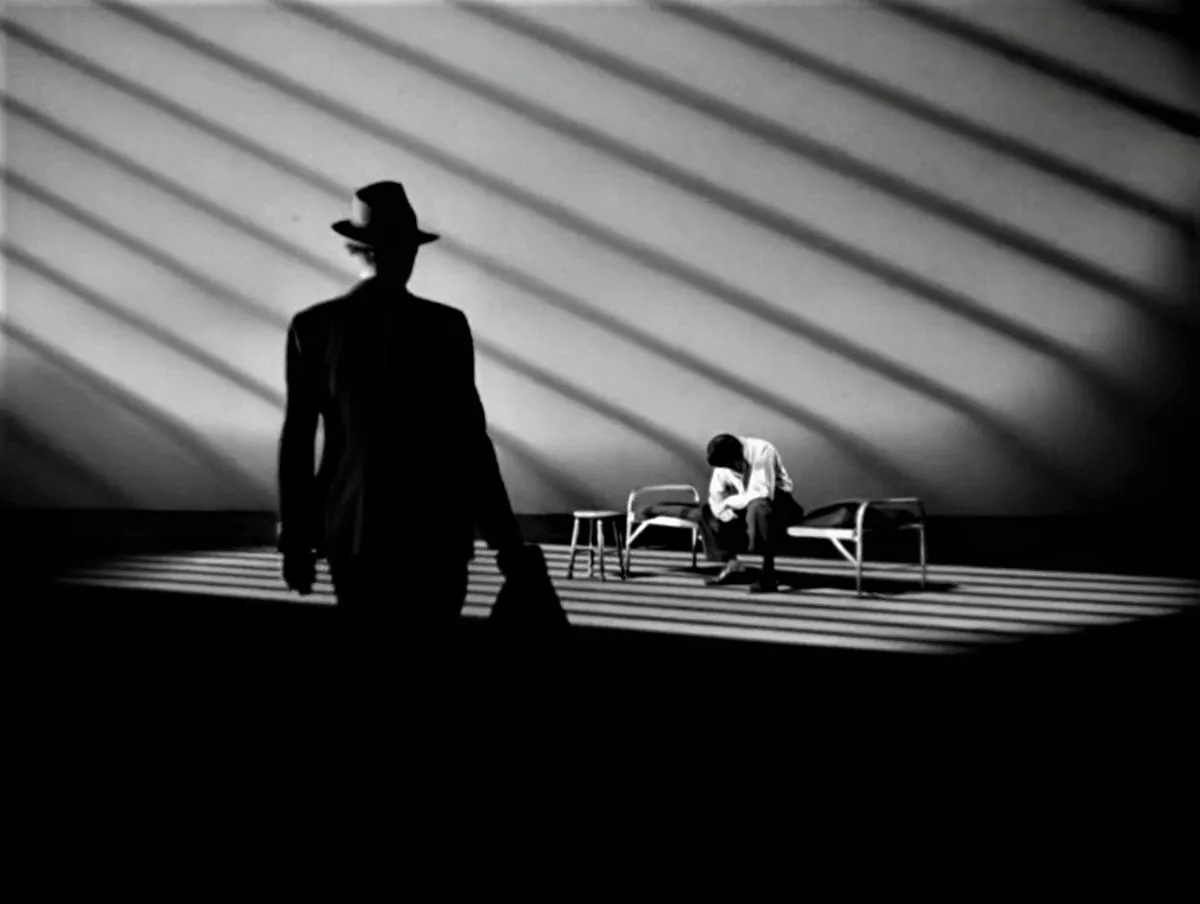
The style of noir cinema did not, of course, remain unchanged throughout its entire duration. Some regard Stranger on the Third Floor (Boris Ingster, 1940) as the beginning of the trend, specifically the nightmare sequence filmed there by Nicholas Musuraca. That film anticipates Citizen Kane in terms of its set design solutions in the oneiric scenes, for which Van Nest Polglase — later the production designer of Citizen Kane — was responsible. In Stranger on the Third Floor an Expressionist atmosphere was created through, among other things, the distinctive lighting of courtroom scenes, cells, and execution sites. The idea of incorporating dream sequences that stand apart from the rest of the film was subsequently partly taken up by noir, and scenes of this type were not uncommon in the years that followed.
Just as with the formal dimension, difficulties also arise on the thematic side when attempting to define the genre unambiguously. Noir in its simplest form is brutal detective cinema, but it is also characterized by existentialism and references to Freudian psychology. Alain Silver and James Ursini write of a viewpoint that stressed the absurdity of existence along with the importance of individual history in determining one’s actions… Two of the most important themes of the noir trend, the “haunting past” and the “fatalistic nightmare,” derive directly from these two sources [existentialism and Freudian psychology — ed. MRO]. Given that the beginning of noir is also frequently placed in 1941, when The Maltese Falcon (John Huston) premiered, and that the next important step in shaping the style was The Glass Key (Stuart Heisler, 1942), one might seek the sources of the themes and outlook present in noir in the prose of Dashiell Hammett, on which both films are based. Even so, one cannot deny that a similar sensibility was already present in earlier adaptations of those books: in Roy Del Ruth’s The Maltese Falcon from 1931 and in Frank Tuttle’s The Glass Key from 1935. This would suggest that noir existed in some form even earlier, in the 1930s, though in a different guise from the one it assumed in the following decade, where the psychological destruction of protagonists was elevated to a level rarely encountered before.
Another important scholar, Steve Neale, argues that noir cinema never existed as a single phenomenon. He writes that many of the characteristic features of film noir, such as the protagonist’s subjective narration, the use of high-contrast lighting and other Expressionist elements, gloomy endings, and the femme fatale figure, are separate features belonging to different tendencies and trends, and that any attempt to treat these tendencies and trends as a single phenomenon, homogenizing them under one name, “film noir,” leads inevitably to vagueness, imprecision, and inconsistency.
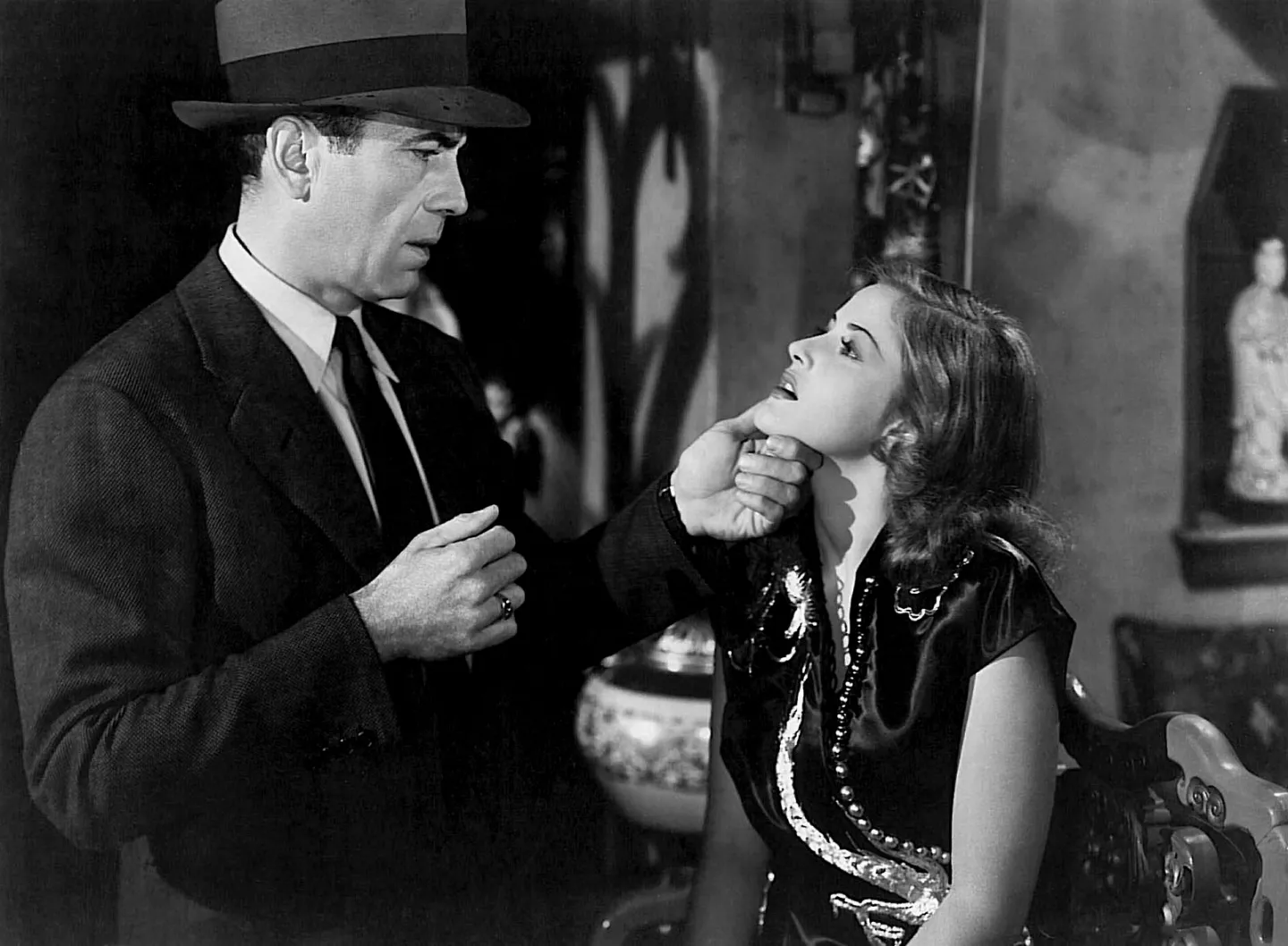
Noir caused difficulties not only for scholars but also for those involved in film promotion. In earlier times genre classifications were far more ambiguous. The titles that are the subject of this article were most commonly described by the term “melodrama.” This emphasized that the protagonist of a given production had to confront some adversity of fate. Even then, however, the term was insufficient. Reviewers therefore began appending to it words such as “psychological,” “psychiatric,” or “neurotic,” thereby emphasizing that the protagonist was dealing not only with external problems but also with internal ones. At a deeper level, this also presupposes the fact that goes beyond categorizing everything into simple categories of “good” and “evil.” In psychological conflict, the ambivalence of moral norms predominates.
Faced with the impossibility of arriving at a clear definition, it is necessary to return to the characteristics — present to varying degrees in different productions and not all at once — required for a given film to be classified as noir. The most important of these are: high-contrast lighting, first-person narration, the use of flashbacks, gloomy endings, the presence of a femme fatale, the loss of clear morality and moral purpose, doubts tormenting the protagonists, and the protagonist’s lack of a sense of invincibility. These last characteristics are all the more intriguing in that they sometimes dominate over the crime plot. In 1946, Double Indemnity (Billy Wilder, 1944) was described as containing a “psychological mechanism” rather than a “formal mystery.” In this way, too, the templates dominant in cinema of the time were being abandoned.
Both the formal and thematic departures from typical productions of the period were possible primarily because noir films were often made as B-grade productions. A smaller budget meant less oversight. Also related to this is the reduced use of lights on set. Less light meant that it was easier to conceal cheap and imperfect sets, and there was no need to pay for a full team of lighting technicians. This gave rise to intriguing scenes, and in time the interplay of light and shadow began to be used in a metaphorical way. Negative characters were bathed partly in darkness, police interrogations took place under a bare lightbulb, and the gradual switching on of lights suggested a three-dimensional effect.
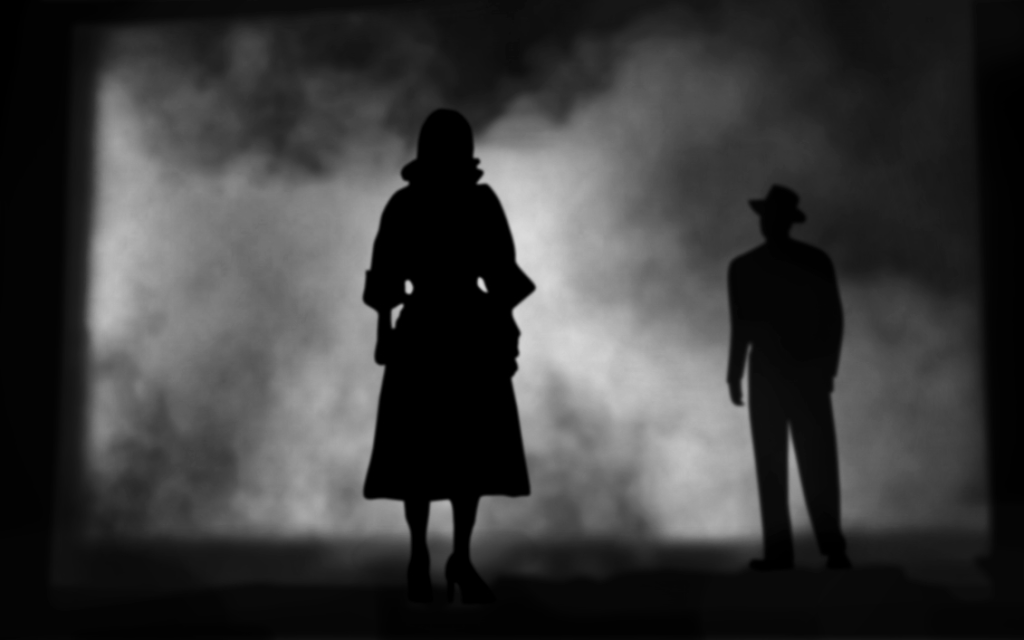
Another important aspect is setting. Although productions set in small towns or even in the countryside can be found, the classic backdrop for this type of cinema is the city. The very titles of a large number of films make this clear: City That Never Sleeps (John H. Auer, 1953), Dark City (William Dieterle, 1950), Edge of the City (Martin Ritt, 1957), The Naked City (Jules Dassin, 1948), Night and the City (Jules Dassin, 1950), etc. A similar setting is indicated by “street” titles: The House on 92nd Street (Henry Hathaway, 1945), Naked Street (Maxwell Shane, 1953), Side Street (Anthony Mann, 1950), Scarlet Street (Fritz Lang, 1945), Street with No Name (William Keighley, 1948), etc. A group of films can also be found that refer to specific cities: Chicago Deadline (a.k.a. Appointment with a Shadow, Lewis Allen, 1949), Kansas City Confidential (Phil Karlson, 1952), The Killer That Stalked New York (Earl McEvoy, 1950), The Phenix City Story (Phil Karlson, 1955), etc. There is also a cluster of titles that point to the setting metaphorically: The Asphalt Jungle (John Huston, 1950) and The Steel Jungle (Walter Doniger, 1956) are examples.
The city in noir cinema is dark, as are its alleyways. They are frequently drenched by recent, sudden rain; streetlamps shed a somber glow; and neon signs illuminate the street with a disquieting vision of a morally corrupt world reflected in dirty puddles. If one enters an interior, it is usually no less unsettling than the view outside the window. Claustrophobic rooms in cramped alleyways, deserted docks where a murderer may be lurking behind every shadow, and nightclubs where positive characters are hard to come by are among the favorite locations of noir. In many respects, then, these stories are stories about cities observed from an extremely unflattering perspective.
An interesting curiosity is the fact that when in the 1960s and 1970s the typical visual motifs and iconography of noir were being catalogued, the list was filled with nocturnal streets, echoing canals, billiard halls, people visually diminished by the décor and the camera’s work, bars, hotel rooms full of empty bottles and cigarette butts, parking lots, and so forth. This speaks quite clearly to the kind of surroundings in which the typical protagonist — and by extension the audience — is compelled to exist. Beyond danger and moral degradation, a sense of decay also surfaced. The image of a woman holding a pistol was likewise considered iconic, which is probably connected to the covers of pulp magazines.
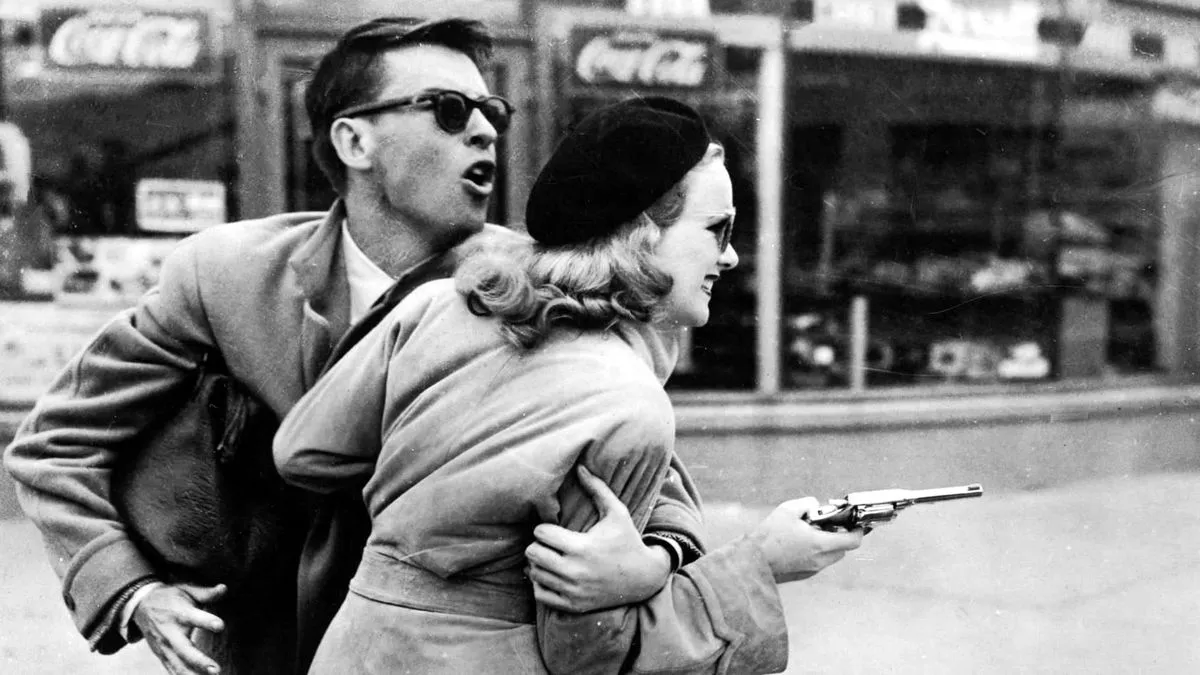
The aforementioned sense of claustrophobia was more prevalent in the early phase of noir cinema. It was imposed primarily by financial constraints. Economies meant that cast and crew did not travel to the actual locations where scenes were set, but remained in the film studio instead. This style dominated until 1948. Filmmakers repeatedly tried, with varying results, to develop this claustrophobic manner through changes in camera angles, play with shadows, and showing the action through the protagonist’s eyes.
During the war, budget restrictions were even greater, so films were made faster and were often darker still. To save on the editing time needed for dialogue scenes, these were frequently filmed from one or two angles, meaning that only one character was shown facing the camera while the other had their back to it; usually the face of the person speaking more was visible. A second effect of the war was an increase in the realism of films, brought about mainly by documentary footage from the front that inspired filmmakers. This in turn gave rise to a new subgenre known as the semi-documentary.
After the end of the Second World War, the still-nascent noir was affected by a thematic shift. America fell prey to fear of spreading communism; after the Communist victory in China in 1949 and the outbreak of the Korean War, this fear intensified further. Hollywood was not spared. Liberalism broadly conceived was being eliminated, while conservative and right-wing movements were gaining strength, placing cinema under pressure. The situation worsened significantly as early as 1947. Many people were forced to leave the industry; many others, to protect themselves, informed on their colleagues to the House Committee on Un-American Activities. Some were required to make openly anti-communist films; there were also those who left the United States in search of work in Europe.
The semi-documentary subgenre mentioned earlier, which continued into the postwar years, gained popularity thanks to films such as The Naked City, listed a few paragraphs above. These films were characterized by a greater realism in their portrayal of cities, since productions were shot in real locations rather than in studios. Crime and corruption, including political corruption, definitively left the studio buildings behind, becoming an inseparable feature associated with actually existing cities. In films of this type, protagonists are often representatives of the law. A change also occurred in the depiction of locations and in the choice of locations itself. Desolate rooms were replaced by places associated with the criminal world: nightclubs, casinos, boxing arenas, and so on. Sport and gambling often went hand in hand, and the money accumulated through one or the other opened up possibilities for robberies. Plots were sometimes based on real events, and various scenes were frequently filmed in the places where individual incidents had actually occurred.
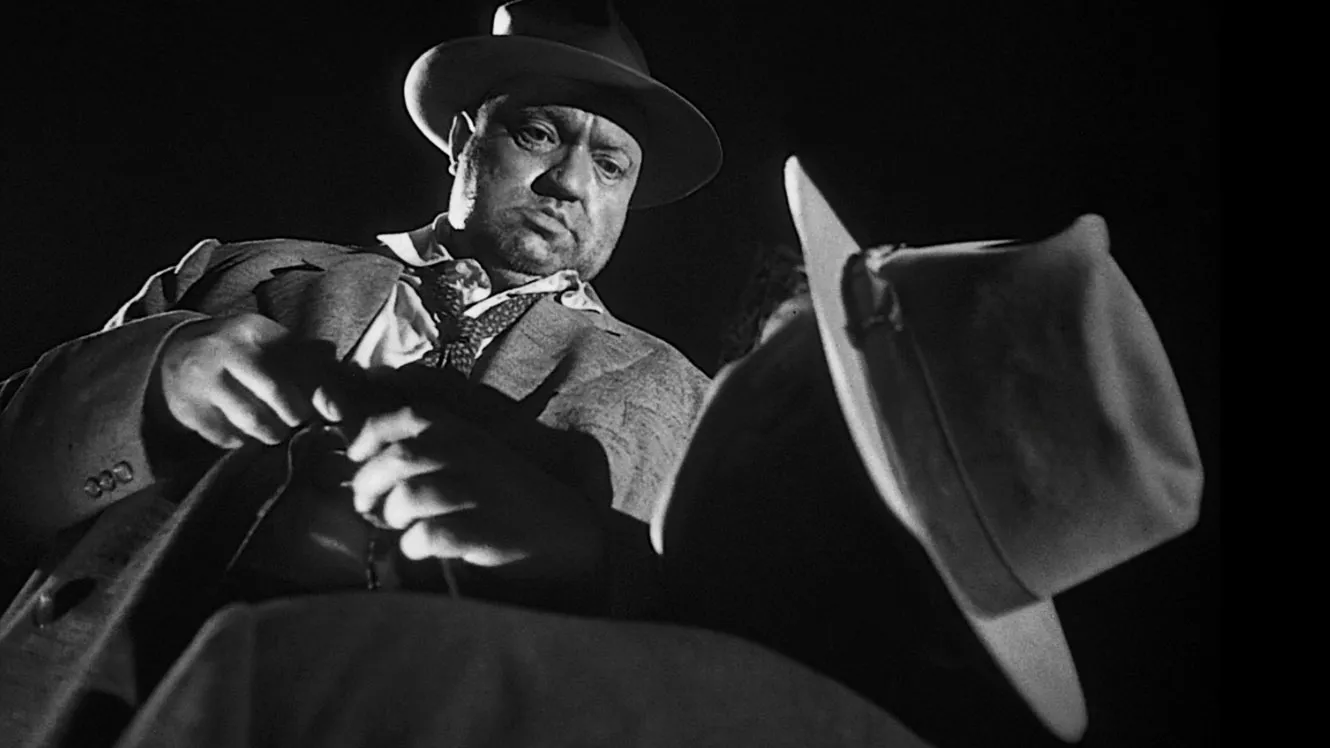
This semi-documentary style was more strongly characterized by an Expressionist presentation of existential alienation. The nature of the city is, as I have noted, pessimistic, and its inhabitants are usually loners unable to find their bearings in a depersonalized environment, caught in a trap of isolation. They walk beneath the streetlights, down back alleys, along wet pavements. They sit alone in dark rooms. The hero walks the streets with anxiety, aware that he is an outsider, wrote Michael Walker. The visual deficiencies are complemented by the voice-over narration, in which characters frequently offer evocative descriptions of their surroundings.
The city also constitutes a labyrinth — an almost unreal labyrinth, in motion, changeable, capable of leading practically anyone astray. The city almost becomes a character in the film itself, something particularly evident in City That Never Sleeps. Of course, it is also a labyrinth for the most fundamental of reasons: the tangled network of streets, tunnels, docks, offices, houses, and apartments is the simplest explanation for the metaphor. A classic example of the labyrinth of the city combined with its destructive influence on people is Orson Welles’s magnificent Touch of Evil (1958). For the sake of precision, it should be added that five versions of that film exist, which multiplies the indeterminate nature of the labyrinth.
Noir films also reveal the danger of relying on surface appearances. Characters frequently turn out to be someone other than we suppose. A typical example is Johnny Eager (Mervyn LeRoy, 1941), where we encounter an ordinary taxi driver passing through various offices until at a certain moment he crosses the threshold of a metal door leading to a luxurious apartment, whereupon the character unexpectedly transforms into a gangster. Critics such as Rob White point through this to the perspectival distortion to which the city is subject. It is not the same for everyone. A gangster perceives given streets differently from an ordinary citizen, an adult differently from a child, a rich man differently from a beggar, and so on. In this way the city reveals its other face. It is not only a place of loneliness and danger; for some it also becomes a place of opportunity and gain.
Noir cinema remains popular today, though — naturally — not as it was during its heyday (which, as is commonly accepted, came to an end with the fifth decade of the twentieth century). Classic productions continue to be revisited; they continue to inspire successive generations of viewers and filmmakers; and work in this style continues to be made, as the Coen brothers and Roman Polański have demonstrated. The term neo-noir has also emerged, defining productions that draw heavily on the style under discussion. This cinema offered — and continues to offer — an incomparable atmosphere, intriguing criminal and psychological puzzles, dark, realistic and Expressionist visions of metropolises and of the human mind. It thus constitutes an extraordinarily significant and one of the most fascinating chapters in the history of cinema. There is nothing left to do, then, but watch it.
Appendix
Since the way of imaging the city and its spirit is of particular interest to me, I would like, in closing and following Brian McDonnell’s intriguing article Film Noir and the City, to briefly discuss the most important cities that serve as protagonists of noir cinema.
Los Angeles — by far the most frequently appearing city, once often referred to as “Los Diablos.” The choice of this particular city was of course usually dictated by the most prosaic need for economy. Los Angeles was at the time being heavily promoted as a sunny place offering its residents opportunities for advancement. Noir cinema presented a distorted reflection of this idealized image, focusing on what was dark, hidden, and repressed. By showing industrial districts, Gothic villas, public bathhouses, bars full of former soldiers, hospitals, canals, and so forth, various productions depicted the absence of comfortable living and the numerous problems afflicting the city. The most celebrated productions set in Los Angeles include: The Brasher Doubloon (John Brahm, 1947), Cry Danger (Robert Parrish, 1951), He Walked by Night (Alfred L. Werker, 1948), Criss Cross (Robert Siodmak, 1949), Murder, My Sweet (Edward Dmytryk, 1944).
New York — arguably the most famous and most American city — was the second most frequently chosen metropolis after Los Angeles. There is no denying that its landscape of skyscrapers and Manhattan is ideally suited to noir cinema. Before filmmakers set off with their actors to shoot in New York, which happened following the success of The Naked City, footage of the metropolis was typically used as a backdrop projected behind actors performing their roles in a Los Angeles studio. Most often the city’s diversity was emphasized — the bustling life of its overworked laborers and printers — but it was also depicted as a modern jungle, in shots of Wall Street among other things, and as the most brutal of places. Classic examples of productions set in New York include: Side Street, The Naked City, Force of Evil (Abraham Polonsky, 1948), Sweet Smell of Success (Alexander Mackendrick, 1957).
San Francisco — its harbors, ports, and crowded suburban streets also proved to constitute an ideal backdrop for noir, all the more so when supplemented by the exoticism of Chinatown, adding additional elements of mystery and disorientation. Out of the Past (Jacques Tourneur, 1947), The Lady from Shanghai (Orson Welles, 1947), and Vertigo (Alfred Hitchcock, 1958) are examples of San Francisco being used as a trap, as hypnotic snares lying in wait for their protagonists. Also noteworthy among productions set in this city are Born to Kill (Robert Wise, 1947), Dark Passage (Delmer Daves, 1947), The Sniper (Edward Dmytryk, 1952), The Maltese Falcon, Raw Deal (Anthony Mann, 1948), and Where Danger Lives (John Farrow, 1950).
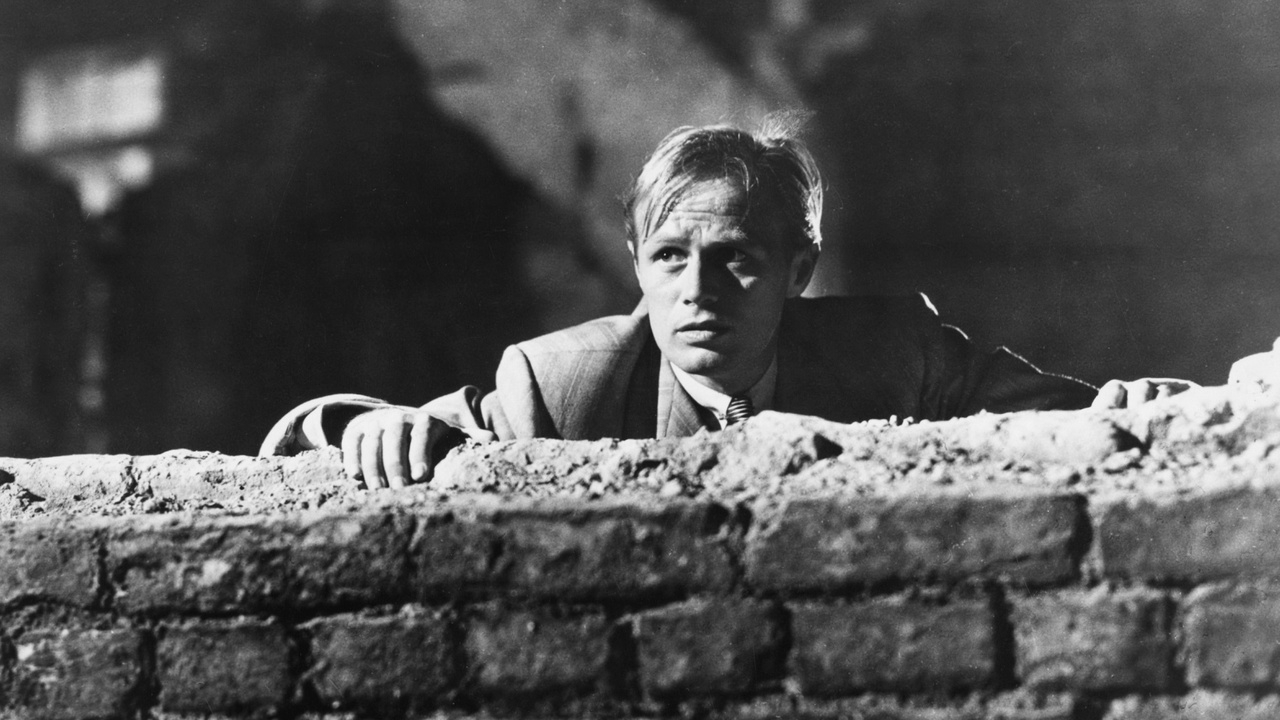
A separate category is formed by cities outside the United States. These were not often visited for budgetary reasons, though exceptions occurred — such as Night and the City, set in London. The main reason for making the film there was the flight of director Jules Dassin from the USA during the period of political repression. Although the city looks different from American ones, no marked stylistic or thematic departures from similar productions made in the United States can be observed, with one important exception. Cities in Europe had genuinely suffered during the war. It was therefore not difficult to find ruins and damaged buildings, lurking like ghosts of brick and concrete. Excellent use was made of them in the celebrated The Third Man (Carol Reed, 1949), set in Vienna.
Productions set in South America also appeared occasionally, particularly in Brazilian Rio de Janeiro or Argentine Buenos Aires. Examples include Cornered (Edward Dmytryk, 1945), Gilda (Charles Vidor, 1946), and Notorious (Alfred Hitchcock, 1946).
Finally, it is also worth noting the spatial conflicts signified in noir cinema. Old cities were contrasted with new ones (e.g. Kiss the Blood Off My Hands [Norman Foster, 1948]), city centers with suburbs (e.g. Act of Violence [Fred Zinnemann, 1949]), and cities with the countryside (e.g. On Dangerous Ground [Nicholas Ray, 1952]). Old cities were morally ruined; new ones could gleam with modernization. Life was lived in the center; in the suburbs one could find shelter; beyond familiar territory lay danger. In the countryside one could sometimes find an opportunity for penance, but there solutions to problems were often not on offer — only their intensification through rural monotony.
[This is a revised version of the text. The captions beneath the stills and posters were written by Marcin Zembrzuski. Polish version of the text was published in Kinomisja.]
Bibliography:
Andrew Spicer, Film Noir, Harlow, 2002.
Geoff Mayer, Introduction: Readings on Film Noir, in: Geoff Mayer and Brian McDonnell, Encyclopedia of Film Noir, 2007.
Brian McDonnell, Film Noir Style, in: Geoff Mayer and Brian McDonnell, op. cit.
Alain Silver and James Ursini, The Noir Style, Cologne, 2004.
Steve Neale, Genre and Hollywood, London, 2000.
Brian McDonnell, Film Noir and the City, in: Geoff Mayer and Brian McDonnell, op. cit.
Michael Walker, Film Noir: Introduction, in: The Movie Book of Film Noir, ed. Ian Cameron, London, 1992.
Rob White, The Third Man, London, 2003.
Author of “Panorama of Hong Kong and Taiwan Cinema”, a lover of Asian cinema, action films, and space voyages aboard the starship Enterprise. He once studied Polish philology, and later became a citizen of the NSK State in Time. He has published in Kinomisja, Ekrany, Kultura Liberalna, Torii, Dwutygodnik Kulturalny, and others.